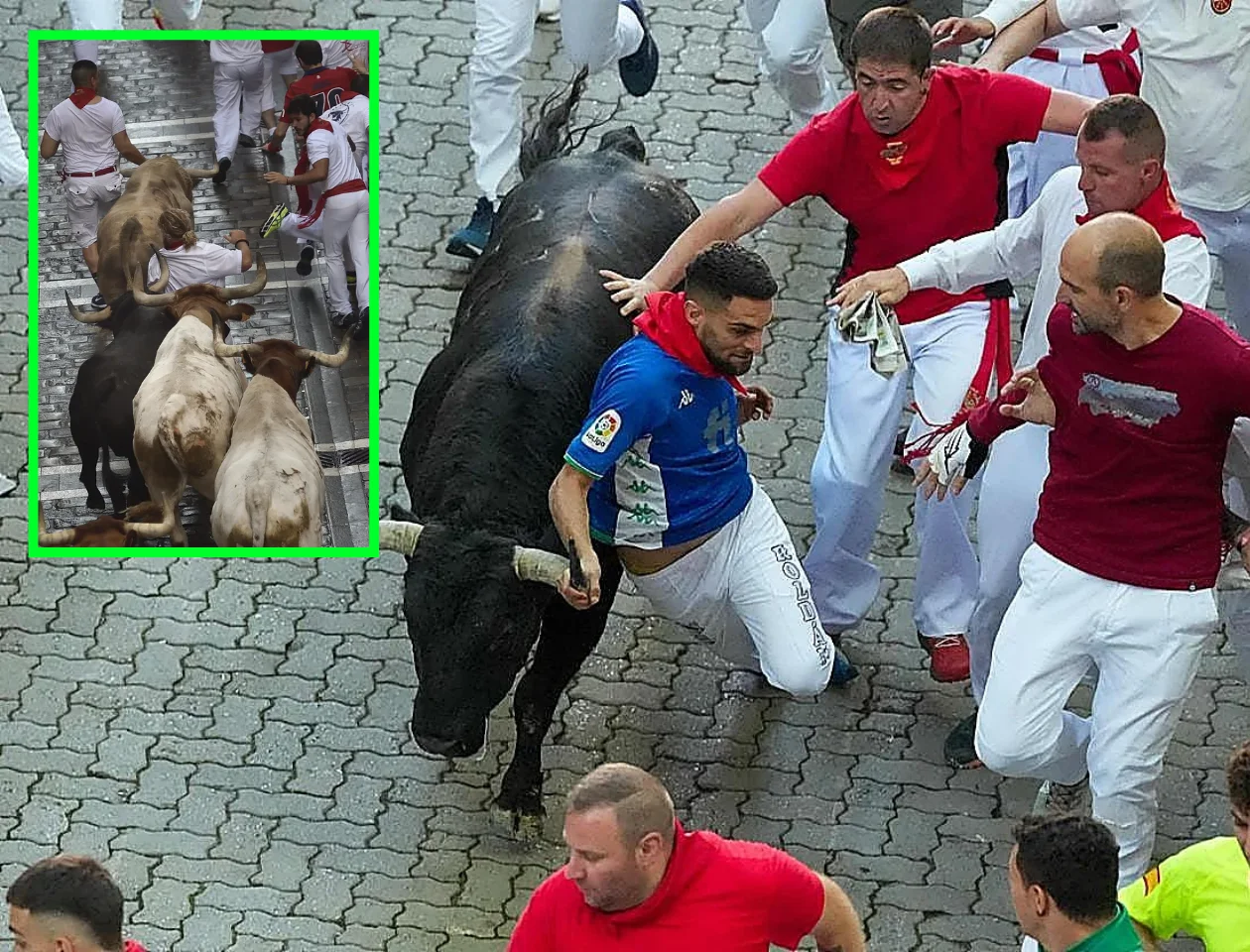
- The first bull run of the 2026 San Fermín Festival took place in Pamplona, Spain, on July 7, with six fighting bulls from the Fuente Ymbro ranch charging through the city's narrow streets as hundreds of runners sprinted ahead of them.
- Five runners were injured during the opening run, three of whom were taken to hospital for bruising. No gorings were reported and none suffered life-threatening injuries.
- Animal rights organizations including PETA and AnimaNaturalis staged protests at the festival, as a 2025 Spanish study found that eight in ten Spaniards now oppose bullfighting.
PAMPLONA, SPAIN — Less than two weeks after a man was dragged to his death by a crocodile at a Puerto Vallarta resort beach while a California couple watched helplessly from the shoreline, another dangerous animal encounter is making headlines — this one entirely intentional. The first bull run of the 2026 San Fermín Festival kicked off in Pamplona, Spain, on Tuesday morning, and while five runners ended up injured, the opening encierro passed without the gorings that have made this event one of the most watched and most debated traditions in the world.
Eight Days of Running. Day One is Done.
The San Fermín Festival officially opened on Monday, July 6, with the traditional chupinazo — a rocket fired from the Town Hall balcony in front of a crowd of more than 12,000 people to mark the start of nine days of celebration. The first bull run followed on Tuesday morning at precisely 8 a.m.
Six fighting bulls from the Fuente Ymbro ranch, based in Cádiz in southern Spain, were released from the corrals at Santo Domingo along with six calmer steers. The animals charged through the traditional route — up from Santo Domingo, past the Town Hall, through the streets of Mercaderes and Estafeta, and into the Plaza de Toros bullring at the end. Hundreds of runners surged ahead of them through the same narrow, centuries-old streets.
Spanish media described the opening run as fast, compact, and largely clean. The herd stayed together through most of the route — a key factor, as bulls that separate from the group pose a significantly higher risk to runners. The entire run lasted approximately two minutes and 16 seconds, making it one of the quicker opening encierros in recent memory.
Five Injured, None Gored
Five runners were injured during the opening run. Three were taken to hospital, where they were treated for bruising. None had life-threatening injuries. No gorings were reported — meaning none of the bulls' horns made contact with a runner in a way that caused a puncture wound, which is the most serious and most commonly fatal type of injury at this event.
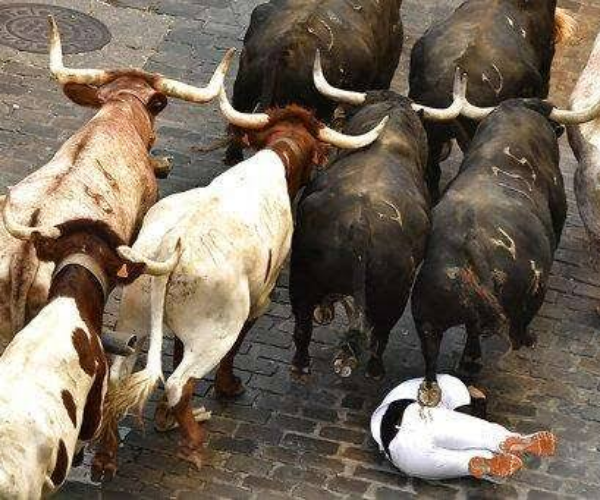
One notable moment: a bull briefly lost its footing and fell among the runners during the run before quickly recovering and rejoining the herd without causing a serious incident.
It is, by the standards of this event, a relatively calm opening day. Dozens of runners are injured every year across the eight days of bull runs, and since records began in 1924, 16 people have been killed at the Pamplona Running of the Bulls. Gorings, broken bones, and trampling injuries are part of the event's long history.
What the Event Is — and What Happens After
The Running of the Bulls is the most internationally recognized part of the San Fermín Festival, but it is one component of a much larger nine-day celebration that fills Pamplona with an estimated one million visitors every year. The streets are lined with brass bands, traditional giants and big-heads, religious processions, fireworks, and crowds dressed in the festival's signature white clothing and red scarves.
Each morning from July 7 through July 14, six fighting bulls — each weighing around 600 kilograms — are released at 8 a.m. and charged through the same 875-meter route to the bullring. What many spectators abroad do not always realize is what happens after the run: the same bulls that charged through the streets in the morning are killed by matadors in evening bullfights at the Plaza de Toros the same day.
That reality is at the center of a growing debate inside Spain itself. A 2025 Spanish national study found that eight in ten Spaniards now oppose bullfighting. Among people aged 18 to 24, that number rises to 72%. Animal rights groups PETA and AnimaNaturalis were present in Pamplona for the 2026 festival, staging demonstrations as they have done each year since 2002, calling on the city's mayor to end the event entirely.
The festival continues through July 14, with seven more bull runs still to come.
To view more cases of shocking animal encounters and dangerous events around the world, check out our video here: