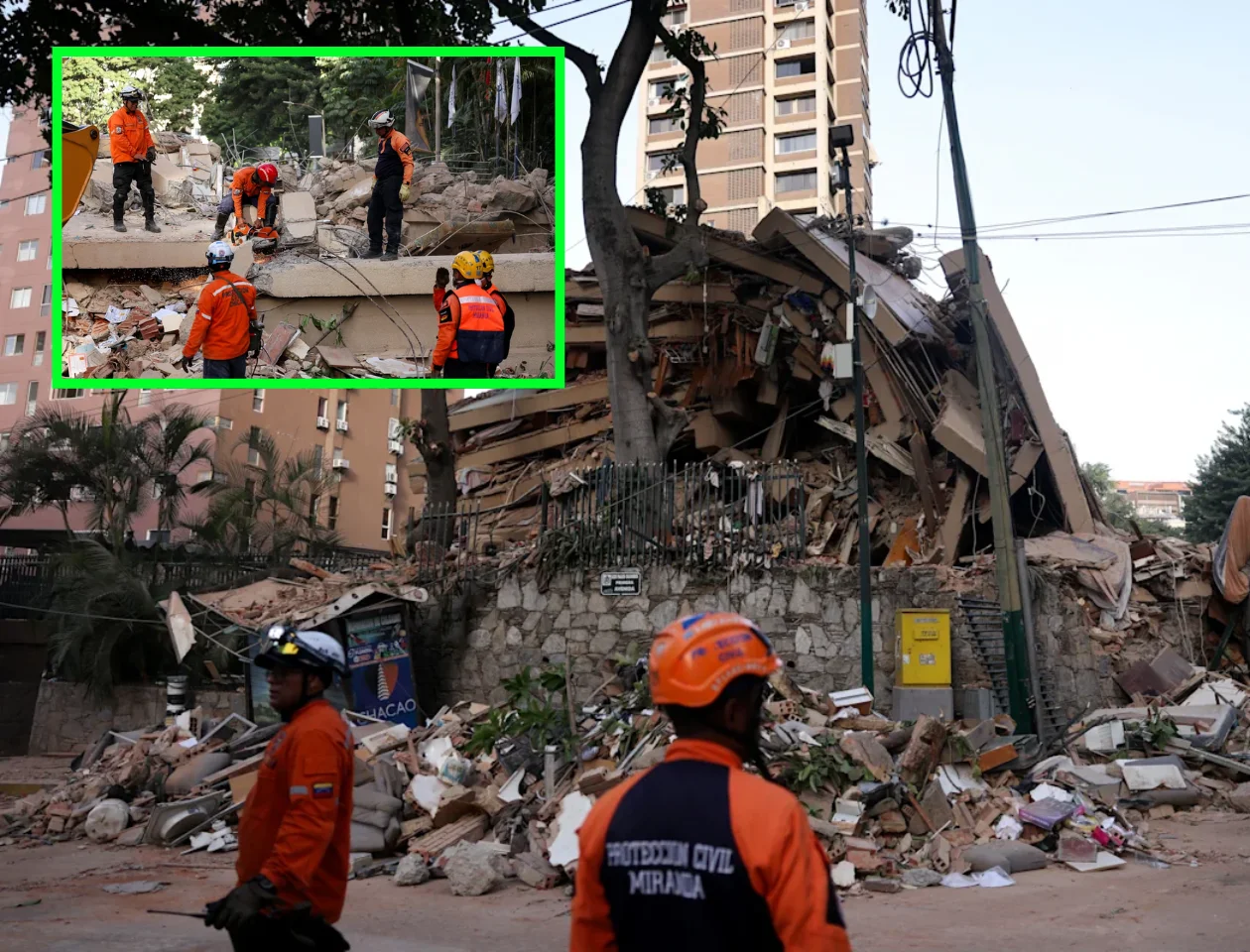
- Two powerful earthquakes struck northern Venezuela, killing at least 164 people and injuring 971 others.
- The first quake measured 7.2, followed by a stronger 7.5 quake just 39 seconds later.
- La Guaira, the hardest-hit area, has been declared a disaster zone with extensive damage and ongoing rescue efforts.
LA GUAIRA, VENEZUELA — Less than eight months after deadly flooding and destruction across central Philippines, another major disaster has left families searching through wreckage and emergency crews racing against time. Two powerful earthquakes struck northern Venezuela within seconds of each other on Wednesday evening, collapsing buildings, damaging the country’s main airport, and sending terrified residents into the streets.
Authorities have confirmed at least 164 deaths and 971 injuries, but officials fear the final number could rise sharply as rescuers continue searching damaged neighborhoods, especially in La Guaira, the coastal state north of Caracas.
Twin Tremors Strike Within Seconds
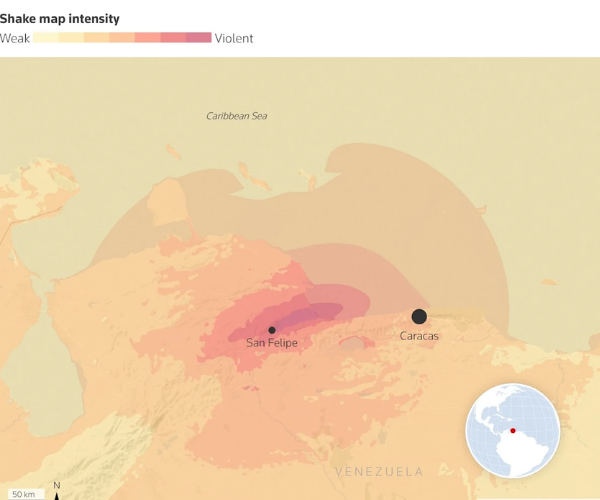
The U.S. Geological Survey reported that the first earthquake, measured at magnitude 7.2, struck west of Morón on Venezuela’s Caribbean coast, roughly 105 miles west of Caracas. Just 39 seconds later, a stronger magnitude 7.5 quake hit nearby, making the disaster one of the most powerful seismic events to strike Venezuela in more than a century.
Because the two quakes happened so close together, many residents said the shaking felt as if it never stopped. Buildings swayed, walls cracked open, and people ran down stairwells as furniture, concrete, and glass crashed around them.
The earthquakes happened during Battle of Carabobo Day, a public holiday in Venezuela, meaning many people were at home when the tremors hit. That timing has raised fears that more victims may still be trapped under collapsed homes and apartment buildings.
La Guaira Declared a Disaster Zone
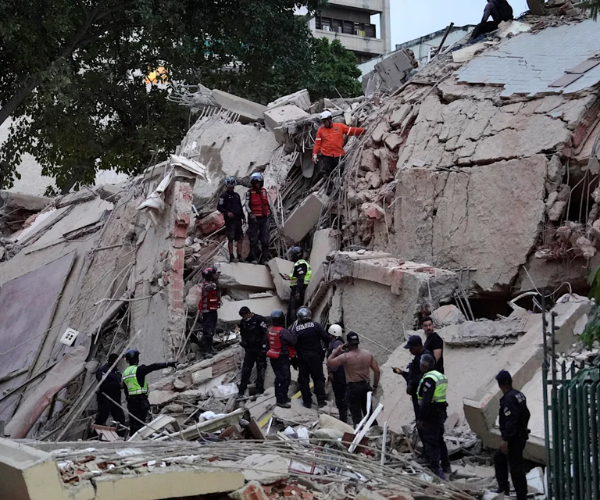
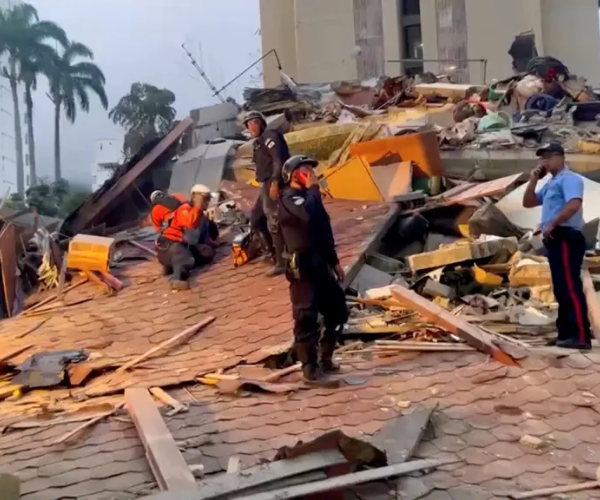
The hardest-hit area appears to be La Guaira, where officials described the damage as a disaster zone. Dozens of buildings reportedly collapsed, and rescue crews were sent from other parts of the country to help search for survivors.
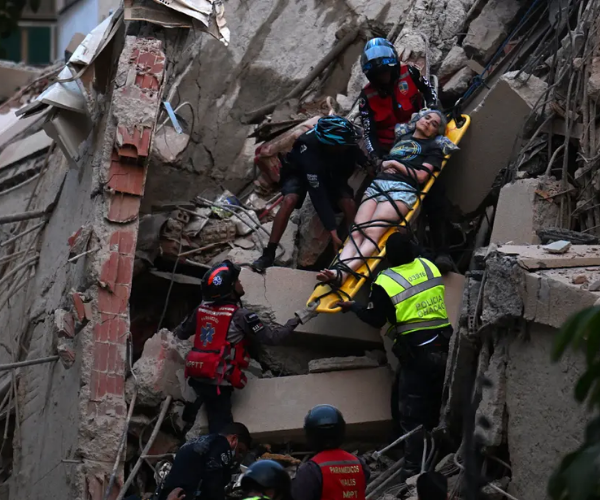
State television showed children covered in dust being pulled alive from rubble, while other footage showed residents and emergency workers digging through broken concrete with limited equipment. Local officials also asked private companies to provide heavy machinery so rescue teams could move debris faster.
In several neighborhoods, families posted names and photos of missing loved ones online, hoping someone could confirm whether they had been found, taken to shelters, or trapped under damaged buildings. Citizen-run websites were also created to help people mark relatives as missing or safe.
Panic in Caracas and Damage at the Airport
In Caracas, residents fled into streets, parks, parking lots, and open plazas after the shaking stopped. Many refused to return indoors because of aftershocks and fears that weakened structures could collapse during the night.
Some families slept outside or inside vehicles. Authorities warned people not to re-enter homes with visible structural damage.
The earthquakes also damaged Simón Bolívar International Airport, also known as Maiquetía Airport, in La Guaira. Video shared online showed ceiling panels falling, lights flickering, dust filling corridors, and frightened passengers running through the terminal. Officials closed the airport as crews assessed the damage.
Parts of the capital also lost power and cellphone coverage. Subway services in Caracas were suspended, natural gas was shut off as a precaution, and classes were canceled for several days. Some school buildings are expected to be used as shelters and donation centers.
USGS Warns Death Toll Could Rise
The U.S. Geological Survey issued a red alert after the earthquake sequence, warning that high casualties and major damage were likely. Its modeling suggested the death toll could eventually reach the thousands, with a significant chance of exceeding 10,000.
That estimate is not a confirmed death toll. It is based on shaking intensity, population exposure, building vulnerability, and past earthquake patterns. Still, the warning reflects the scale of the disaster and the risk faced by communities near the epicenter.
Venezuela sits near the boundary between the Caribbean Plate and the South American Plate. Strong earthquakes are not as common there as in some other parts of Latin America, but the country has a long history of damaging quakes. One of the deadliest happened in 1812, when a powerful earthquake devastated parts of Mérida and Caracas and killed thousands.
International Aid Begins Moving In
International offers of help began arriving within hours of the disaster. U.S. Secretary of State Marco Rubio said the United States was deploying search-and-rescue teams, medical resources, and humanitarian assistance. Officials said teams from Fairfax County, Virginia, and Los Angeles were among those being prepared to assist.
Other governments also offered aid as Venezuelan officials focused on the first critical hours after the collapse. Rescue workers often have the best chance of finding survivors during the first 48 to 72 hours after a major earthquake, especially when people are trapped in pockets beneath rubble.
Acting President Delcy Rodríguez declared a state of emergency and said authorities were working to save as many lives as possible. She also announced plans for a reconstruction fund to help repair hospitals, homes, and other damaged structures.
Aftershocks Keep Residents on Edge
Aftershocks continued into Thursday, keeping many people outdoors and away from unstable buildings. Interior Minister Diosdado Cabello urged residents to be cautious, especially with children, elderly relatives, and people in damaged structures.
Hospitals in Caracas and nearby areas prepared for more injured patients, with medical workers called in to help handle the emergency. The Venezuelan Red Cross also sent rescue teams to the worst-affected zones, even after its own headquarters reportedly sustained serious damage.
For many families, the immediate focus remains simple: finding missing relatives, getting medical help, and staying away from buildings that may still collapse.
For more cases related to natural disasters, check out our video here: