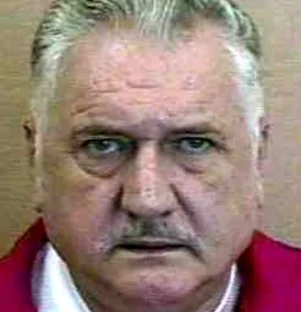
1936 - 1998
Summary
Name:
Zane Brown HillYears Active:
1990Birth:
May 09, 1936Status:
ExecutedClass:
MurdererVictims:
1Method:
ShootingDeath:
August 14, 1998Nationality:
USA1936 - 1998
Summary: Murderer
Name:
Zane Brown HillStatus:
ExecutedVictims:
1Method:
ShootingNationality:
USABirth:
May 09, 1936Death:
August 14, 1998Years Active:
1990Date Convicted:
October 2, 1990Zane Brown Hill was born on May 9,1936. By the time of the events that led to his execution, he had a documented history of alcohol dependency and prescription drug use, along with at least one prior conviction from 1980 for assaulting a law enforcement officer. Court records from his later trial established that he suffered from spinal arthritis and had sustained some degree of brain damage linked to long-term alcohol abuse, a condition a psychiatric expert testified had affected the areas of his brain responsible for processing and organizing information.
Hill was married to Bonnie Hill, and the couple had children together, including a son, Randall "Randy" Hill. In October 1989, Hill left the marital relationship and moved out, though the couple continued to have contact afterward. Early in the morning of November 29, 1989, Hill broke a bedroom window and entered his estranged wife's home without permission. He held a pistol to her throat and told her he had come to kill her, then ordered her to bed before losing consciousness from intoxication; Mrs. Hill left the house while he slept.
On January 1, 1990, Hill again came to his wife's residence, this time carrying a pistol. The two went for a drive together, during which Hill fired the pistol twice into the floorboard of the car. They later checked into a motel room, where Hill passed out. While he was unconscious, Mrs. Hill took the pistol from him and returned home. At some point during this encounter, Hill again threatened to kill her.
In the days that followed, Hill and his estranged wife discussed the possibility of reconciling. By his own account, he had also been living with another woman, Teresa Taylor, and her son during this period, and defense witnesses later testified that he had developed a close, supportive relationship with the boy.
On the morning of January 10, 1990, Bonnie Hill left for work at 6:20 a.m. Over the course of the day, Zane Hill called her at her workplace several times to discuss reconciling. When Mrs. Hill returned home at around 5:30 p.m., she noticed her husband's van parked behind a trailer on the property. Inside the house, she spoke with her son Randall and with Hill's mother, who also lived at the residence. Shortly afterward, Mrs. Hill and Randall saw Hill leave the trailer and walk toward the house carrying a rifle. Randall retrieved a pistol from inside the home.
Before entering, Hill had told a group of teenagers near a nearby garage, "You're going to see some blue lights now." He then entered the house and pointed the rifle at his son. Hill had alcohol on his breath, and Randall asked him to put the weapon down; Hill's mother also attempted to calm him. In the confusion, Randall went to a bedroom to telephone the sheriff's office for help. Hill followed him. Mrs. Hill heard a shot fired, followed by her son moaning, then a second shot and another moan, and finally a third shot.
Mrs. Hill ran into the bedroom and found her son on the floor with the telephone receiver still in his hand. As she tried to help him, Hill struck her with the butt of the rifle, knocking her down. While he attempted to reload the weapon, she fled the house. As she ran across the yard, she heard additional gunfire and saw Hill standing on the porch holding the rifle; a witness confirmed Hill fired at her from the porch as she ran, though he did not strike her. She reached a neighbor's home and asked them to call the police. Hill did not pursue her further.
Sheriff's deputies located and arrested Hill later that day, finding him lying in the front seat of a truck with the rifle underneath him. At the scene, deputies found Randall's body on the bedroom floor, the telephone cord wound around his arm. An autopsy determined Randall Hill had been shot three times — in the upper abdomen, the upper middle back, and the upper left side of his back — with one bullet passing through his aorta and causing fatal internal bleeding. A fully loaded pistol was recovered from Randall's pants pocket. Ballistics testing matched spent shell casings found inside the house and on the porch to the rifle taken from Hill at his arrest.
At trial, Hill testified that he had gone to the house at his wife's invitation to discuss reconciliation and that he had brought the rifle only intending to leave it inside, as he said he customarily did. He testified that his son threatened him with the pistol twice, and that when he believed Randall was about to shoot him, he pulled the trigger, though he stated he could not recall the specific details of firing multiple times. He denied ever reloading the rifle or striking his wife with it. After the shooting, Hill said he fled through a nearby field, fell into a creek, borrowed clean clothes from a neighbor, and eventually fell asleep in a parked truck, where deputies found him.
The prosecution presented Hill's history of threats and violence toward his wife — including the November 1989 break-in and the January 1 incident — as evidence of motive, arguing that the killing of Randall occurred because his son intervened to protect his mother and call for help. The jury convicted Hill of first-degree murder based on premeditation and deliberation, along with a separate charge of assault with a deadly weapon with intent to kill his wife. During the capital sentencing phase, the jury found three aggravating circumstances: that Hill had a prior violent felony conviction, that the murder was part of a course of conduct including violence against another person, and that the murder was committed to avoid or prevent a lawful arrest. Weighed against several mitigating circumstances presented by the defense — including his history of substance abuse treatment, his physical disability, and his good conduct in jail following his arrest — the jury recommended a death sentence, which the Buncombe County Superior Court formally entered on October 03, 1990.
Hill appealed his conviction and sentence to the North Carolina Supreme Court, raising numerous procedural and constitutional challenges relating to jury selection, evidentiary rulings, and sentencing instructions. On June 25 1992, the court rejected each of his arguments, found no prejudicial error in his trial, and concluded that his death sentence was neither excessive nor disproportionate compared to similar cases, upholding both his conviction and sentence.
In the years that followed, Hill's attorneys pursued further appeals through the state and federal courts and sought executive clemency, arguing the case merited commutation because prosecutors had at one point offered a second-degree murder plea agreement. North Carolina Governor Jim Hunt denied the clemency request, citing Hill's documented history of threatening his wife and children with firearms and the fact that he had shot his son twice in the back.
Zane Brown Hill was executed by lethal injection on August 14, 1998, at Central Prison in Raleigh, North Carolina. The execution began at 2:01 a.m.; Hill gave no final statement and did not open his eyes before the lethal drugs were administered. He was pronounced dead at 2:24 a.m., the tenth person executed in North Carolina since the state's death penalty was reinstated in 1977.
