Summary
Name:
Yu HaginoYears Active:
2005Status:
ImprisonedClass:
MurdererVictims:
1Method:
StabbingNationality:
JapanSummary: Murderer
Name:
Yu HaginoStatus:
ImprisonedVictims:
1Method:
StabbingNationality:
JapanYears Active:
2005Date Convicted:
March 6, 2007“I want to apologize to the girl and her parents from whom I took away the precious life of their child.”
— Yu Hagino
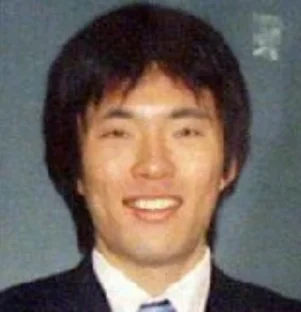
Yu Hagino was born in 1982. At the time of the murder, he was 23 years old and worked as a part-time teacher at a private cram school in Uji, Kyoto Prefecture, Japan. Reports also identified him as a student at Doshisha University.
Hagino taught at Kyoshin Co.’s Uji Shinmei cram school. His victim, Sayano Horimoto, was a 12-year-old sixth-grade student at Shinmei Primary School who attended the cram school. The available reports show that problems had developed between Hagino and Sayano before the murder. Her parents had reportedly complained about the way Hagino treated her during an individual counseling session in May 2005.
Prosecutors later said Hagino came to distrust and resent Sayano because of complaints about his teaching. He also reportedly suspected that she had written an anonymous complaint in a cram school questionnaire saying his teaching was difficult to understand. Reports from the trial stated that he believed she had been disrespectful toward him.
Before the murder, Hagino had reportedly received psychiatric treatment and was taking medication. His defense argued that he suffered from hallucinations and delusions and could not properly judge right from wrong at the time of the crime. However, the court later rejected the argument that he was mentally incompetent and held him fully responsible.
The case happened during a period when Japan was already shaken by other child murders. Because Sayano was killed in a place where children were expected to be safe, the case drew national attention and pushed cram schools to review their safety practices and teacher-hiring standards.
On the morning of December 10, 2005, Sayano Horimoto was at Kyoshin Co.’s Uji Shinmei cram school in Uji, Kyoto Prefecture. She was 12 years old and in the sixth grade. Hagino was working there as a part-time teacher.

Before the attack, Hagino separated Sayano from the other students. Reports said he moved other students to another room and left Sayano alone with him in the classroom. The classroom’s surveillance camera system was also disabled before the attack.
Hagino attacked Sayano with a kitchen knife. Prosecutors said he first approached her from behind and tried to hit her with a hammer, but failed. He then stabbed her in the neck, head, face, and other parts of the body multiple times. Sayano was taken to a hospital but died from her injuries.
Police arrested Hagino the same day. Early police statements said he admitted stabbing Sayano after a verbal dispute. ABC/Kyodo reported that he later pleaded guilty in Kyoto District Court and said, “I am sorry that I claimed a precious life.”
During the trial, the prosecution argued that the crime was planned. Reports stated that Hagino had bought knives before the killing and had wrapped knives and a hammer in a towel so they would not make noise when placed in a bag. Prosecutors also said he had considered committing the attack earlier, on December 3, 2005, but did not do so because Sayano had already taken her test.
Hagino’s defense argued that he had mental health problems, including hallucinations and delusions. He claimed that he believed Sayano had attacked him with a dagger. However, the Kyoto District Court rejected the defense claim that he was mentally incompetent. The court found that he was able to understand reality and was responsible for his actions.
On March 6, 2007, the Kyoto District Court sentenced Hagino to 18 years in prison. The court found that the murder was premeditated and noted that the killing happened in a school setting, where a student should have been safe with a teacher. The court did not accept the prosecution’s request for life imprisonment, partly noting that Hagino had made an emergency call to police after the attack.
Prosecutors appealed the sentence and sought a heavier penalty. However, later case summaries state that the Osaka High Court revoked the original 18-year sentence and resentenced Hagino to 15 years in prison on March 24, 2009.
The murder of Sayano Horimoto became one of Japan’s most widely reported child-safety cases of the mid-2000s. It raised concerns about supervision inside cram schools, the screening of teachers, and how schools should protect children even in private educational settings.
