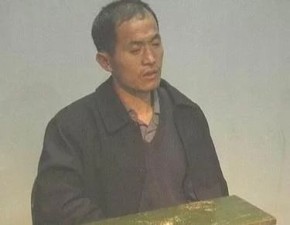
1968 - 2004
Summary
Name:
Yang XinhaiNickname:
The Monster KillerYears Active:
1999 - 2003Birth:
July 17, 1968Status:
DeceasedClass:
Serial KillerVictims:
67Method:
BeatingDeath:
February 14, 2004Nationality:
China1968 - 2004
Summary: Serial Killer
Name:
Yang XinhaiNickname:
The Monster KillerStatus:
DeceasedVictims:
67Method:
BeatingNationality:
ChinaBirth:
July 17, 1968Death:
February 14, 2004Years Active:
1999 - 2003Yang Xinhai was born on July 17, 1968, in a rural township of Zhengyang County, Henan Province. His family lived in deep poverty, occupying a small house in one of the poorest parts of the village. He was the youngest of four children. Neighbors described him as a quiet, withdrawn boy who rarely caused trouble outside the home. Though introverted, he was considered sharp and capable when he applied himself. He often kept to himself and did not mix easily with peers, a trait that became more pronounced as he grew older.
Yang attended local schools but struggled academically and socially. His family could not afford additional tuition or support, and by age 17, he dropped out of school altogether. Rather than return home, he drifted across China, picking up casual labor jobs—construction, factory work, and seasonal farm labor. This transient lifestyle isolated him from a stable support system and exposed him to environments where he alternated between low-wage work and petty criminal behavior.
By the late 1980s, Yang’s life had taken a darker turn. In 1988, he was sentenced to a labor camp for theft. Three years later, in 1991, he was sentenced again—this time for another theft committed in a different province. His criminal record continued to grow. In 1996, Yang attempted to rape a woman in Zhumadian, Henan, leading to a five-year prison sentence. He was released in 1999 after serving roughly three years.
Upon his release, Yang returned to his wandering lifestyle. His family believed he had become increasingly detached, refusing to settle down or maintain relationships. Chinese media later reported that Yang had experienced a breakup with a girlfriend who left him because of his prior criminal convictions, a rejection that may have contributed to his deepening resentment toward society. Others who crossed paths with him during this period recalled him as cold, emotionally shut down, and operating in a world entirely of his own making.
What emerged from this combination of poverty, social isolation, criminality, and untreated psychological disturbance was a dangerous drifter who moved from province to province with no fixed home, no work commitments, and no sense of moral restraint. When Yang began killing, he did so with the detachment of someone who believed he had nothing left to lose.
Between 1999 and 2003, Yang Xinhai carried out one of the most violent killing sprees in modern Chinese history. His crimes spanned four provinces—Henan, Hebei, Anhui, and Shandong—and involved home invasions, mass murders, and sexual assaults. The brutality and randomness of his attacks earned him the nickname the “Monster Killer”, and to this day he remains China’s most prolific known serial killer since 1949.
Yang operated with a distinctive approach. He traveled by bicycle, scouted isolated rural homes at night, and attacked when families were sleeping. He entered without warning and killed every occupant—men, women, children, and the elderly—using heavy tools such as hammers, axes, or shovels. After the murders, he sometimes raped female victims, living or dead. His killings were indiscriminate, targeting entire households with staggering efficiency.
He developed patterns that later aided investigators in linking cases: wearing new clothes for each attack, wearing large-sized shoes to erase footprint evidence, and leaving scenes quickly before dawn. The crimes showed no clear financial motive. Robbery was minimal. The killings appeared driven by impulse, rage, and sexual violence.
One of the most notorious incidents occurred in October 2002, when Yang broke into a family home and used a shovel to kill a father and a six-year-old girl. He then raped a pregnant woman who survived despite suffering severe head trauma. Her survival became one of the key accounts used to understand Yang’s methods.
During this five-year period, Yang was unknown to police and moved constantly. China’s vast rural landscape and his habit of drifting from place to place allowed him to elude detection. Families in remote areas had no warning that a serial killer was active nearby.
On November 3, 2003, Yang was detained during a routine police inspection at an entertainment venue in Cangzhou, Hebei. Officers found his behavior suspicious and asked for identification. Shortly afterward, a routine database check revealed he was wanted for murder in multiple provinces.
Once detained, Yang confessed quickly and in chilling detail. He admitted to 67 murders and 23 rapes. Investigators were shocked by the scope of his crimes. His statements matched unsolved cases across four provinces, and forensic evidence linked him to several of the scenes. Chinese media at the time referred to his spree as the longest and most terrifying series of murders since the founding of the People's Republic of China.
Yang’s trial was swift. He appeared before the Luohe City Intermediate People’s Court in Henan on February 1, 2004, charged with multiple counts of intentional homicide and rape. He expressed neither remorse nor interest in defending himself. The court sentenced him to death the same day. On February 14, 2004, just two weeks later, Yang was executed by shooting. His body was cremated shortly afterward.
