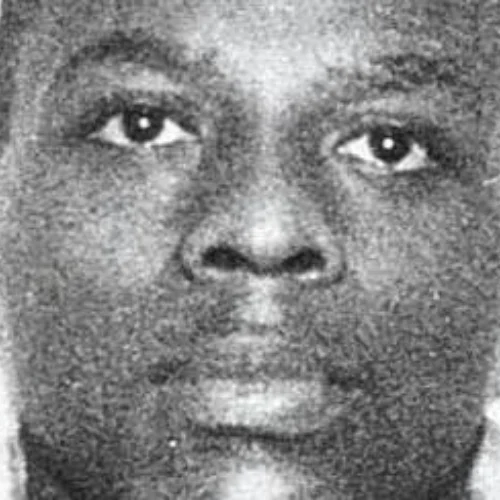
d: 1992
Summary
Name:
Willie Leroy JonesYears Active:
1983Status:
ExecutedClass:
MurdererVictims:
2Method:
Shooting / ArsonDeath:
September 15, 1992Nationality:
USAd: 1992
Summary: Murderer
Name:
Willie Leroy JonesStatus:
ExecutedVictims:
2Method:
Shooting / ArsonNationality:
USADeath:
September 15, 1992Years Active:
1983"Killing me is not the answer. There's a place called prison."
— Willie Leroy Jones
Willie Leroy Jones was born in 1958 and was raised in Virginia. Prior to the murders that brought him national attention, he had no documented criminal record significant enough for prosecutors to pursue the "future dangerousness" aggravating factor during sentencing. Instead, the Commonwealth of Virginia sought the death penalty solely based on the extreme brutality involved in the murders themselves.
By his mid-twenties, Jones was acquainted with the Adkins family through one of their sons. The elderly couple, Graham and Myra Adkins, lived a quiet life in rural Charles City County, east of Richmond. The familiarity Jones had with the family later became an important aspect of the prosecution's case because it demonstrated that he knew the victims personally and was aware that they kept substantial savings inside their home.
On May 13, 1983, Willie Leroy Jones carried out one of the most brutal double homicides in Virginia's modern death penalty era. Graham Adkins, 77, and his wife, Myra Adkins, 78, lived in Charles City County, Virginia. Jones knew the couple through their son and was aware that they kept a large amount of cash in a safe inside their residence.
According to evidence presented at trial, Jones disguised himself and hitchhiked to the Adkins residence. After arriving at the home, he falsely identified himself as an undercover police officer searching for missing children. Believing they were assisting law enforcement, the elderly couple allowed him inside their home.
Once inside, Jones initiated the robbery. He first confronted Graham Adkins and shot him in the head at close range. Medical testimony later established that Mr. Adkins died quickly from the gunshot wound.
Jones then turned his attention to Myra Adkins. Rather than killing her immediately, he restrained the 78-year-old woman by binding her hands and gagging her. He forced a sock into her mouth and secured it with tape wrapped around her face and neck. He then placed her inside a bedroom closet.
While Mrs. Adkins remained alive, Jones shot her in the head at point-blank range. The wound, however, was not immediately fatal. The medical examiner testified that she likely would have survived for several hours after the gunshot injury.
Jones proceeded to douse both victims and portions of the home with accelerants, including kerosene. He set the residence on fire in an apparent effort to destroy evidence and conceal the crimes.
Investigators later concluded that Myra Adkins remained alive after the fire was started. Despite her severe injuries, she ultimately died from carbon monoxide poisoning caused by smoke inhalation while trapped inside the burning closet. The fire also inflicted extensive burns upon her body. The Virginia Supreme Court later cited these facts when affirming that the murder involved aggravated battery, torture, and depravity beyond that necessary to commit homicide. Jones blasted open the couple's bedroom safe and stole more than $30,000 in cash the Adkinses' life savings.
Neighbors eventually noticed smoke coming from the house at approximately 1:00 p.m. When they forced entry into the locked residence, they discovered Graham Adkins near the doorway and managed to remove his body before flames prevented further rescue attempts. Authorities later recovered the remains of Myra Adkins inside the burned closet.
Following the murders, Jones used the stolen money to finance a spending spree that eventually took him to Hawaii. Law enforcement authorities later arrested him there and returned him to Virginia to face prosecution.
In January 1984, a jury in York County convicted Jones of two counts of capital murder. The prosecution pursued the death penalty under Virginia's "vileness" aggravating factor rather than future dangerousness because Jones had no significant prior criminal record.
The jury determined that Jones's conduct was "outrageously or wantonly vile, horrible or inhuman" and sentenced him to death for both murders.
Jones appealed his convictions and sentences through the Virginia Supreme Court, the United States Supreme Court, state habeas proceedings, federal habeas review, and multiple subsequent appeals. Each court ultimately upheld both the convictions and death sentences. The Fourth Circuit repeatedly concluded that the extreme nature of the crimes satisfied Virginia's capital sentencing requirements.
During his years on death row at Mecklenburg Correctional Center, Jones became one of six condemned inmates who escaped from the facility on May 31, 1984. The escape generated national attention due to the prison's reputation as one of the country's most secure death row facilities. Jones and the other escapees were recaptured the following day without causing additional deaths. Several of the escapees were later executed.
After nearly a decade of appeals, the United States Supreme Court declined to intervene. Virginia Governor L. Douglas Wilder also denied clemency. Willie Leroy Jones was executed by electrocution at the Greensville Correctional Center in Jarratt, Virginia, on September 15, 1992. He was 34 years old. He was pronounced dead at 11:08 p.m.
