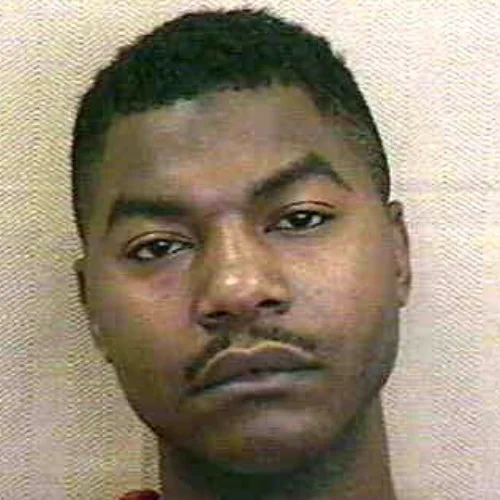
1968 - 2003
Summary
Name:
William Quentin JonesNickname:
Quentin JonesYears Active:
1987Birth:
August 29, 1968Status:
ExecutedClass:
MurdererVictims:
1Method:
ShootingDeath:
August 22, 2003Nationality:
USA1968 - 2003
Summary: Murderer
Name:
William Quentin JonesNickname:
Quentin JonesStatus:
ExecutedVictims:
1Method:
ShootingNationality:
USABirth:
August 29, 1968Death:
August 22, 2003Years Active:
1987Date Convicted:
November 3, 1987“I’m sorry. I’m gone. I love you.”
— William Quentin Jones
William Quentin Jones was born on August 29, 1968. Publicly available records describe him as having grown up in a difficult family environment marked by poverty, instability, and exposure to substance abuse and mental illness. Defense materials presented during later clemency efforts stated that Jones spent much of his childhood in poverty and often had to search for food for himself and his siblings. His mother reportedly struggled with heroin addiction, while his father was diagnosed with paranoid schizophrenia and spent significant time in mental hospitals.
Court records show that Jones’ parents testified about his upbringing during sentencing proceedings. Evidence presented by the defense stated that Jones had witnessed and experienced domestic violence during childhood. His father had a history of schizophrenia and repeated admissions to Dorothea Dix Hospital, while his mother had substance abuse problems.
By the time of the murder, Jones was 18 years old. Psychological testimony described him as emotionally immature, socially impaired, and affected by substance use and stress. Clinical psychologist Dr. Billie Corder testified that Jones was not psychotic but had impaired social functioning and problem-solving ability. She characterized him as having a borderline personality with antisocial tendencies and stated that his emotional responses were unstable. His full-scale IQ was reported as 92, within the average range.
Psychiatrist Dr. Selwyn Rose also testified that Jones knew the difference between right and wrong and understood what he was doing at the time of the crime. However, he believed Jones had a borderline personality disorder, immaturity, impulsiveness, substance abuse issues, and passive-aggressive traits. Dr. Rose stated that Jones’ ability to conform his conduct to the law was impaired, though he also believed Jones had the specific intent to commit robbery.
Evidence also showed that shortly before the crime, Jones had experienced several stressful events. His girlfriend, who was pregnant with his child, had ended their relationship three days before the robbery and her mother had made him leave the home. Some witnesses testified that Jones used cocaine, marijuana, and alcohol on the evening before the crime and appeared nervous, jittery, emotional, and highly intoxicated.
Jones had no significant prior criminal record before the murder. However, evidence showed that on February 20, 1987, he and two others broke into Triangle Jewelry and Pawn in Cary and stole several firearms, including the Uzi 9 mm weapon later used in the convenience store shooting.
Shortly before midnight on March 7, 1987, several employees and customers were inside a Fast Fare convenience store on North Person Street in Raleigh, North Carolina. Among them was Edward “Ed” Peebles, a 32-year-old plasterer who had stopped at the store for coffee, and Orlando Watson, another customer.
Jones entered the store wearing a ski mask and carrying an Uzi 9 mm semiautomatic pistol. Before announcing the robbery, he began firing the weapon. The store’s security camera recorded much of the incident. Evidence showed that Jones fired six shots when he entered the store and discharged a total of ten rounds during the robbery.
Two bullets struck Orlando Watson, who survived after surgery. Jones then announced, “this is a stickup,” turned toward Edward Peebles, and shot him twice while Peebles was standing in a corner of the store. The bullets ruptured Peebles’ aorta and a major vein, causing massive internal bleeding and death.
After shooting Peebles, Jones ordered Charles Taylor, the man behind the counter, to open the cash register and threatened to kill him. When Taylor could not open it, Jones grabbed the register and pulled it by its cord out of the store, dragging it around a fence and to the side of the building.
Police quickly responded to the scene. Officer Tony Wisniewski arrived first, gathered a description of the gunman, and radioed for backup. Officers found scratches and gouges along the sidewalk where the register had been dragged. A short distance from the store, officers spotted Jones near a low wall. He fled, but police chased and arrested him at a nearby ballpark.
Near the area where Jones was first seen, police recovered a ski mask, a red North Carolina State sweatshirt, the cash register, and the Uzi semiautomatic weapon. Investigators also found shell casings and bullets at the crime scene. Analysis of the cash register later revealed at least one of Jones’ fingerprints.
After his arrest, Jones confessed. He later entered conditional guilty pleas to first-degree murder, robbery with a dangerous weapon, and assault with a deadly weapon with intent to kill inflicting serious injury. The pleas preserved his right to appeal the trial court’s decision denying his motion to suppress his confession.
On November 3, 1987, Jones was sentenced to death in Wake Superior Court for the murder of Edward Peebles. He also received consecutive prison sentences of 40 years for robbery with a dangerous weapon and 20 years for the assault on Orlando Watson.
On October 3, 1990, the North Carolina Supreme Court affirmed Jones’ convictions but vacated his death sentence because of an error in the capital sentencing instructions. The case was sent back for a new capital sentencing hearing.
At the new sentencing hearing, prosecutors again presented the security-camera footage and evidence showing that Jones fired the weapon before announcing the robbery. The jury found aggravating circumstances, including that the murder was committed for pecuniary gain and was part of a course of conduct involving other violent crimes. Jones was again sentenced to death, and the North Carolina Supreme Court affirmed the new death sentence on May 6, 1994.
Jones pursued state and federal appeals for years. His attorneys raised issues including claims about juror misconduct, alleged suppression of exculpatory evidence, and the proportionality of the death sentence. The United States Supreme Court denied review on June 23, 2003, clearing the way for the execution.
Jones’ lawyers sought clemency from North Carolina Governor Mike Easley, arguing that Jones had been only 18 at the time of the crime, had no prior violent record, had shown remorse, and had changed during his years in prison. Easley denied clemency.
William Quentin Jones was executed by lethal injection at Central Prison in Raleigh, North Carolina, on August 22, 2003. He was pronounced dead at 2:16 a.m. His final meal was a tossed salad with shredded carrots and cheese, thousand island dressing, and a soda. Before the execution, Jones repeatedly looked toward the victim’s family and said he was sorry. His final words were reported as: “I’m sorry. I’m gone. I love you.”
