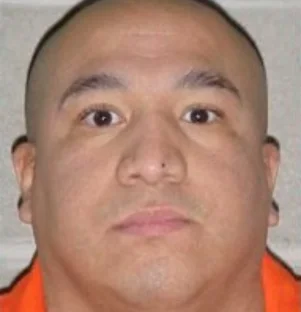
b: 1968
Summary
Name:
William Herrera Jr.Years Active:
1988Birth:
May 01, 1968Status:
ImprisonedClass:
MurdererVictims:
1Method:
ShootingNationality:
USAb: 1968
Summary: Murderer
Name:
William Herrera Jr.Status:
ImprisonedVictims:
1Method:
ShootingNationality:
USABirth:
May 01, 1968Years Active:
1988Date Convicted:
October 5, 1989''Shoot him.''
— William Herrera Jr.
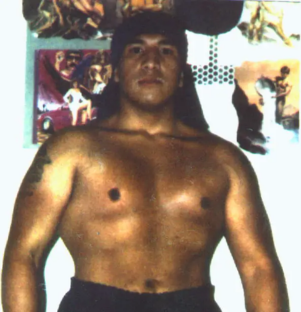
William Diaz Herrera Jr. was born on May 1, 1968. The confirmed case record identifies him as the son of William Diaz Herrera Sr. and the brother of Mickel Herrera and Ruben Herrera. The family members were together on the afternoon of June 30, 1988, when the crime occurred in southwest Phoenix, Arizona.
At the time of the murder, Herrera Jr. was 20 years old. The Arizona Supreme Court later noted his age as a statutory mitigating factor during review of his death sentence. The trial court also considered evidence related to his family background and alcoholism, but determined that those factors were not strong enough to outweigh the aggravating circumstance found in the case.
The court record shows that Herrera Jr. was with his father, his brothers Mickel and Ruben, and Mickel’s girlfriend, Mary Cardenas, on the afternoon of June 30, 1988. They traveled in two vehicles, a gold Plymouth Duster and a blue Chevrolet pickup. After purchasing beer and wine, the group stopped on a relatively isolated dirt road in southwest Phoenix because the Duster had overheated. They parked near trees and brush, drank alcohol, talked, and listened to music.
According to the Arizona Supreme Court record, Herrera Jr. told police that he had consumed a large amount of alcohol that day. At trial, evidence also showed that he did not have identification when Deputy Marconnet approached the group. Herrera Jr. admitted that he was concerned about being arrested because he had outstanding “tickets and stuff” and had previously jumped probation in Texas on burglary charges.
On June 30, 1988, Maricopa County Sheriff’s Deputy Vernon P. Marconnet was on duty when a motorist reported seeing two vehicles near a canal area in southwest Phoenix. The vehicles appeared to the motorist as though they might have been involved in an accident. Deputy Marconnet went to the location to investigate.
When Deputy Marconnet arrived, he radioed in information about the vehicles and the people at the scene. He approached the group and asked whether there was a problem. Mickel Herrera told him that the Duster had overheated. Deputy Marconnet then asked the men for identification.
Ruben Herrera provided identification, but William Herrera Jr. said he had lost his identification. Mickel Herrera also said he could not provide identification because his wallet had been stolen. When Deputy Marconnet asked William Herrera Sr. for identification, Herrera Sr. became belligerent and refused. Deputy Marconnet placed Herrera Sr. in the back of his patrol car and called for backup.
After Herrera Sr. was placed in the patrol car, Deputy Marconnet spoke with Mary Cardenas, who was seated in the pickup, and asked her to look for the vehicle registration. While she searched the glove compartment, the confrontation between Deputy Marconnet and Herrera Jr. escalated. According to the court record, Herrera Jr. began arguing with the deputy when the deputy again asked him for identification.
The argument became physical. Herrera Jr. grabbed Deputy Marconnet and struck him. After the deputy recovered, Herrera Jr. struck him again. At about the same time, Ruben Herrera released William Herrera Sr. from the patrol car. Herrera Sr. then joined the struggle and struck or kicked Deputy Marconnet.
During the fight, Mickel Herrera was urged to take Deputy Marconnet’s revolver. The court record states that Mickel managed to take the deputy’s gun and ordered him to get on the ground. Herrera Jr. also took Deputy Marconnet’s portable radio and threw it at him. The radio struck the deputy in the forehead and caused a deep wound.
Deputy Marconnet was forced onto the ground while Mickel Herrera held the revolver. The evidence showed that the deputy was conscious, vulnerable, and aware of the danger. Herrera Jr. later told police that Deputy Marconnet had his hands in front of his face and was pleading. The court record also noted that powder burns on the deputy’s hands were consistent with his hands being raised defensively when the shot was fired.
Mary Cardenas testified that she heard Mickel say “freeze” and then saw him pointing the gun at Deputy Marconnet. She testified that Herrera Jr. shouted for Mickel to shoot the deputy. Mickel’s first two police interviews were also consistent with the account that he fired the shot. At trial, Mickel later changed his account and claimed that Herrera Sr. had fired the weapon, but the court noted that Herrera Jr.’s own actions were not disputed: he fought with the deputy, helped overpower him, took and threw the radio, and admitted that he urged Mickel to shoot.
Deputy Marconnet was shot once in the head at close range. The medical examiner determined that the fatal wound was a gunshot to the right eye. Backup officers later arrived and found Deputy Marconnet dead at the scene. His clothing was dirty and disheveled, his name plate was bent, and physical evidence at the scene confirmed that a struggle had occurred.
After the shooting, the Herrera family fled in the two vehicles. Herrera Jr. left with Ruben Herrera and William Herrera Sr. in the Duster and headed toward Casa Grande. During the drive, a tire blew out. Herrera Jr. and Ruben separated from Herrera Sr. and spent the night wandering before going to the Casa Grande hospital. From there, Herrera Jr. called police and turned himself in.
William Herrera Jr., Mickel Herrera, and William Herrera Sr. were indicted on charges of first-degree murder, aggravated robbery, and kidnapping. Herrera Jr. and Mickel were tried together, while Herrera Sr.’s trial was handled separately. Ruben Herrera entered a plea agreement and received a 10-year prison sentence.
Herrera Jr.’s trial began on September 5, 1989. On October 5, 1989, a Maricopa County jury convicted him of first-degree felony murder, aggravated robbery, and kidnapping. The felony murder conviction was based on the underlying crimes of aggravated robbery and kidnapping. On December 21, 1989, the trial court sentenced Herrera Jr. to death for the murder, 10 years in prison for aggravated robbery, and life imprisonment for kidnapping, with the sentences to run consecutively.
At sentencing, the court found the murder had been committed in an especially cruel manner. The court considered Herrera Jr.’s age, alcohol use, and background as mitigating evidence, but ruled that the mitigating factors were not sufficient to call for leniency. On March 4, 1993, the Arizona Supreme Court affirmed Herrera Jr.’s convictions and sentences. The United States Supreme Court later denied certiorari on November 1, 1993. Herrera Jr.’s death sentence was later vacated on May 20, 2002.
