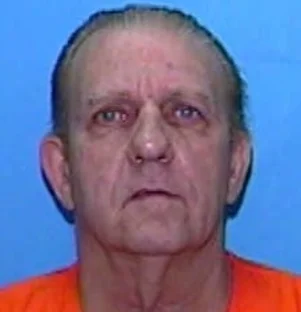
1942 - 2024
Summary
Name:
William Harold KelleyNickname:
Bill KelleyYears Active:
1966Birth:
December 08, 1942Status:
DeceasedClass:
MurdererVictims:
1Method:
Stabbing / ShootingDeath:
December 03, 2024Nationality:
USA1942 - 2024
Summary: Murderer
Name:
William Harold KelleyNickname:
Bill KelleyStatus:
DeceasedVictims:
1Method:
Stabbing / ShootingNationality:
USABirth:
December 08, 1942Death:
December 03, 2024Years Active:
1966Date Convicted:
March 30, 1984William Harold Kelley was born on December 8, 1942. Kelley became connected to the murder through John Sweet, a criminal associate who was involved with Maxcy’s wife, Irene Von Maxcy. Prosecutors said Irene and Sweet wanted Charles Von Maxcy killed so they could benefit from his estate and live together. Sweet later claimed that Kelley was one of the men hired to carry out the murder.
The case took many years to reach Kelley. Sweet was first prosecuted, but his conviction did not stand after appeal. Irene received immunity in the murder investigation but was later convicted of perjury related to her testimony. Kelley was not arrested until June 16, 1983, almost seventeen years after Maxcy was killed.
Kelley’s case remained controversial because Sweet testified after receiving immunity and because some physical evidence had been destroyed before Kelley was indicted. A federal court granted Kelley a new trial in 2002, but the Eleventh Circuit reversed that decision in 2004 and reinstated his conviction and death sentence.
Kelley stayed on Florida’s death row for decades. He filed several appeals, including a DNA-testing request that was denied in 2009. He was never executed. In December 2024, he reportedly died in Florida prison after about 40 years on death row.
On October 3, 1966, Charles Von Maxcy was killed at his residence in Highlands County, Florida. Court and capital-case summaries state that Maxcy was both stabbed and shot. Prosecutors later alleged that the killing was a murder-for-hire arranged by Maxcy’s wife, Irene Von Maxcy, and her lover, John Sweet. The alleged motive was financial: Irene and Sweet planned to live together using money from Maxcy’s estate, which was reported to be worth more than one million dollars.
According to the prosecution theory, Sweet arranged for outside men to kill Maxcy. Kelley was later accused of being one of the hired killers. The case did not move quickly against him. Sweet was originally charged and tried for Maxcy’s murder. His first trial ended in a mistrial, and he was later convicted and sentenced to life imprisonment. That conviction was reversed on appeal, and the state did not ultimately secure a final murder conviction against Sweet. Irene Von Maxcy’s testimony also became a major issue in the earlier proceedings. She later recanted parts of her testimony regarding Sweet’s involvement and served prison time for perjury.
For more than a decade after the killing, the case remained unresolved against Kelley. In 1981, Sweet became involved in other criminal activity in Massachusetts. Facing legal pressure, he gave authorities information about the Maxcy murder in exchange for immunity. Kelley’s later prosecution was based largely on Sweet’s testimony.
Kelley was arrested on June 16, 1983. FBI agents apprehended him at a motel in Tampa, Florida. Litigation summaries later stated that when Kelley was told about the indictment, he made statements suggesting knowledge of the Maxcy case and commented on the state’s ability to obtain a conviction. Those statements later became disputed at trial.
Kelley’s first trial in January 1984 ended in a mistrial after the jury could not reach a verdict. His second trial began in March 1984. On March 30, 1984, the jury found him guilty of first-degree murder. On April 2, 1984, the jury recommended death by a vote of 8 to 4, and the trial court sentenced Kelley to death. The sentencing court found aggravating circumstances, including pecuniary gain and a cold, calculated, and premeditated killing, while noting one mitigating circumstance: Kelley was the only person punished for Maxcy’s murder among several people allegedly connected to the crime.
Kelley appealed to the Florida Supreme Court. He argued, among other issues, that evidence useful to his defense had been destroyed before his indictment, that a witness should not have been allowed to testify about an alleged conversation, that the court failed to answer a jury question properly, and that his constitutional rights had been violated. On April 10, 1986, the Florida Supreme Court affirmed his conviction and death sentence. The U.S. Supreme Court denied review later that year.
The case continued through decades of postconviction litigation. In 2002, the federal district court granted habeas relief, finding that undisclosed evidence and other issues undermined the conviction and sentence. The court ordered a new trial. However, in 2004, the Eleventh Circuit reversed that ruling. The appellate court held that the withheld documents did not establish Brady violations sufficient to overturn the conviction, either individually or cumulatively. As a result, Kelley’s conviction and death sentence were reinstated.
Kelley later pursued DNA testing. In 2009, the Florida Supreme Court rejected his DNA-related appeal and affirmed the denial of his motion. He remained under a death sentence afterward. Kelley was not executed. He reportedly died in Florida Department of Corrections custody on December 3, 2024, after spending approximately 40 years on death row.
