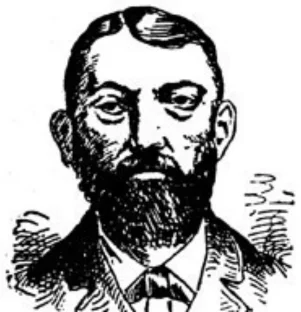
1860 - 1890
Summary
Name:
William Francis KemmlerNickname:
John HartYears Active:
1889Birth:
May 09, 1860Status:
ExecutedClass:
MurdererVictims:
1Method:
BeatingDeath:
August 06, 1890Nationality:
USA1860 - 1890
Summary: Murderer
Name:
William Francis KemmlerNickname:
John HartStatus:
ExecutedVictims:
1Method:
BeatingNationality:
USABirth:
May 09, 1860Death:
August 06, 1890Years Active:
1889Date Convicted:
May 10, 1889“Take it easy and do it properly. I’m in no hurry.”
— William Francis Kemmler
Born in Philadelphia in 1860, William Kemmler later moved to Buffalo, New York, where he worked as a poor, poorly educated vegetable vendor who drank heavily. On March 29, 1889, following a drunken argument, Kemmler brutally killed his common-law wife, Matilda “Tillie” Ziegler, with a hatchet.
Kemmler’s case became historically famous because New York had recently chosen electrocution over hanging, viewing it as a more humane execution method. Kemmler was the first person sentenced to die this way. His lawyers fought the sentence all the way to the U.S. Supreme Court, but the Court ruled that the electric chair did not violate the Constitution.
On March 29, 1889, William Kemmler killed Matilda “Tillie” Ziegler in Buffalo, New York. Ziegler was his common-law wife. The attack followed an argument, and Kemmler used a hatchet to beat her to death. After the killing, he reportedly told others that he had killed her. He was arrested and prosecuted for murder.
Kemmler’s trial moved quickly. On May 10, 1889, he was convicted of first-degree murder. Three days later, he was sentenced to death. Because New York had replaced hanging with electrocution, Kemmler became the first person scheduled to be executed in an electric chair.
His lawyers appealed, arguing that execution by electricity was cruel and unusual. George Westinghouse, whose alternating-current system was being used in the electric-chair controversy, supported efforts against the execution. Thomas Edison, who promoted direct current and opposed alternating current, supported the state’s position and the use of AC in the chair. The case became tied to the wider public conflict over electricity known as the “War of the Currents.”
On May 23, 1890, the U.S. Supreme Court rejected Kemmler’s constitutional challenge in In re Kemmler. The Court held that the punishment was not unconstitutional simply because it used a new method, and the execution was allowed to proceed.
On the morning of August 6, 1890, Kemmler was prepared for execution at Auburn Prison. He was awakened early, dressed, prayed, and had the top of his head shaved so the electrode could be attached. Witnesses described him as calm and cooperative. Before the current was applied, he told officials to take their time and do the work properly.
The first electrical current was applied for about 17 seconds. Officials initially believed Kemmler was dead, but witnesses soon noticed that he was still breathing. Doctors then ordered the current turned on again. A stronger current was applied, and the second attempt caused visible burning and a strong odor in the execution chamber. The whole process lasted several minutes and was widely reported as a failed and disturbing execution.
William Kemmler died on August 6, 1890. His execution became one of the most infamous in American death-penalty history because it was the first legal execution by electric chair and because it did not produce the quick, clean death its supporters had promised. Britannica describes the execution as a “grotesque and fiery botch.”
