Summary
Name:
William Erwin WalkerNickname:
Machine Gun WalkerYears Active:
1945 - 1946Status:
DeceasedClass:
MurdererVictims:
1Method:
ShootingNationality:
USASummary: Murderer
Name:
William Erwin WalkerNickname:
Machine Gun WalkerStatus:
DeceasedVictims:
1Method:
ShootingNationality:
USAYears Active:
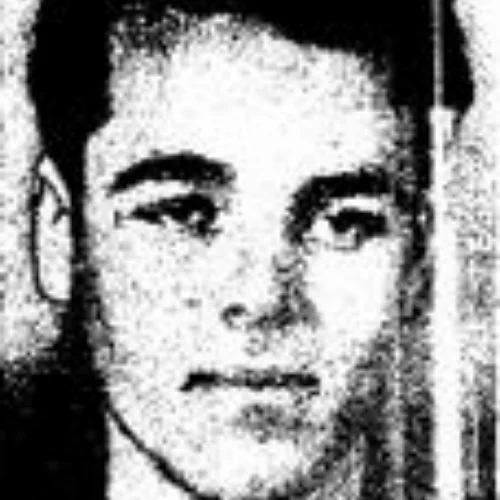
1945 - 1946William Erwin Walker, also known as Erwin M. Walker and Machine Gun Walker, was born in 1918 to Weston and Irene L. Walker. He grew up in Glendale, California, where he lived with his parents and a sister. Despite being nearsighted, Walker was a good athlete. He was described by those who knew him as gentle, affectionate, and considerate.
Walker's father worked as an engineer for the Los Angeles County flood control, and his uncle was a lawyer who used to be the Chief Deputy District Attorney in Los Angeles. In school, Walker graduated from Hoover School and attended the California Institute of Technology for one year, where he excelled in electronics and radio engineering.
After completing his education, Walker became a radio operator and police dispatcher for the Glendale Police Department. His skills in electronics led him to be drafted into the U.S. Army during World War II. He served in Australia and later at officer candidate school in Brisbane, where he graduated as a second lieutenant. He was assigned to various locations, including Wake Island and Leyte Island in the Philippines, where he managed a radar unit.
While on duty, Walker faced a traumatic event when his close friend was killed during a Japanese attack. This experience deeply impacted him, causing feelings of guilt and leading to a change in his demeanor. After returning from the war, family members noticed he seemed morose, secretive, and troubled. He chose not to return to his former job with the Glendale Police Department.
After his discharge from the Army in late 1945, Walker engaged in several burglaries. He began to exhibit troubling behavior, distancing himself from family and friends. He rented an apartment and took up various jobs but quit them frequently. Walker also began to collect weapons, which raised concerns among those around him.
Walker’s life after the war was marked by a downward spiral of crime, which he justified by claiming he needed money for his ideas for developing technology. His early life was characterized by confusion and conflict, showing early signs of the troubled path he would take.
William Erwin Walker, also known as Erwin M. Walker and "Machine Gun Walker," committed his murder on June 5, 1946. The victim was Loren Cornwell Roosevelt, a 43-year-old State Highway Patrol Officer in Los Angeles County, California.
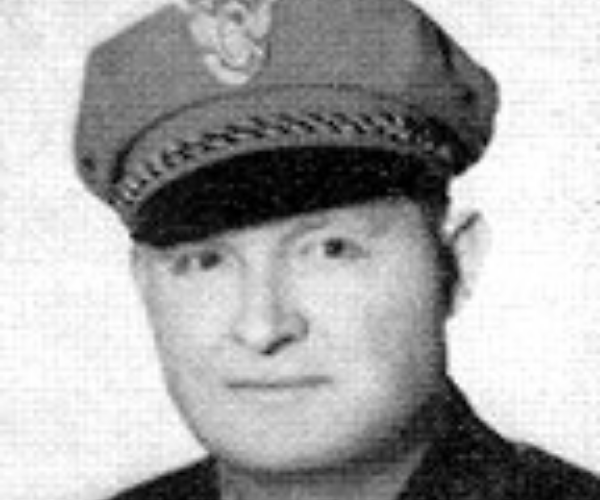
On that early morning, Walker went to a meat market in Glendale. He used bolt cutters to break the lock on the store and then hid the bolt cutters in a nearby area. After a short drive around the block to check for witnesses, he returned to the store. While outside, he noticed a person with a flashlight and recognized him as Officer Roosevelt. The officer approached Walker’s car and asked what he was doing in the area.
When Roosevelt asked for identification, Walker pulled out a loaded .45 caliber pistol and aimed it at the officer. Roosevelt responded by drawing his service revolver. Walker shot the officer twice and then fled the scene, using storm drains to escape.
Despite being critically wounded, Officer Roosevelt was able to provide a description of the shooter and details about their encounter. He later died in the hospital from multiple gunshot wounds. Walker left behind his car, which contained numerous stolen tools and weapons, including a Thompson submachine gun.
After the murder, Walker avoided police for several months, committing more robberies and crimes. He was eventually arrested on December 20, 1946, following a tip-off about his whereabouts. When police entered his apartment, a struggle occurred, and Walker was apprehended after being shot by officers.
During his arrest and transport to the hospital, Walker made several admissions, including acknowledging the murder of Officer Roosevelt. He later stood trial and pleaded not guilty by reason of insanity, but was ultimately found sane and sentenced to death. His sentence was later commuted to life in prison. Walker was released on parole in 1974 and lived under a new identity until his death in 1982.
