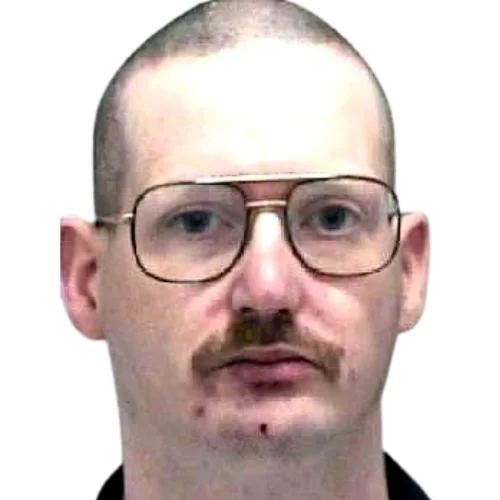
Summary
Name:
William David Riley Sr.Nickname:
Bill RileyYears Active:
2000Status:
Awaiting ExecutionClass:
Mass MurdererVictims:
3Method:
ArsonNationality:
USASummary: Mass Murderer
Name:
William David Riley Sr.Nickname:
Bill RileyStatus:
Awaiting ExecutionVictims:
3Method:
ArsonNationality:
USAYears Active:
2000Date Convicted:
March 14, 2003“My son plays with lighters.”
— William David Riley Sr.
William David Riley Sr. was born in 1968. He grew up in a household where relationships were difficult. As a teenager, he had trouble in school and did not complete his education. He eventually earned an eleventh-grade education. Throughout his life, he faced various personal challenges.
Riley had a difficult upbringing that included strained family ties. His childhood experiences may have influenced his relationships with others in his later life. He became a father and had three children: Ashley, William, and Samantha. At some point, he became estranged from their mother, which led to him having full custody of the children. This responsibility included raising them, which was a significant part of his life.
As an adult, Riley struggled with financial issues. Reports indicate he faced hardships that included being denied welfare benefits and dealing with eviction from his home. This financial strain created tension in his relationships, particularly with his girlfriend. The instability in his life may have affected his ability to manage his role as a parent.
Despite these challenges, he lived with his girlfriend and their three children. The family resided in a trailer in Pine Valley Mobile Home Park in Newton County, Georgia. The neighborhood was close-knit, and neighbors would often observe interactions between Riley and his family.
Riley’s life took a tragic turn on August 16, 2000, when a fire broke out in their trailer. This incident marked a critical point in his life, leading to significant legal consequences and changes.
On August 16, 2000, a fire broke out in a trailer at Pine Valley Mobile Home Park in Newton County, Georgia. The trailer was rented by William David Riley Sr. He lived there with his girlfriend and his three young children: Ashley, who was 6, William, who was 5, and Samantha, who was just 3 years old. On that day, all three adults in the trailer managed to escape the fire, but tragically, the three children died.
Witnesses reported that during the fire, William Riley displayed unusual behavior. Neighbors noted that he seemed unemotional and cold. At one point, he banged on the trailer's walls and yelled for his children. Fearing that his car, parked nearby, might explode, he moved it away. He also attempted to break a window to reach the children by throwing a piece of wood through it. Despite his actions, he did not manage to rescue them.
In the days leading up to the fire, Riley had experienced significant personal difficulties. He faced financial troubles and was scheduled for an eviction hearing just two days after the fire. People close to him reported hearing arguments between him and his girlfriend. Some accounts described threats he made regarding his children, which added context to the events that transpired.
Shortly after the fire, authorities began questioning Riley. He was told that they had evidence pointing to arson. In a moment of apparent stress, he broke down and made a false confession. This false confession would later be pivotal in his trial and conviction. Police had not allowed him a phone call or provided legal assistance during his questioning.
The trial that followed was brief, taking only 42 minutes for the jury to convict him on three counts of malice murder and two counts of first-degree arson. William Riley was sentenced to death by lethal injection and was placed on Death Row. He has faced denial of one appeal and has several more appeals available to him. Throughout the legal proceedings, questions arose about his rights and the fairness of his trial, particularly regarding the validity of his confession and the interrogation tactics used by law enforcement.
