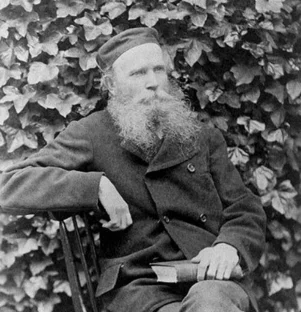
1834 - 1920
Summary
Name:
William Chester MinorNickname:
W. C. MinorYears Active:
1872Birth:
June 22, 1834Status:
DeceasedClass:
MurdererVictims:
1Method:
ShootingDeath:
March 26, 1920Nationality:
USA1834 - 1920
Summary: Murderer
Name:
William Chester MinorNickname:
W. C. MinorStatus:
DeceasedVictims:
1Method:
ShootingNationality:
USABirth:
June 22, 1834Death:
March 26, 1920Years Active:
1872“A man. I should not be such a coward as to shoot a woman.”
— William Chester Minor
William Chester Minor was born on June 22, 1834, in Ceylon, now Sri Lanka. His parents were Congregationalist missionaries from New England. When he was 14, he was sent to the United States for education and later studied medicine at Yale. He graduated from Yale Medical School in 1863.
After completing his medical training, Minor joined the Union Army during the American Civil War. He served as an army surgeon and was present during the Battle of the Wilderness in 1864. Later accounts state that his military service exposed him to severe battlefield injuries and traumatic events. Some biographies also describe one incident in which he had to brand a deserter, an experience later linked by writers to his paranoid delusions.
After the war, Minor’s mental health declined. By 1868, he had been admitted to St. Elizabeths Hospital in Washington, D.C., then known as the Government Hospital for the Insane. After about 18 months, he was released and later resigned from the army with a pension.
In 1871, Minor traveled to London, hoping the change would help his condition. Instead, his paranoia continued. He lived in Lambeth and became convinced that people were entering his room or following him. He carried a revolver for protection because of these delusions.
On February 17, 1872, William Chester Minor was living in Lambeth, London. Early that morning, he believed someone had broken into his room. Acting under this delusion, he went into the street armed with a revolver.
At about 2:00 a.m., George Merritt, a brewery worker employed at the Lion Brewery, was walking to work along Belvedere Road. Minor did not know Merritt. Believing Merritt was connected to the imagined intrusion, Minor fired several shots at him. Merritt was struck in the neck and died soon afterward.
Police quickly reached the area. A constable stopped Minor and asked who had fired the gun. Minor admitted that he had fired it. When asked who he had shot at, he said, “A man. I should not be such a coward as to shoot a woman.” The revolver was still warm when police took it from him.
George Merritt was 34 years old. He had been on his way to work to support his wife, Eliza, and their children. Contemporary reports stated that Eliza was pregnant at the time and was left in serious financial distress after his death.
Minor was arrested the same day and held before trial. At court, evidence showed that he was suffering from serious delusions. He believed people were entering his room and persecuting him, even though no real intruder had been found.
In April 1872, Minor was found not guilty on grounds of insanity. The court ordered that he be detained “until Her Majesty’s Pleasure be known.” On April 17, 1872, he was sent to Broadmoor Criminal Lunatic Asylum in Berkshire.
While detained at Broadmoor, Minor was given relatively comfortable rooms because he had a U.S. Army pension and was considered manageable inside the institution. He bought books, read widely, and later became one of the most important volunteer contributors to the Oxford English Dictionary. He collected thousands of quotations showing how words were used in older books.
Minor remained at Broadmoor for decades. His mental health later worsened, and in 1902 he seriously mutilated himself during a period of delusion. In 1910, after efforts by supporters including Oxford English Dictionary editor James Murray, he was allowed to return to the United States.
After returning to America, Minor was again placed in St. Elizabeths Hospital. He was later moved to a hospital in Hartford, Connecticut. He died on March 26, 1920, at age 85.
