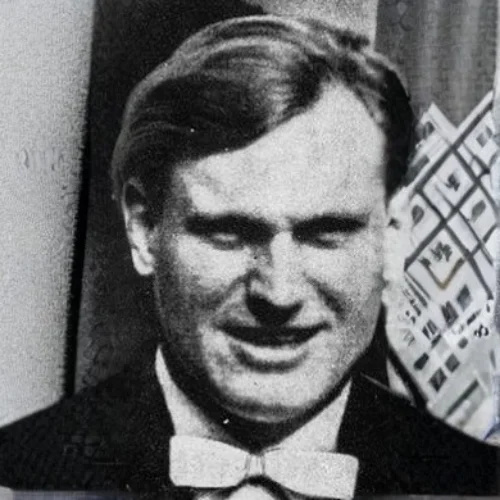
1921 - 1964
Summary
Name:
Walter SeifertYears Active:
1964Birth:
June 19, 1921Status:
DeceasedClass:
Mass MurdererVictims:
10Method:
Arson / Stabbing / BludgeoningDeath:
June 11, 1964Nationality:
Germany1921 - 1964
Summary: Mass Murderer
Name:
Walter SeifertStatus:
DeceasedVictims:
10Method:
Arson / Stabbing / BludgeoningNationality:
GermanyBirth:
June 19, 1921Death:
June 11, 1964Years Active:
1964“Whoever denies me the protection of the law forces the cudgel into my hand.”
— Walter Seifert
Willi Walter Seifert was born on 19 June 1921 in Bickendorf, a district of Cologne, during the final years of the Weimar Republic. He was raised in a working‑class household as the son of a glass grinder and grew up with one brother. Between 1927 and 1935, Seifert attended the local Volksschule in Ehrenfeld before entering an apprenticeship as a metalworker at a machine factory. He successfully completed his training in 1939, shortly before the outbreak of the Second World War.
In 1941, Seifert was conscripted into the Luftwaffe. He attended the Air Force’s weaponry technology school for approximately one year and later served in an anti‑aircraft unit. By the end of the war, he held the rank of sergeant. Following Germany’s defeat, Seifert spent several months as a prisoner of war before being released back into civilian life.
After returning to Cologne, Seifert initially found work at a car manufacturing plant. On 14 November 1945, he joined the Schutzpolizei. Less than a year later, in August 1946, he was treated for a bronchial illness. Subsequent medical examinations diagnosed him with tuberculosis of the right lung. As a result, Seifert was declared unfit for police service and was dismissed on 30 September 1946.
From that point forward, Seifert became increasingly consumed by disputes with state authorities over financial support and compensation. He believed his illness was directly linked to his wartime imprisonment and repeatedly accused government agencies and medical professionals of denying him rightful benefits. In 1953, medical authorities determined that his tuberculosis was inactive and assessed his reduced earning capacity at 30 percent. However, they rejected any causal link between his condition and his military service, a decision Seifert vehemently contested.
Throughout the 1950s, Seifert authored lengthy letters to public offices, physicians, and social institutions, alleging falsified medical reports and systematic injustice. In August 1954, a public health officer described him as mentally manipulative and lacking motivation to recover, recommending further observation. A later psychiatric evaluation documented unusual behavior, disorganized thinking, inappropriate emotional responses, and persistent persecutory beliefs directed at doctors and officials. He was assessed as suffering from paranoid schizophrenia but was not committed, as he did not present as immediately violent.
During this period, Seifert privately expressed disturbing ideas, including plans to abduct young girls and confine them in a makeshift cellar attached to his motorbike trailer. These statements were not reported to authorities at the time.
On 7 October 1955, Seifert married Renata Urszula. Her death on 11 February 1961, caused by an embolism during a premature childbirth, marked a significant turning point in his life. Seifert blamed her death on medical malpractice and became fixated on what he described as institutional murder. He wrote a 120‑page manifesto accusing doctors and society at large of criminal negligence and moral corruption, equating the medical profession with mass killing. His writings increasingly framed violence as a justified response to perceived injustice.
In the months leading up to June 1964, Seifert secretly constructed a collection of improvised weapons. These included a spear fashioned from a broom handle and metal scraper, a crude mace, and a homemade flamethrower built from an insecticide sprayer filled with a mixture of motor oil and paint thinner.
On the morning of 11 June 1964, shortly after 9:00 a.m., Seifert approached the Catholic elementary school located on Volkhovener Weg in the Volkhoven district of Cologne. The school complex consisted of a main building and four wooden barracks, housing approximately 380 pupils and eight teachers.
Seifert entered the schoolyard through a side gate, carrying his weapons. Crossing guards briefly questioned him, mistaking him for a maintenance worker, but he ignored them and blocked the gate behind him. He then moved toward a girls’ physical education class being led outdoors by teacher Anna Langohr. When Langohr addressed him, Seifert activated his flamethrower and began attacking both the teacher and the children.
He proceeded to one of the wooden barracks, smashing windows and directing flames into classrooms. As children attempted to flee, he continued his assault until the device ran out of fuel. He then discarded the flamethrower. When teacher Gertrud Bollenrath exited onto the schoolyard, Seifert stabbed her fatally in the chest with his spear.
Seifert next approached another barrack where teachers Ursula Kuhr and Mrs. Kunz attempted to keep the doors shut. He forced one door open, causing Kuhr to fall down the steps. After she landed outside the building, Seifert stabbed her multiple times, inflicting fatal injuries.
After fleeing the school grounds, Seifert attempted suicide by ingesting the insecticide E605. The poison was diluted, delaying its effects. He was pursued by bystanders and attempted to fend them off with his spear near a railway embankment. Police arrived at 9:38 a.m., and Seifert attempted to stab one officer before being shot in the leg and subdued.
He was transported to the University Hospital in Cologne‑Lindenthal, where he was questioned several times. Seifert died later that evening at 8:35 p.m. from the effects of the poison.
The attack lasted approximately fifteen minutes. Two teachers died from their injuries, and eight pupils later succumbed to severe burns sustained during the assault.
