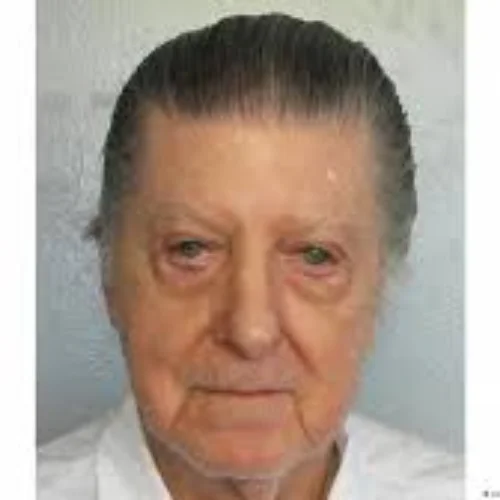
1935 - 2018
Summary
Name:
Walter Leroy Moody Jr.Nickname:
Roy MoodyYears Active:
1989Birth:
March 24, 1935Status:
ExecutedClass:
MurdererVictims:
2Method:
BombingDeath:
April 19, 2018Nationality:
USA1935 - 2018
Summary: Murderer
Name:
Walter Leroy Moody Jr.Nickname:
Roy MoodyStatus:
ExecutedVictims:
2Method:
BombingNationality:
USABirth:
March 24, 1935Death:
April 19, 2018Years Active:
1989Date Convicted:
June 28, 1991Walter Leroy Moody Jr. was born on March 24, 1935, in Georgia. He was known as a technically skilled man with an interest in mechanical devices and explosives. Before the 1989 mail-bomb murders, Moody had already been convicted in a bomb-related case. In 1972, an explosive device went off in his home and injured his wife. He was later convicted of possessing a bomb and served time in federal prison.
After that conviction, Moody became resentful toward the federal court system. He tried to challenge the conviction, but his efforts failed. Investigators later believed this anger became the main motive for the 1989 bombings.
Although Judge Robert Vance was not responsible for Moody’s original conviction, Moody connected him to the federal appeals system. Prosecutors later argued that Moody targeted Judge Vance as part of a revenge attack against the courts.
In December 1989, Walter Leroy Moody Jr. mailed a series of package bombs to targets in the southeastern United States. The first deadly package was sent to Judge Robert Smith Vance, a judge on the United States Court of Appeals for the Eleventh Circuit. On December 16, 1989, Judge Vance opened the package in the kitchen of his home in Mountain Brook, Alabama. The bomb exploded, killing him instantly and seriously injuring his wife, Helen Vance.
Two days later, on December 18, 1989, another package bomb exploded in Savannah, Georgia. The victim was attorney Robert E. Robinson, a civil rights lawyer. Like the Vance bombing, the device had been sent through the mail. The similarity between the two attacks quickly led investigators to treat the cases as connected
Two other bombs were also sent but did not kill anyone. One was mailed to the federal courthouse in Atlanta, Georgia, and was intercepted before it exploded. Another was mailed to the Jacksonville, Florida, office of the NAACP and was also recovered before detonation. The U.S. Department of Justice’s Office of Inspector General described the case as involving four mail bombs: two fatal bombs and two intercepted unexploded bombs.
The bombings initially led investigators to consider whether the motive was racial or connected to civil rights, because Robinson was a civil rights lawyer and another bomb had been sent to an NAACP office. Investigators later determined that this was likely a false trail. Prosecutors concluded that Moody sent the additional bombs to make the attacks appear racially motivated and to distract attention from his personal motive against the court system.
A major break came when bomb experts noticed similarities between the 1989 devices and a bomb connected to Moody in the early 1970s. This led investigators to examine Moody’s past, his court history, his purchases, phone calls, contacts, and movements. The FBI, ATF, postal inspectors, IRS, U.S. Marshals, state police, and other agencies were involved in the investigation. The FBI later described the case as one of the largest investigations in its history.
Moody was arrested in July 1990. In 1991, he was convicted in federal court on more than 70 charges connected to the mail-bomb murders and the attempted bombings. The U.S. Attorney’s Office later stated that a federal jury convicted Moody on 71 charges related to the pipe-bomb murders of Judge Vance and Robert Robinson.
The federal case resulted in life imprisonment, but Alabama later prosecuted Moody separately for the murder of Judge Vance. In 1997, he was sentenced to death in Alabama. He remained on death row for more than two decades.
Walter Leroy Moody Jr. was executed by lethal injection at Holman Correctional Facility in Alabama on April 19, 2018. He was 83 years old. At the time, he was reported as the oldest inmate executed in the United States since the modern death penalty era began.
