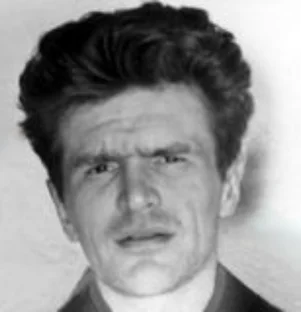
b: 1938
Summary
Name:
Walter KelbachYears Active:
1966Birth:
June 25, 1938Status:
DeceasedClass:
Mass MurdererVictims:
6Method:
Stabbing / ShootingNationality:
USAb: 1938
Summary: Mass Murderer
Name:
Walter KelbachStatus:
DeceasedVictims:
6Method:
Stabbing / ShootingNationality:
USABirth:
June 25, 1938Years Active:
1966“I don’t mind people getting hurt because I just like to watch it.”
— Walter Kelbach
Walter B. Kelbach was born on June 25, 1938. Before the 1966 killings, he had already spent time in prison and was described in later crime accounts as an ex-convict with a history of alcohol and drug abuse. Kelbach became closely associated with Myron Lance, who was 25 years old during the killings. The two men were described in later accounts as relatives or close companions, and both had criminal backgrounds before the murders.
Their relationship became central to the case because the crimes were carried out together over several days in December 1966. The available case material does not provide a full verified account of Kelbach’s childhood, education, family background, or earlier convictions, so those details should not be expanded beyond what can be supported.
By December 1966, Kelbach and Lance were moving through Salt Lake County while committing robberies, abductions, sexual assaults, and murders. Their crimes began with attacks on young service station attendants working alone at night. After police became aware of the pattern and gas stations were warned or closed, the pair changed their approach and targeted a taxi driver and then a tavern. The short time span and multiple locations support Kelbach’s classification as a spree killer.
He and Lance were originally sentenced to death, but their death sentences were vacated after the U.S. Supreme Court’s 1972 ruling that invalidated existing death penalty schemes. In 1977, Kelbach was resentenced to two consecutive life sentences. In 1992, the Utah parole board decided that he and Lance should remain in prison for the rest of their natural lives. Kelbach died in prison in 2018 after serving about 51 years.
Walter B. Kelbach and Myron Lance began their killing spree in December 1966 in the Salt Lake City area. Their first known victim was 18-year-old service station attendant Steven or Stephen Shea. On December 17, 1966, Kelbach and Lance stopped at a gas station where Shea was working alone. They robbed him, forced him into their vehicle, and drove him to a remote area. The supplied case material states that Shea was sexually assaulted and then stabbed to death. His body was left on a desert road.
The next victim was Michael Holtz, also an 18-year-old service station attendant. On December 18, 1966, Kelbach and Lance abducted Holtz from another Salt Lake City-area filling station. Like Shea, Holtz was taken away from the station, sexually assaulted, and stabbed. Later reporting states that his nude body was dumped near a highway in Summit County. The two service station robberies together brought in less than $300.
After the first two killings, police recognized a connection between the service station attacks and warned local businesses. Kelbach and Lance then changed their method. On December 21, 1966, they got into a taxi driven by Grant Creed Strong. Strong became suspicious of his passengers and contacted his dispatcher. According to the supplied account, he arranged to signal trouble by pressing his microphone button. After Kelbach and Lance threatened him and demanded money, Strong gave them the small amount of cash he had. He was then shot in the head and killed.
Later that same night, Kelbach and Lance went to Lally’s Tavern, also identified in some accounts as Lolly’s Tavern, near the Salt Lake City airport. Utah Supreme Court records describe the tavern attack in detail. The court stated that Lance shot James Sizemore in the head, announced a robbery, and took money from the cash drawer. A burst of gunfire followed. Fred Lillie and Beverly Mace were killed, and another patron was wounded. Kelbach and Lance fled but were arrested at a roadblock a few hours later.
Kelbach and Lance were convicted of first-degree murder and sentenced to death. The Utah Supreme Court affirmed their convictions and death sentences in 1969. After the U.S. Supreme Court’s 1972 decision in Furman v. Georgia, Kelbach’s death sentence was vacated. The Utah courts later resentenced him to two consecutive life sentences on February 25, 1977.
Kelbach remained incarcerated for decades. In 1992, he and Lance appeared before the Utah Board of Pardons and Parole. The board decided that both men should spend their natural lives in prison, citing the intentional and premeditated nature of the crimes and the deaths of multiple vulnerable victims over a five-day period. Lance died in prison in 2010. Kelbach remained incarcerated afterward and died in 2018 after serving approximately 51 years.
