
2000 - 2018
Summary
Name:
Vladislav Igorevich RoslyakovYears Active:
2018Birth:
May 02, 2000Status:
DeceasedClass:
Mass MurdererVictims:
20Method:
Shooting / bombingDeath:
October 17, 2018Nationality:
Russia2000 - 2018
Summary: Mass Murderer
Name:
Vladislav Igorevich RoslyakovStatus:
DeceasedVictims:
20Method:
Shooting / bombingNationality:
RussiaBirth:
May 02, 2000Death:
October 17, 2018Years Active:
2018Vladislav Igorevich Roslyakov was born on 2 May 2000 in Kerch, Crimea. He was the only child of his parents. When Roslyakov was around ten years old, his parents separated following a serious head injury suffered by his father, after which his father became disabled, began abusing alcohol, and subjected Roslyakov, his mother, and other relatives to domestic abuse.
Roslyakov performed poorly in school, showed little interest in his studies, and had few close friends. His interests reportedly included weapons and video games. In 2015, he enrolled at Kerch Polytechnic College to study as an electrician. While attending college, he developed an increasing fascination with weapons and explosives. He was known to bring a bayonet knife to classes, once discharged pepper spray in a classroom without explanation, and periodically attended a shooting club.
Roslyakov’s mother, a Jehovah’s Witness, reportedly imposed strict controls on his social life, searched his belongings, and restricted his access to computers and social activities until he turned sixteen. In the years leading up to the attack, Roslyakov participated in online communities dedicated to serial and mass killers and discussed themes of suicide, violence, and resentment toward others on social media.
In the days before the attack, he reportedly expressed disbelief in an afterlife and destroyed personal belongings, including a Bible and his mobile phone. Acquaintances later stated that he harbored intense resentment toward his college and some of its staff.
On 17 October 2018, Vladislav Roslyakov carried out a mass shooting and bombing at Kerch Polytechnic College in Kerch, Crimea. He had legally purchased a 12‑gauge Hatsan Escort pump‑action shotgun on 8 September 2018 and bought 150 rounds of ammunition on 13 October 2018, after obtaining a valid firearm permit and completing the required training.
Roslyakov entered the college building at approximately 10:02 a.m. Witnesses described him moving calmly through hallways while firing indiscriminately at students and staff. He also shot at doors, computer equipment, and fire extinguishers. Surveillance footage later showed him wearing black trousers and a white T‑shirt printed with the word “НЕНАВИСТЬ” (“HATRED”).
During the attack, Roslyakov detonated at least one improvised explosive device, including a nail bomb, in the college dining area. Authorities later stated that additional explosive devices were found and deactivated on campus. The assault lasted for more than 15 minutes, during which emergency services were dispatched. Reports varied regarding response times, with estimates ranging from 10 to 15 minutes, despite a police station being located nearby.
The attack ended when Roslyakov retreated to the college library and shot himself in the mouth, dying at the scene.
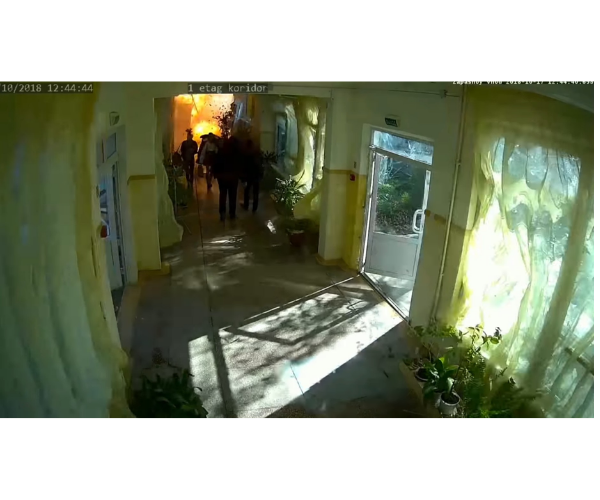
A total of 20 people were killed, including 15 students and 5 staff members, and at least 67 others were injured, with several in critical condition. Russian authorities later stated that Roslyakov acted alone. The Investigative Committee initially classified the incident as terrorism before reclassifying it as the murder of two or more persons committed in a generally dangerous way.
The massacre became the deadliest school attack in Russia or Ukraine since the 2004 Beslan school siege. In the months and years that followed, investigators documented multiple copycat plots and attacks inspired by Roslyakov. The event prompted national mourning, renewed debate over firearm access, online radicalization, and youth violence, and led to changes in security procedures at educational institutions across Crimea and Russia.
