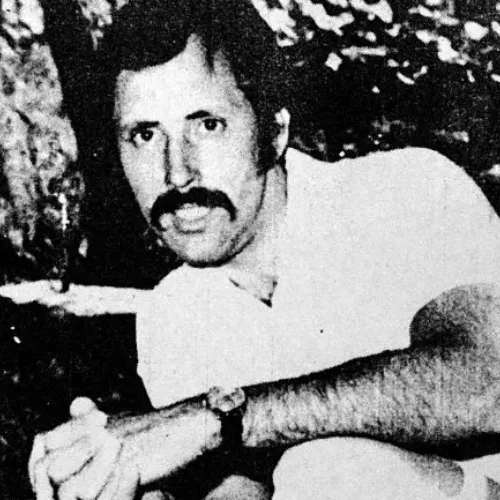
1949 - 2018
Summary
Name:
Vítor JorgeNickname:
Mata-Sete (Kill-Seven)Years Active:
1987Birth:
November 02, 1949Status:
DeceasedClass:
Mass MurdererVictims:
7Method:
Shooting / Stabbing / BeatingDeath:
December 29, 2018Nationality:
Portugal1949 - 2018
Summary: Mass Murderer
Name:
Vítor JorgeNickname:
Mata-Sete (Kill-Seven)Status:
DeceasedVictims:
7Method:
Shooting / Stabbing / BeatingNationality:
PortugalBirth:
November 02, 1949Death:
December 29, 2018Years Active:
1987Date Convicted:
January 20, 1988“I kill my wife because she wasn't a virgin when she married, I kill my daughters so they won't be prey for the pleasures of the world, I spare my son to perpetuate the seed of evil.”
— Vítor Jorge
Vítor Jorge was born on November 2, 1949. After his birth, his parents abandoned him and he was raised by his grandparents.
When he was five years old, he saw his uncle drown his two baby daughters. At eight, his mother took him in and he went to live in Lisbon. His mother worked as a prostitute. Because they had only one room, he was forced to watch her having sex with clients.
He met his future wife, Carminda, in 1968. They had three children: two daughters and a son. Professionally, Vítor worked as a banker at Banco Espírito Santo e Comercial de Lisboa and worked part-time as a wedding and christening photographer. He had several lovers, and one of them was Leonor dos Santos Tomás.
Vítor Jorge (November 2, 1949 – January 5, 2019), known as Mata-sete, killed seven people and attempted to kill one more on March 1, 1987. Investigators believed his crimes had religious and misogynistic motives. The case became known as the Osso da Baleia Beach Massacre because some of the murders happened on that beach.
On the morning after Leonor dos Santos Tomás’s birthday, Leonor and four friends left a celebration. They hitched a ride with Vítor Jorge, who had been hired to photograph the party. He convinced them to go to Praia do Osso da Baleia. At the beach he shot José Pacheco first. He then shot Leonor, Luís Teixeira, and Maria do Céu Araújo. Isabel Moreia escaped briefly, but he followed her and beat her to death with a piece of pine wood. Police later found a note next to Leonor’s body that read: "This was because you wanted it. The others were dragged along."
After the beach killings, Vítor Jorge went to his house and attacked his family. He took his wife to a pine forest and stabbed her. He then killed his eldest daughter, Anabela. He attacked his middle daughter, Sandra, but she managed to fight him and escape wounded. The youngest son, age ten, was asleep at home and was not harmed. Sandra got help from a passing motorist, who called the National Republican Guard. A man who had once been Vítor’s neighbor found him hiding in a ruined shack two days later. Vítor Jorge was arrested and taken to a hospital because he had a fever and a leg injury.
Vítor Jorge kept a diary in which he wrote about his afflictions and criminal plans. He sent the diary to the newspaper Correio da Manhã a day after the massacre. The envelope containing the diary had a note that read: "There is always a little reason in madness." The diary included plans for other attacks, a list of twelve people he wanted to kill, and attempts to predict newspaper headlines. It also blamed women and named reasons for killing his family, including the sentence: "I kill my wife because she wasn't a virgin when she married, I kill my daughters so they won't be prey for the pleasures of the world, I spare my son to perpetuate the seed of evil." Medical reports, salary receipts, and messages to public figures were found in the diary. The last entry read: "Regrettably consummated and thickened the beginning of my madness. Doctors, do you believe it now? Whalebone."
Psychiatric experts gave differing opinions on his mental state. One hospital director said he suffered from a serious mental illness, and some newspapers reported schizophrenia. Another psychiatrist said psychotic symptoms were not present. The court found him criminally responsible. The trial began on December 15, 1987. On January 20, 1988, he was sentenced to pay compensation to his surviving children and given prison terms for each homicide that totaled 119 years. Changes in the criminal code reduced the maximum effective sentence to 20 years, and he was sent to Coimbra Prison.
On October 3, 2001, Vítor Jorge was released on parole for good behavior after serving 14 years and six months. He moved to his son’s house in England and later emigrated to Corsica. He died in Corsica on January 5, 2019, after several suicide attempts.
