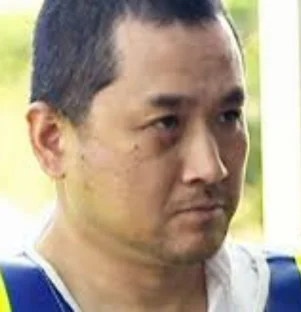
b: 1968
Summary
Name:
Vince Weiguang LiNickname:
Will BakerYears Active:
2008Birth:
April 30, 1968Status:
ReleasedClass:
MurdererVictims:
1Method:
StabbingNationality:
Canadab: 1968
Summary: Murderer
Name:
Vince Weiguang LiNickname:
Will BakerStatus:
ReleasedVictims:
1Method:
StabbingNationality:
CanadaBirth:
April 30, 1968Years Active:
2008“Please kill me.”
— Vince Weiguang Li
Vince Weiguang Li was born on April 30, 1968, in Dandong, China. He studied computer-related subjects and worked in China before moving to Canada in 2001. He later became a Canadian citizen. Li lived in different Canadian cities, including Winnipeg and Edmonton. He worked several regular jobs, including at a church, as a forklift operator, in fast food, at Wal-Mart, and delivering newspapers. People who knew him through work described him as quiet and hardworking.
Li was married to a woman named Anna, but their relationship became strained as his mental health appeared to decline. He had symptoms of untreated mental illness before the attack, including hearing voices and having paranoid or religious delusions. Shortly before the murder, Li was traveling by Greyhound bus toward Winnipeg. On July 29, 2008, he got off the bus in Erickson, Manitoba, stayed overnight near a grocery store, and later sold his laptop to a teenager. The next evening, he boarded another bus heading toward Winnipeg. Tim McLean was already on that bus.
Li and McLean did not know each other. The attack was later found to have happened while Li was suffering from severe mental illness. At trial, psychiatric evidence stated that Li believed McLean was a threat and that voices had told him to kill him. The court accepted that Li did not understand the moral wrongfulness of his actions at the time.
On July 30, 2008, Tim McLean was traveling home to Winnipeg on a Greyhound Canada bus after working as a carnival worker in Alberta. He was 22 years old. The bus was traveling along the Trans-Canada Highway near Portage la Prairie, Manitoba, when Vince Weiguang Li, who had boarded earlier in Manitoba, moved and sat beside him.
McLean was reportedly resting with headphones on when Li suddenly attacked him with a knife. Witnesses said the attack began without warning. Passengers fled from the bus as the violence continued. The bus driver and others tried to respond, but Li remained inside the bus with the victim.
Li repeatedly stabbed McLean. After the passengers escaped, Li continued to mutilate McLean’s body. Witnesses and later reports stated that Li beheaded McLean and showed the severed head to people outside the bus. Reports also stated that police later observed Li continuing to cut and defile the body while officers were outside the vehicle.
The Royal Canadian Mounted Police responded to the scene. A standoff followed while Li remained on the bus. The driver had disabled the bus to prevent it from being driven away, and passengers stayed outside while police secured the area. Li was arrested in the early hours of July 31, 2008, after he tried to escape through a bus window. He was subdued, taken into custody, and later charged with second-degree murder.
The killing received wide national and international attention because of its public setting and the condition of McLean’s body. Greyhound Canada also withdrew an advertising campaign after the case because one of its ads had used the phrase “bus rage,” which was considered inappropriate after the murder.
Li’s court proceedings began in March 2009. He pleaded not criminally responsible due to mental disorder. The court heard psychiatric evidence that Li had schizophrenia and that he believed God had ordered him to kill McLean because McLean was a force of evil. Justice John Scurfield ruled that Li did not understand that his actions were morally wrong and accepted the not-criminally-responsible finding on March 5, 2009.
Because Li was found not criminally responsible, he was not given a prison sentence for murder. Instead, he was sent to the Selkirk Mental Health Centre in Manitoba and placed under the authority of the provincial review board. Under Canadian law, his continued detention or release conditions depended on whether he was considered a significant threat to public safety.
Over the following years, Li was gradually granted more freedom as mental-health professionals and the review board assessed his progress. In 2010, he was allowed supervised walks on hospital grounds. In 2012, he was allowed escorted community trips in Selkirk. In 2013, he was granted supervised full-day trips to places including Lockport and Winnipeg.
In later years, Li legally changed his name to Will Baker. By 2015, he had been granted permission to move to a group home in the community. He later sought more independence, and by 2017 the review board considered whether he should receive an absolute discharge.
On February 10, 2017, Manitoba’s Criminal Code Review Board granted Baker an absolute discharge. This meant he was no longer under review-board supervision and was no longer subject to criminal-law monitoring conditions connected to the NCR finding. The board stated that the evidence did not show that he posed a significant threat to public safety at that time.
