They Will Kill You Logo
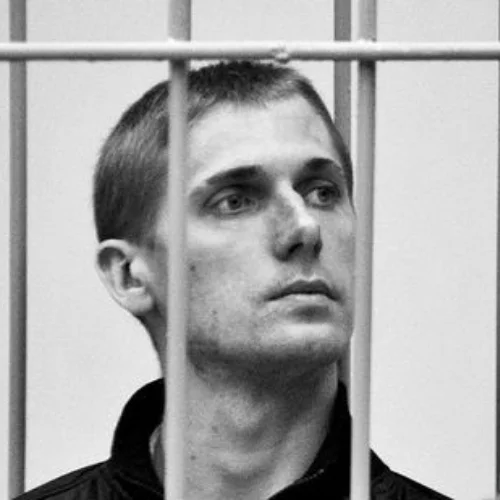
Uladzislau Kavalyou

Uladzislau Kavalyou

Summary

Name:

Uladzislau Kavalyou

Years Active:

2011

Status:

Executed

Class:

Mass Murderer

Victims:

15

Method:

Bombing

Nationality:

Belarus
Uladzislau Kavalyou

Uladzislau Kavalyou

Summary: Mass Murderer

Name:

Uladzislau Kavalyou

Status:

Executed

Victims:

15

Method:

Bombing

Nationality:

Belarus

Years Active:

2011

bio

Suggest an update

Uladzislau Kavalyou was born in 1986 in Vitebsk, a regional city in northeastern Belarus. He was raised by a single mother and spent his childhood and adolescence in Vitebsk. Public records indicate no history of violent crime, extremist activity, or formal military or explosives training prior to 2011.

After completing his basic education, Kavalyou worked in various forms of employment. In 2010, he relocated from Vitebsk to Minsk in search of work opportunities, reflecting a broader pattern of internal migration common among young Belarusians at the time. He maintained contact with acquaintances from his hometown, including Dzmitry Kanavalau, whom he had known prior to the events of 2011.

Available information suggests that Kavalyou lived an otherwise ordinary life in Minsk. No evidence was publicly disclosed indicating that he had previously participated in bomb‑making or acts of violence. His role in the 2011 Minsk Metro bombing would later become a central point of legal and political controversy, particularly regarding the extent of his involvement and the reliability of his confession.

Like what you're reading?
Join our mailing list for exclusive content you won't find anywhere else. You'll receive a free chapter from our e-book, increased chances to win our t-shirt giveaways, and special discounts on merch.

murder story

Belarus experienced several bomb‑related incidents in the years preceding 2011, none of which resulted in fatalities. These included explosions in Vitebsk in 2005 and a bombing during Independence Day celebrations in Minsk on 4 July 2008, which injured dozens of people. Those earlier incidents were initially classified as acts of hooliganism rather than terrorism.

By 2011, Belarus was facing a severe economic crisis alongside political unrest following the December 2010 presidential election. Protests against President Alexander Lukashenko’s government had been met with mass arrests, and public tension remained high in the months leading up to April 2011.

On 11 April 2011 at approximately 17:55 local time, an improvised explosive device detonated at Kastryčnickaja station in the Minsk Metro during evening rush hour. The explosion occurred beneath a bench near the inbound track as a train arrived, killing 15 people and injuring at least 315 others.

The device was packed with metal fragments, including nails and ball bearings, and produced a blast equivalent to approximately five to seven kilograms of TNT. The explosion caused extensive structural damage and shrapnel injuries, marking the deadliest terrorist incident in Belarusian history.

On 13 April 2011, Belarusian authorities arrested Uladzislau Kavalyou along with Dzmitry Kanavalau. According to investigators, Kavalyou had shared a rented apartment in Minsk with Kanavalau between 10 and 13 April 2011, after Kanavalau traveled from Vitebsk to the capital.

Authorities announced that both men had confessed shortly after their arrest. Kavalyou was accused of acting as an accomplice, with prosecutors alleging that he had prior knowledge of the planned bombing and had failed to report it. Investigators also claimed that fingerprint evidence linked Kanavalau to earlier bombings, while Kavalyou’s role was framed as supportive rather than technical.

Psychiatric evaluations conducted during the investigation found Kavalyou to be legally sane. Throughout the proceedings, he reportedly denied direct participation in constructing or detonating the explosive device, a position that would later be cited by his family and human rights groups.

The trial of Kavalyou and Kanavalau began in September 2011 and concluded in November 2011. Both men were found guilty of terrorism and related charges. Uladzislau Kavalyou was sentenced to death by shooting, despite arguments raised by defense lawyers and international observers questioning the sufficiency and handling of evidence against him.

The trial attracted significant international attention and condemnation. The European Union, human rights organizations, and Belarusian opposition figures criticized the proceedings, citing concerns over due process, the speed of the investigation, and the reliance on confessions.

Uladzislau Kavalyou was executed by shooting in March 2012. As per Belarusian practice, the exact date, time, and location of the execution were not disclosed. His family was not informed in advance. On 17 March 2012, his mother received official notification stating that the sentence had been carried out.

The executions of Kavalyou and Kanavalau prompted renewed international criticism of Belarus’s use of capital punishment. On 15 March 2012, the European Parliament passed a resolution condemning the executions and calling on Belarus to impose a moratorium on the death penalty.

The conviction and execution of Uladzislau Kavalyou remain among the most controversial criminal cases in modern Belarusian history. Skepticism surrounding the official account has persisted due to the political climate at the time, the secrecy surrounding the executions, and questions about the reliability of confessions.

The United Nations Security Council issued a statement condemning the bombing, referring to it as an “apparent terrorist attack,” language that was notable for its caution. International analysts and journalists continued to debate the investigation’s conclusions, while Belarusian authorities maintained that the case had been conclusively solved.

Uladzislau Kavalyou is officially recorded as an accomplice convicted in the 2011 Minsk Metro bombing, an event that reshaped Belarus’s security policies and intensified international scrutiny of its justice system.