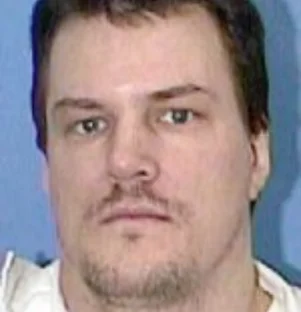
1966 - 2005
Summary
Name:
Troy Albert KunkleNickname:
No Remorse killerYears Active:
1984Birth:
May 27, 1966Status:
ExecutedClass:
MurdererVictims:
1Method:
ShootingDeath:
January 25, 2005Nationality:
USA1966 - 2005
Summary: Murderer
Name:
Troy Albert KunkleNickname:
No Remorse killerStatus:
ExecutedVictims:
1Method:
ShootingNationality:
USABirth:
May 27, 1966Death:
January 25, 2005Years Active:
1984Date Convicted:
February 22, 1985“I would like to ask you to forgive me. I made a mistake and I am sorry for what I did.”
— Troy Albert Kunkle
Troy Albert Kunkle was born on May 27, 1966, in Nuremberg, West Germany, where his father was serving in the United States military. During his childhood, the family eventually settled in San Antonio, Texas. As a child and teenager, Kunkle experienced significant behavioral and academic difficulties. School records showed repeated disciplinary problems involving truancy, smoking, and classroom disruption. His conduct became serious enough that he was transferred to Center School, a specialized educational program intended for students with emotional and behavioral difficulties. Despite intervention efforts, he continued to struggle socially and academically.
By adolescence, Kunkle had developed substance-abuse problems involving alcohol and drugs. He eventually dropped out of school during the eleventh grade and spent much of his time associating with other troubled young people. Although he accumulated a reputation as a difficult and disruptive teenager, he had no known adult criminal convictions before the murder of Stephen Wayne Horton.
Years after his conviction, mental-health evaluations conducted during post-conviction proceedings concluded that Kunkle suffered from serious psychiatric problems. Defense experts reported symptoms consistent with schizophrenia and argued that warning signs of mental illness had been present before the murder. Appeals and clemency petitions also presented evidence that both of his parents had histories of mental-health problems and that Kunkle had been exposed to violence, instability, and neglect throughout much of his childhood.
According to defense submissions, Kunkle's personal difficulties intensified during his late teenage years. Heavy alcohol consumption and drug use became a regular part of his lifestyle, and on the night of the murder he and his companions were under the influence of alcohol and LSD. Although these issues became central to later appeals seeking to spare him from execution, the courts ultimately upheld his conviction and death sentence.
On the evening of August 11, 1984, Troy Kunkle and his companions left San Antonio for Corpus Christi. During the drive, Russell Stanley removed a loaded .22-caliber pistol from the glove compartment and fired it into the air. Stanley and Aaron Adkins discussed committing robberies, and the group later stopped at a convenience store in Corpus Christi.
At the convenience store, Stanley and Adkins robbed a man at gunpoint and obtained only seven dollars. After that robbery, the group continued driving around in search of another victim. They saw Stephen Wayne Horton, a 31-year-old man, walking along a road. Lora Lee Zaiontz asked Horton if he needed a ride. Horton initially resisted, saying he lived nearby, but he was eventually persuaded to get into the car. He sat in the front passenger seat next to Zaiontz.
Once Horton was inside the vehicle, Stanley placed the pistol against the back of his head and demanded his wallet. When Horton turned to look back, Zaiontz scratched his face and told him to face forward. Kunkle then told Stanley to kill Horton. Stanley refused, saying a killing was not necessary. Kunkle took the gun from Stanley, placed it against Horton’s head, and said they were going to take him behind the area and blow his brains out.
Adkins drove the car behind a skating rink. There, Kunkle shot Horton once in the back of the head with the .22-caliber pistol. After the shooting, the group opened the car door and pushed Horton’s body out. Zaiontz took Horton’s wallet, which contained a small amount of money, reported in later accounts as $13.
After the killing, Kunkle reportedly quoted the line, “another day, another death, another sorrow, another breath,” from Metallica’s song “No Remorse.” Witness testimony also stated that he called the murder “beautiful.” These statements became a major part of the public reporting around the case.
Kunkle was arrested later in August 1984. On October 17, 1984, a Nueces County grand jury indicted him for the capital murder of Stephen Horton. On February 22, 1985, a jury found him guilty. On March 1, 1985, after a punishment hearing, the court sentenced him to death.
His accomplices received lesser sentences. Lora Lee Zaiontz was convicted of capital murder and sentenced to life imprisonment. Russell Stanley and Aaron Adkins were convicted of murder and each received 30-year prison sentences. Tom Sauls was not charged in connection with the murder and testified about the events.
Kunkle’s conviction and sentence were affirmed by the Texas Court of Criminal Appeals in 1986. He filed state and federal appeals over the following years, including claims involving mitigation evidence, mental-health issues, substance abuse, and ineffective assistance of counsel. The Fifth Circuit later denied federal relief, and the U.S. Supreme Court declined to stop the execution.
Troy Albert Kunkle was executed by lethal injection at the Huntsville Unit in Texas on January 25, 2005. He was 38 years old. In his final statement, he apologized to Stephen Horton’s family, asked for forgiveness, expressed love to his own witnesses, and recited the Lord’s Prayer. He was pronounced dead at 8:12 p.m.
