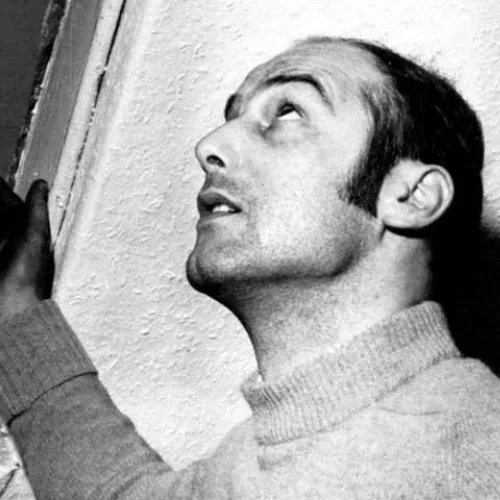
1945 - 2012
Summary
Name:
Trevor Joseph HardyNickname:
The Beast of Manchester / The Monster of ManchesterYears Active:
1974 - 1976Birth:
June 11, 1945Status:
DeceasedClass:
Serial KillerVictims:
3Method:
Stabbing / StrangulationDeath:
September 25, 2012Nationality:
United Kingdom1945 - 2012
Summary: Serial Killer
Name:
Trevor Joseph HardyNickname:
The Beast of Manchester / The Monster of ManchesterStatus:
DeceasedVictims:
3Method:
Stabbing / StrangulationNationality:
United KingdomBirth:
June 11, 1945Death:
September 25, 2012Years Active:
1974 - 1976Trevor Joseph Hardy was born on June 11, 1945, in Newton Heath, Manchester, England. He was the second youngest of four children, raised in a working-class neighbourhood of terraced houses. From a young age, Hardy showed signs of antisocial behaviour — bullying classmates at primary school, progressing to theft and burglary in his teens. His criminal record escalated significantly when, at age 27, he was convicted of wounding a man with a pickaxe and sentenced to five years in prison, which he served at Albany Prison on the Isle of Wight. He was released on parole in November 1974. Within weeks, he claimed his first life.
Janet Lesley Stewart — December 31, 1974
On New Year's Eve 1974, Hardy encountered 15-year-old Janet Lesley Stewart in Newton Heath. She had been dropped off nearby and was on her way to meet her boyfriend at a works party. Hardy, who had become fixated on a schoolgirl he was infatuated with, reportedly mistook Janet for her. He stabbed her in the throat, killing her, then transported her body in his car and buried her in a shallow grave in a clay pit in Newton Heath. What the article in its original form did not mention is what came next: Hardy returned to the grave multiple times over the following months, armed with an axe, to dismember the body. He removed her head and discarded it in a nearby lake, and buried her hands and feet separately at other locations. He also removed a ring from her finger and gave it to another girl as a "love token." Janet remained listed as a missing person for nearly two years — police had no idea she was dead.
Wanda Skala — July 19, 1975
On July 19, 1975, 17-year-old Wanda Skala was walking home along Lightbowne Road in Moston after her shift as a barmaid at the Lightbowne Hotel. Hardy attacked her, striking her over the head with a brick, robbing her, and sexually assaulting her. He strangled her and bit off one of her nipples. Her naked body was later found partially buried on a nearby construction site. Hardy kept her blood-stained clothes and handbag as trophies.
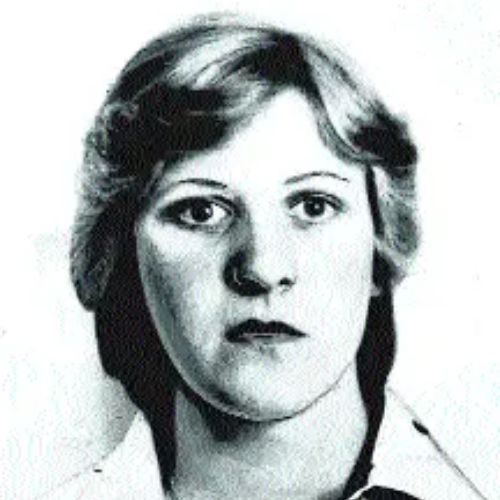
Hardy was arrested for Skala's murder after bragging about it to his younger brother, Colin. While in custody, he arranged for his girlfriend Sheilagh Farrow to smuggle a contraband file into the prison, which he used to file his teeth into points so they would not match the bite marks left on Skala's body. With his altered teeth and the false alibi Farrow provided to police, Hardy was freed. Six months later, he killed again.
Sharon Mosoph — March 1976
In March 1976, 17-year-old Sharon Mosoph was walking home from a staff party in Failsworth when she came across Hardy attempting to break into Marlborough Mill at night. Having witnessed him, Sharon became a target. Hardy stabbed and strangled her with a pair of tights, stripped and mutilated her body, and dumped her in the Rochdale Canal at Failsworth, Oldham. She had been murdered the same way as Skala, and her body bore similar signs of mutilation.
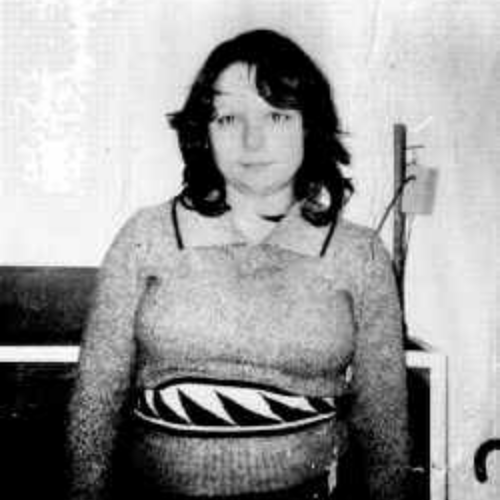
After the murder, Hardy went on the run, living rough in quarries, railway tunnels, and along canal banks. During this period, he also violently sexually assaulted a 21-year-old woman named Christian Campbell in a pub toilet. Campbell survived and provided police with crucial identifying information.
Arrest, Trial, and Conviction
In August 1976, Hardy was arrested in Stockport. His brother Colin had gone to police, and Sheilagh Farrow had by then recanted her false alibi. At the time of his arrest, Hardy confessed not only to the murders of Skala and Mosoph but also revealed the truth about Janet Lesley Stewart — leading police to her burial site for the first time. The scale of the manhunt had been immense: at its height, police had stopped and searched 23,000 people across Greater Manchester.
At his trial, Hardy sacked his Queen's Counsel and conducted his own defence, attempting to plead guilty to manslaughter on the grounds of diminished responsibility. The plea was rejected. On May 2, 1978, at Manchester Crown Court, he was found guilty of three counts of murder and sentenced to three life sentences with a minimum of 30 years.
Hardy served his sentence at HMP Wakefield in West Yorkshire, where he was noted for having a good work record. He consistently maintained his innocence and sent a letter to the family of Sharon Mosoph blaming his upbringing and his parents for his crimes. On February 23, 2008, The Times reported that Hardy was one of up to 50 prisoners in Britain issued with a whole-life tariff, meaning he would never be released. The High Court reaffirmed this ruling in June 2008.
Separately, Manchester locals had long suspected Hardy in the 1971 murder of 17-year-old Dorothy Leyden. In 2004, her family requested a review by Greater Manchester Police. Detectives concluded that DNA evidence from the scene did not match Hardy and that forensic evidence exonerated him in Leyden's case.
Hardy collapsed in his prison cell at HMP Wakefield on September 23, 2012 after suffering a heart attack. He died in hospital two days later, on September 25, 2012, at the age of 67 — having spent 35 years behind bars and never having publicly admitted his guilt.
