d: 2016
Summary
Name:
Travis Clinton HittsonYears Active:
1992Status:
ExecutedClass:
MurdererVictims:
1Method:
Beating / ShootingDeath:
February 17, 2016Nationality:
USAd: 2016
Summary: Murderer
Name:
Travis Clinton HittsonStatus:
ExecutedVictims:
1Method:
Beating / ShootingNationality:
USADeath:
February 17, 2016Years Active:
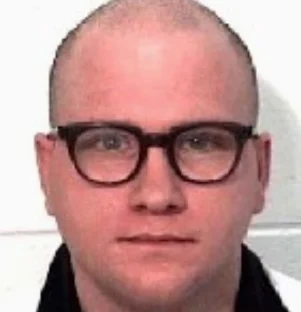
1992Travis Clinton Hittson was born in 1971. As an adult, he served in the U.S. Navy and was stationed aboard the USS Forrestal out of Pensacola, Florida, where he worked alongside Conway Utterbeck, a fellow 20-year-old sailor, and Edward Vollmer, who served as Hittson's leading petty officer and direct supervisor. Hittson had no prior felony convictions before the killing that would end his career and his life.
His attorneys later described him as having endured a troubled and abusive childhood, struggling with alcoholism and a relatively low IQ, and having a persistent need for others' approval — traits they argued made him especially vulnerable to manipulation by Vollmer, whom they described as exercising an unusual degree of dominance and control over him.
On April 3, 1992, Hittson, Utterbeck, and Vollmer left their posting in Pensacola, Florida, and drove to the home of Vollmer's parents in Warner Robins, Georgia, for the weekend while the elder Vollmers were away. The three men spent their first night in a shed on the property before obtaining a key to the house from a family friend the next day.
On the second night of the trip, Hittson and Vollmer went out to several bars, leaving Utterbeck alone at the house. According to statements Hittson later gave investigators, as the two men drove back, Vollmer told him that Utterbeck was planning to kill them both and that they needed to act first. When they arrived at the house and found Utterbeck dozing in a recliner, Vollmer armed himself with a bulletproof vest and firearms from his car and handed Hittson an aluminum baseball bat.
At Vollmer's direction, Hittson struck Utterbeck several times in the head with the bat, then dragged him into the kitchen, where Vollmer was waiting. According to Hittson's account, Utterbeck screamed, "Travis, whatever have I did to you?" as Vollmer stepped on his hand; Hittson then shot him in the head. Hittson later told investigators he felt "cold" and had "no emotion" as he did so.
Approximately two hours later — after the two men had gone out for food — Vollmer said they needed to dismember Utterbeck's body to dispose of the evidence. Hittson stated that they used a hacksaw to remove the victim's hands, head, and feet; he became sick after removing one hand and could not continue, so Vollmer completed the dismemberment alone. An autopsy later determined that the body had also been further mutilated with a knife. The two men packed Utterbeck's remains into garbage bags, buried his torso in Houston County, Georgia, and brought the rest of his remains back to Pensacola, Florida, where they buried them separately, before cleaning the crime scene at the Vollmer family home.
Utterbeck's torso was discovered by loggers in June 1992, roughly two months after the murder. Investigators subsequently questioned many of Utterbeck's fellow sailors about his disappearance. During this questioning, Hittson eventually confessed to the killing, implicated Vollmer, and led investigators to the location of the rest of Utterbeck's remains. Both men were arrested.
Hittson was convicted in February 1993 of malice murder, aggravated assault, possession of a firearm during the commission of a crime, and theft by taking. The jury found that the murder involved depravity of mind under Georgia's capital sentencing statute and recommended a death sentence; he was formally sentenced to death in March 1993. Vollmer, by contrast, reached a plea agreement with prosecutors and received a life sentence, becoming eligible for parole — a disparity Hittson's later legal team argued was unjust given evidence that Vollmer had been the more culpable and controlling of the two men.
Hittson's case remained under appeal for over two decades. His attorneys ultimately sought clemency, arguing that his troubled background, alcoholism, and low intelligence had made him vulnerable to Vollmer's manipulation, and noting that some jurors from his original trial had said they would have preferred a life sentence had that option been presented to them. The Georgia State Board of Pardons and Paroles denied his clemency request, and the Georgia Supreme Court denied a final stay of execution.
Travis Clinton Hittson was executed by lethal injection at the Georgia Diagnostic and Classification Center in Jackson, Georgia, on February 17, 2016. He declined to make a final statement, telling the warden, "No, sir. I'm alright," and requested that a prayer be read instead. He was pronounced dead at 8:14 p.m.
