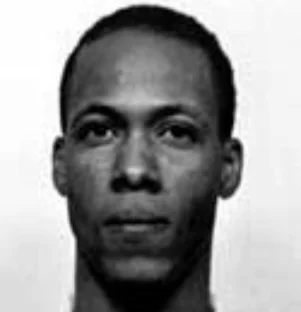
1956 - 2000
Summary
Name:
Tommy Ray JacksonYears Active:
1983Birth:
November 15, 1956Status:
ExecutedClass:
MurdererVictims:
1Method:
ShootingDeath:
May 04, 2000Nationality:
USA1956 - 2000
Summary: Murderer
Name:
Tommy Ray JacksonStatus:
ExecutedVictims:
1Method:
ShootingNationality:
USABirth:
November 15, 1956Death:
May 04, 2000Years Active:
1983Date Convicted:
December 3, 1984"I cannot show any remorse for something that I did not do."
— Tommy Ray Jackson
Tommy Ray Jackson was born on November 15, 1956. Prior to the murder of Rosalind Robison, Jackson had accumulated a criminal record that included robbery, burglary, and theft-related offenses. In April 1977, he was sentenced to a ten-year federal prison term for bank robbery. Although sentenced to ten years, he was later released on parole after serving approximately three years.
Following his release, Jackson continued to commit crimes. In February 1982, he was convicted in Texas for burglary of a motor vehicle and received a four-year sentence. He was again released on parole after serving approximately one year. Court records later showed that he was on parole when the events leading to the murder of Rosalind Robison occurred.
By late 1983, Jackson was residing at the Dismas Halfway House in Austin, Texas. There he became acquainted with James Otis Clary, another resident. The two men discussed committing robberies and planned to steal a vehicle that could be used during future criminal activities. These discussions eventually led to the events of November 17, 1983.
On November 17, 1983, Tommy Ray Jackson and James Otis Clary left the Dismas Halfway House in Austin, Texas. According to trial testimony, the pair spent much of the day together before deciding to search for a vehicle to steal. Jackson had obtained a .25-caliber pistol from an acquaintance prior to the crime.
Late that evening, the two men went to the University of Texas campus looking for an opportunity to steal a car. Between approximately 11:00 p.m. and midnight, they observed 24-year-old engineering student Rosalind Robison walking toward her white Oldsmobile Delta 88 near the Petroleum Engineering Building.
As Robison entered her vehicle, Jackson approached her with the handgun drawn. He forced his way into the car and took control of the vehicle. Clary entered as well, trapping Robison between them. Robison pleaded with the men not to hurt her and explained that she had little money. She informed them that she possessed an ATM card and could withdraw cash.
Jackson and Clary drove Robison to a nearby bank where she was forced to withdraw $50 from an automated teller machine. Bank records later confirmed the transaction. After obtaining the money, the two men drove north on Interstate 35.
During the drive, Jackson raped Robison in the back seat of the vehicle while Clary drove. Later, the vehicle was stopped in Williamson County, where Clary also sexually assaulted her. Evidence recovered during the investigation supported the conclusion that Robison had been sexually assaulted during the kidnapping.
The group eventually arrived at a remote gravel pit area in Williamson County. According to testimony presented at trial, Clary had accidentally used Jackson's name during the kidnapping. Prosecutors argued that Jackson feared Robison could later identify him and decided to kill her.
Robison's hands were bound behind her back. She was led from the vehicle to a gravel pile. Evidence indicated that she was forced to kneel before being shot at close range in the back of the head with the .25-caliber pistol. The fatal wound caused her immediate death.
After the shooting, Jackson partially concealed the body beneath loose gravel. He and Clary then returned to Austin in Robison's vehicle. Witnesses later testified that Jackson spent money freely, visited clubs, drank alcohol, and socialized after the murder.
When Robison failed to return home, she was reported missing. Four days later, police stopped Jackson while he was driving her white Oldsmobile. Investigators discovered Robison's ATM card in his possession. Additional evidence linked him to the crime, including fingerprints found on Robison's personal property and pubic hairs recovered from the vehicle that matched Jackson.
Approximately one month after the kidnapping, Robison's body was discovered in the gravel pit where she had been killed. A firearms examination later determined that the bullet recovered from her body had been fired from the handgun Jackson had rented before the crime.
On February 10, 1984, Jackson was indicted for capital murder in Williamson County, Texas. The indictment alleged that Robison had been murdered during the course of kidnapping, robbery, and aggravated sexual assault.
Jackson's trial began in 1984. He pleaded not guilty. Prosecutors presented testimony from James Otis Clary, physical evidence recovered from the vehicle, forensic findings, ATM records, witness testimony, and ballistic evidence linking the murder weapon to Jackson.
On December 3, 1984, a jury found Jackson guilty of capital murder. The following day, December 4, 1984, the jury answered Texas's special sentencing questions in favor of the prosecution, resulting in a death sentence.
Over the next fifteen years, Jackson pursued numerous appeals through both state and federal courts. His conviction and sentence were affirmed repeatedly. The Texas Court of Criminal Appeals upheld the conviction in 1988, and later state and federal habeas corpus proceedings were unsuccessful. The United States Supreme Court ultimately declined to intervene.
Throughout his appeals, Jackson maintained that he was innocent of the murder and claimed that James Otis Clary was responsible for the fatal shooting. Courts reviewing the evidence rejected those arguments and allowed the sentence to stand.
Tommy Ray Jackson was executed by lethal injection at the Huntsville Unit in Huntsville, Texas, on May 4, 2000. He was pronounced dead at 6:24 p.m.
