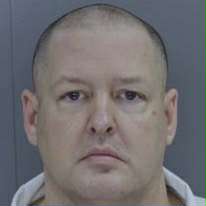
b: 1971
Summary
Name:
Todd Christopher KohlheppYears Active:
1986 - 2016Birth:
March 07, 1971Status:
ImprisonedClass:
Serial KillerVictims:
7+Method:
ShootingNationality:
USAb: 1971
Summary: Serial Killer
Name:
Todd Christopher KohlheppStatus:
ImprisonedVictims:
7+Method:
ShootingNationality:
USABirth:
March 07, 1971Years Active:
1986 - 2016Date Convicted:
May 26, 2017Todd Christopher Sampsell, later known as Todd Kohlhepp, was born on March 7, 1971, in Florida. His early childhood was shaped by instability, emotional neglect, and persistent behavioral issues that surfaced long before he committed any violent crimes. When he was two years old, his parents divorced, and custody was awarded to his mother. She remarried shortly after, beginning what Kohlhepp would later describe as a turbulent and deeply unhappy period of his life.
Throughout early childhood, he struggled to form friendships or function in group environments. Teachers, counselors, and family members repeatedly documented that he was aggressive, destructive, and prone to sudden—and often extreme—emotional outbursts. In nursery school, he frequently broke other children’s belongings and reacted with disproportionate anger to routine situations. He also demonstrated early signs of cruelty to animals, once shooting a dog with a BB gun and killing a pet goldfish by pouring bleach into its bowl. By age nine, Kohlhepp was already attending counseling, where professionals described him as emotionally explosive and unusually preoccupied with sexual content for a child his age.
His relationship with his stepfather was strained, and reports from that time suggest Kohlhepp felt isolated and unsupported. As he grew older, the tension within the household worsened. His mother and stepfather struggled to manage his behavior, and his escalating anger led to several confrontations. Eventually, he was admitted for several months to a psychiatric facility in Georgia due to an inability to coexist safely with other children.
In 1983, following another separation between his mother and stepfather, Kohlhepp was sent to live with his biological father in Arizona—a man he had not seen in nearly a decade. Their reunion initially seemed to offer stability. Kohlhepp took his father’s surname and began learning mechanical skills and explosives handling from him. His father also introduced him to firearms and the hobby of building homemade bombs, experiences that would later take on a darker significance.
Despite these shared interests, their relationship deteriorated. Kohlhepp’s father was frequently absent, focused on a rotation of girlfriends, which intensified the boy’s sense of abandonment. Kohlhepp repeatedly asked his mother to bring him home, but she declined, citing “practical reasons” for leaving him in Arizona. This extended sense of rejection formed a core grievance he later referenced during psychiatric evaluations.
By adolescence, Kohlhepp was academically capable—his IQ was later measured at 118—but emotionally unstable. He developed an entrenched belief that he was mistreated and that the world owed him compensation for his perceived hardships. This mixture of resentment, entitlement, and isolation set the foundation for the violent crime he would commit at age 15.
In 1986, his life took a defining turn when he kidnapped and raped a 14‑year‑old girl in Tempe, Arizona. The crime and the brutal manner in which it was carried out led to his conviction and a 15‑year prison sentence. During his incarceration, he completed a college degree and avoided major disciplinary issues after age 20, but psychological reports consistently described him as manipulative, emotionally stunted, and unlikely to benefit from rehabilitation.
When he was released in 2001 at age 30, Kohlhepp appeared outwardly transformed. He rebuilt his life in South Carolina, earned a business degree, and became a highly successful real estate agent—despite being a registered sex offender. He carefully constructed a public persona that was financially successful, outwardly charismatic, and seemingly stable.
Todd Kohlhepp’s murders span thirteen years and reveal a pattern of calculated violence, resentment, and predatory behavior disguised under a professional exterior. His first known murders occurred on November 6, 2003, at Superbike Motorsports in Chesnee, South Carolina. Four people were killed: shop owner Scott Ponder, service manager Brian Lucas, mechanic Chris Sherbert, and bookkeeper Beverly Guy.
For years, the case remained unsolved. Investigators knew the killer had moved quickly through the shop, striking each victim with lethal precision. Theories circulated about robbery and retaliation, but no clear suspect emerged. Kohlhepp later confessed in 2016 that he committed the killings after feeling mocked by employees when he attempted to return a motorcycle. His mother echoed this claim, stating that Kohlhepp believed the staff had humiliated him during earlier visits. The detail matched his lifelong pattern of perceiving minor personal slights as severe acts of disrespect.
For more than a decade after the motorcycle shop murders, Kohlhepp lived an outwardly normal life. He ran a successful real estate business, purchased large parcels of land, earned a pilot’s license, and became known in his community as hardworking—if occasionally abrasive. Meanwhile, he continued accumulating weapons, isolating himself on rural property, and developing patterns of predatory behavior toward women.
In December 2015, a married couple—Johnny Joe Coxie, 29, and Meagan Leigh McCraw‑Coxie, 26—disappeared after being hired by Kohlhepp to do work on his property. He killed Johnny first, shooting him in the torso around December 19, 2015. Meagan was held captive for several days before being shot in the head around December 25–26. Their bodies were later found buried on Kohlhepp’s property, identified through distinctive tattoos. Reports indicate that Meagan had previously worked as a waitress at a Waffle House that Kohlhepp frequented, where his unsettling behavior toward female staff had become well‑known.
The crime that ultimately unraveled Kohlhepp’s secret life occurred in 2016. On August 31, Kala Brown, 30, and her boyfriend Charles David Carver, 32, went missing after visiting Kohlhepp’s property to perform clearing work. Kohlhepp shot Carver shortly after they arrived and buried his body. He kept Brown alive, chaining her inside a metal shipping container where he repeatedly raped and threatened her. Over the next two months, suspicious posts appeared on Carver’s Facebook account, leading friends and investigators to believe someone else had access to his devices.
On November 3, 2016, investigators traced the couple’s cellphone data to Kohlhepp’s property. When deputies arrived, they heard banging from inside a steel storage container. They cut the locks and found Kala Brown chained by the neck, dehydrated, and terrified. She immediately told officers that Kohlhepp had murdered Carver in front of her and had threatened to kill her if she tried to escape.
Brown’s testimony, coupled with the discovery of Carver’s car hidden in a ravine, led to Kohlhepp’s arrest the same day. As investigators searched the property, they uncovered the graves of Johnny and Meagan Coxie on November 6–7, 2016. Faced with growing evidence, Kohlhepp began confessing, ultimately admitting to the 2003 Superbike killings in detail.
He also hinted at other murders he claimed to have committed in the 1980s and 1990s, though no additional victims have been confirmed.
In 2017, Kohlhepp pleaded guilty to seven counts of murder, two counts of kidnapping, and one count of sexual assault. He was sentenced to seven consecutive life sentences without the possibility of parole, plus an additional 60 years for kidnapping and sexual assault. His real estate business collapsed immediately after his arrest, and his property was seized and searched for months.
Kohlhepp remains incarcerated in South Carolina. Despite occasional attempts at correspondence—sometimes offering investigators “information” about other alleged crimes—he has never provided proof of additional victims beyond the seven confirmed murders.
