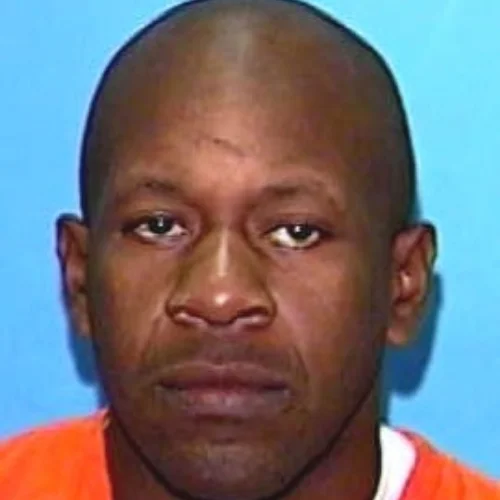
b: 1973
Summary
Name:
Thomas James MooreYears Active:
1993Birth:
April 20, 1973Status:
ImprisonedClass:
MurdererVictims:
1Method:
ShootingNationality:
USAb: 1973
Summary: Murderer
Name:
Thomas James MooreStatus:
ImprisonedVictims:
1Method:
ShootingNationality:
USABirth:
April 20, 1973Years Active:
1993Date Convicted:
October 29, 1993Thomas James Moore was born on April 20, 1973, in the United States. He lived in Duval County, Florida, and was nineteen years old at the time of the crime. Before the murder, Moore already had a criminal history that included violent felony convictions for armed robbery and aggravated battery.
Moore knew the victim, Johnny Parrish, before the killing. Parrish lived in Moore’s neighborhood, and court records described the two as friends or acquaintances. Moore had been to Parrish’s home before, and there was no verified record of a serious conflict between them before the crime.
On January 21, 1993, Moore was outside Parrish’s house at around 3:00 p.m., drinking with him. Later that day, Parrish was shot and killed inside his home. The case then led to Moore’s arrest, trial, conviction, and death sentence.
On January 21, 1993, Johnny Parrish was killed inside his residence in Duval County, Florida. Earlier that afternoon, Thomas James Moore and Parrish were outside Parrish’s house drinking. Parrish was a neighborhood resident and someone Moore knew personally. According to the evidence summarized by the Florida Supreme Court, Carlos Clemons and Vincent Gaines testified that they had discussed robbing Parrish with Moore. Clemons testified that he was to enter the house with Moore, while Gaines was to act as a lookout. Gaines stated that he did not see Moore and Clemons enter the house, but he heard two gunshots and then saw Clemons come out of the house before going back inside. Gaines later said Clemons caught up with him and told him that Moore had shot Parrish.
Clemons testified that he and Moore entered Parrish’s house together. According to Clemons, Moore pulled out a gun and demanded to know where Parrish kept his money. When Parrish did not respond, Moore shot him. Court records describe Parrish as having been shot twice. After the shooting, smoke was seen coming from Parrish’s house. Neighbors entered the residence and pulled Parrish out, but he was already dead. A fire investigator later testified that two separate fires had been intentionally set inside the house. The medical evidence summarized in later court filings stated that Parrish was dead before the fire began.
The prosecution also presented testimony from a witness named Shorter. Shorter testified that Moore brought him a bag of clothes and asked him to burn them. According to Shorter, Moore admitted that he had shot Parrish and set fire to the house. Shorter’s testimony included Moore’s alleged explanation that he shot Parrish twice, that Clemons ran out of the house, and that Moore then used part of a lawnmower and set it on fire in an attempt to destroy fingerprints inside the residence. Shorter contacted his mother, who then contacted police.
Another witness, a jail inmate identified as Jackson, testified that Moore said he had not meant to kill Parrish but had to do so because Parrish would recognize him. A neighbor named Dean also testified that Moore had asked him to rob Parrish before the killing. These statements became part of the prosecution’s case that the killing occurred during an attempted robbery and that Parrish was killed because he could identify Moore. The trial court later found aggravating factors including that the capital felony was committed for pecuniary gain and for the purpose of avoiding arrest.
Moore was indicted on February 18, 1993. He was charged with first-degree murder with a firearm, attempted armed robbery, conspiracy to commit robbery, armed burglary, arson, and possession of a firearm by a convicted felon. The firearm-possession count was not submitted to the jury. On October 29, 1993, the jury found Moore guilty of the remaining counts. On November 3, 1993, the jury recommended a death sentence by a vote of nine to three. On December 2, 1993, Judge John D. Southwood sentenced Moore to death for first-degree murder. Moore also received prison terms for the related offenses, including thirty years for attempted armed robbery, ten years for conspiracy to commit robbery, and life sentences for armed burglary and arson, with those sentences running concurrently with the death sentence.
Moore appealed directly to the Florida Supreme Court. On October 2, 1997, the court affirmed his conviction and death sentence. The court reviewed several claims and found one evidentiary issue involving testimony that Moore had a gun two days after the murder. The court ruled that the testimony should not have been admitted because it was not relevant to whether Moore committed the Parrish murder, but it found the error harmless and left the conviction and sentence in place. Rehearing was denied on November 18, 1997. The United States Supreme Court denied certiorari on April 20, 1998.
Moore continued to challenge his conviction and sentence through state and federal postconviction proceedings. On March 7, 2002, the Florida Supreme Court affirmed the denial of his postconviction motion and denied his habeas petition. His claims included issues relating to public records, ineffective assistance of counsel, his presence at critical stages of trial, and other trial-related arguments. The court rejected the claims or found them procedurally barred, legally insufficient, moot, or without merit.
Moore later filed additional postconviction challenges. In 2013, the Florida Supreme Court reviewed his second successive motion to vacate his conviction and death sentence. That appeal focused on claims that the State knowingly presented false or misleading evidence in violation of Giglio v. United States and that newly discovered evidence established innocence. The court affirmed the denial of postconviction relief on November 27, 2013.
Federal litigation continued after the state proceedings. On February 21, 2024, the United States Court of Appeals for the Eleventh Circuit affirmed the denial of Moore’s federal habeas petition. The issue before the Eleventh Circuit was whether Florida had presented false testimony from witness Vincent Gaines in violation of Giglio. The court affirmed the district court’s denial of relief. Moore then sought review from the United States Supreme Court. The Supreme Court’s October 7, 2024 order list included Moore, Thomas J. v. Dixon, Secretary, Florida Department of Corrections, docket number 23-7509, among petitions denied. Thomas James Moore remains imprisoned under a Florida death sentence for the January 21, 1993 murder of Johnny Parrish.
