Summary
Name:
Theodore StreleskiYears Active:
1978Status:
ReleasedClass:
MurdererVictims:
1Method:
BludgeoningNationality:
USASummary: Murderer
Name:
Theodore StreleskiStatus:
ReleasedVictims:
1Method:
BludgeoningNationality:
USAYears Active:
1978“I feel regret, but no remorse.”
— Theodore Streleski
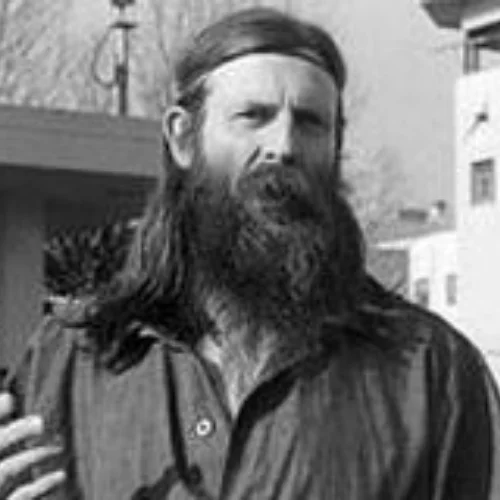
Theodore Landon Streleski was born in 1936 in Breese, Illinois. He grew up in the nearby town of Carlyle. Theodore was the only child of a mother who worked as a schoolteacher. His father worked for Caterpillar Tractor Company. After his parents divorced, Theodore's father passed away from a brain tumor in 1956, and this had a profound effect on him.
Theodore graduated from the University of Illinois before being admitted to Stanford University in 1959. He earned a master's degree in electrical engineering three years later. After that, he began a long 16-year struggle to obtain a doctorate in mathematics. During this time, he worked various low-paying jobs to support himself.
Throughout his years at Stanford, Theodore often felt mistreated and overlooked. He had difficulty finding a thesis advisor and faced many challenges in his academic life. He would sometimes complain about the university's treatment of graduate students, feeling it was unfair.
During his time at Stanford, he married an airline stewardess named Merrily Merwin. However, their marriage began to decline. Merrily later described how Theodore became tense and sometimes violent. They eventually divorced in 1974. After the divorce, Theodore lost his last job and faced deep financial struggles.
By 1978, after nearly two decades as a graduate student, Theodore felt hopeless about his chances of earning a Ph.D. His frustration with the university and his advisors continued to grow. On August 18, 1978, he committed a violent act against his former faculty advisor, Karel de Leeuw. Later that same day, he turned himself into the police.
On August 18, 1978, Theodore Streleski killed Professor Karel de Leeuw, his former faculty advisor at Stanford University. Streleski used a small sledgehammer to strike de Leeuw multiple times. After the incident, he fled the scene and later surrendered to the police. He claimed that the murder was his way of protesting against the university's decision not to grant him a Ph.D. after many years of study.
During his trial, Streleski stated that he believed the murder was a form of justified action. He argued that his frustrations with the mathematics department and his treatment as a graduate student warranted such drastic measures. He resisted his lawyer's advice to plead not guilty by reason of insanity, insisting on pleading not guilty instead.
Streleski was convicted of second-degree murder. He received a sentence of seven years in prison, a relatively short term due to laws in effect at that time. After serving the majority of his sentence, he was released in September 1985. Upon his release, he mentioned that he had no intention of killing again, but he also stated that he could not predict the future.
