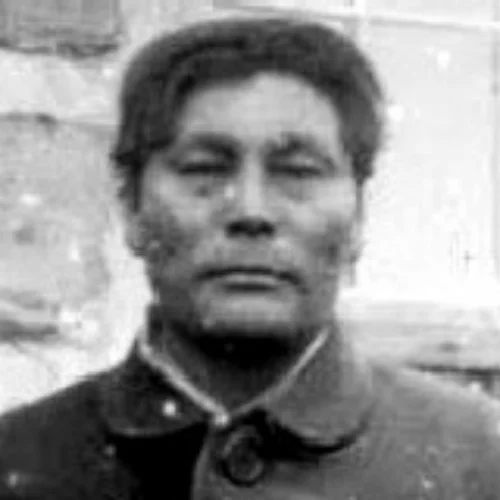
d: 1879
Summary
Name:
Swift RunnerNickname:
Ka-Ki-Si-KutchinYears Active:
1879Status:
ExecutedClass:
Mass MurdererVictims:
6Method:
Shooting / BludgeoningDeath:
December 20, 1879Nationality:
Canadad: 1879
Summary: Mass Murderer
Name:
Swift RunnerNickname:
Ka-Ki-Si-KutchinStatus:
ExecutedVictims:
6Method:
Shooting / BludgeoningNationality:
CanadaDeath:
December 20, 1879Years Active:
1879“I did it.”
— Swift Runner
Swift Runner was a Cree Indian who lived in what is now central Alberta, Canada. He was known as a hunter and trapper, and he received a useful education in his Cree community. Swift Runner grew up in a typical family setting, married, and had six children. He was known for being mild-mannered and trustworthy. He also traded with the Hudson's Bay Company and worked as a guide for the North West Mounted Police.
As he lived in a time when many Cree people faced hardship, Swift Runner's life took a tragic turn. During the harsh winter of 1878-79, the food supply dwindled, leading to severe starvation in his community. This situation affected Swift Runner and his family deeply, and it would later play a crucial role in the tragic events of his life.
Reports began to surface that Swift Runner had become troubled and confused. Some began to suspect that he may have been affected by a condition known as Windigo psychosis, which in Cree beliefs involves a spirit that causes individuals to crave human flesh. As time went on, Swift Runner's behavior raised concerns among his community and eventually led to an investigation by the North West Mounted Police when he returned from a winter camp without his family.
Despite being well-regarded in his earlier life, Swift Runner faced suspicion and worry from those around him after his family went missing. The police, tasked with investigating, began to uncover the horrifying truth surrounding his actions during the winter of 1878-79.
Swift Runner committed his murders during the harsh winter of 1878-79. At the time, he and his family were struggling with starvation. His eldest son died from the lack of food. Swift Runner, feeling desperate, made a tragic decision to kill and consume his wife and five remaining children. The location of these events was near Fort Saskatchewan in Alberta, Canada.
After he returned to his camp in the spring of 1879 without his family, his in-laws became worried and informed the North West Mounted Police. Inspector Sévère Gagnon led an investigation into Swift Runner's actions. When the police arrived, Swift Runner showed them a small grave, claiming it was where one of his boys was buried. However, they discovered human bones scattered around the camp, including a skull that Swift Runner identified as belonging to his wife.
Under pressure, Swift Runner confessed that a Windigo spirit had taken control of him and had forced him to commit these acts. He explained that the spirit compelled him to consume his family. The Windigo urged him to harm his wife first and then made one of his sons kill another. He described how the spirit caused chaos and drove him to madness.
Swift Runner's arrest followed soon after, and he was brought to trial. The trial began on August 8, 1879. Despite the cultural belief surrounding the Windigo and Swift Runner's claims of possession, the judge and jury found him guilty of murder. There were no defenses presented, and Swift Runner openly admitted his guilt.
He was sentenced to death by hanging, which was a first for the area at the time. On December 20, 1879, Swift Runner was executed. Many people gathered to witness the hanging, and he walked calmly to the gallows. The execution was delayed due to various issues, but Swift Runner remained composed as he awaited his fate. He even joked with bystanders before the execution.
Finally, the hanging proceeded, and Swift Runner was pronounced dead. His body was buried outside Fort Saskatchewan after the execution.
