d: 1986
Summary
Name:
Suleiman Mohammed Abdul-Hamid KhaterNickname:
Suliman Khater / Hero of SinaiYears Active:
1985Status:
DeceasedClass:
Mass MurdererVictims:
7Method:
ShootingDeath:
January 07, 1986Nationality:
Egyptd: 1986
Summary: Mass Murderer
Name:
Suleiman Mohammed Abdul-Hamid KhaterNickname:
Suliman Khater / Hero of SinaiStatus:
DeceasedVictims:
7Method:
ShootingNationality:
EgyptDeath:
January 07, 1986Years Active:
1985Date Convicted:
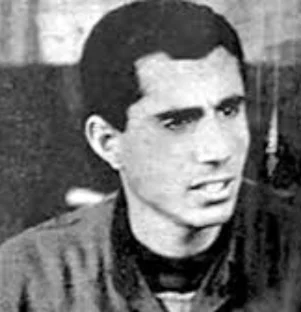
December 28, 1985Suleiman Mohammed Abdul-Hamid Khater was born in 1961 in the village of Ekyad, also written as Akyad, in Egypt’s Al-Sharqia Governorate. He came from a poor family. He later joined Egypt’s Central Security Forces and was serving in the Sinai at the time of the shooting.
Khater’s background is often discussed through the political tensions between Egypt and Israel after the 1979 peace treaty. He was born before the 1967 Arab-Israeli War and grew up during a period when Egyptian society was still heavily affected by conflict with Israel. Some later accounts claimed that he had been affected as a child by the 1970 Israeli bombing of Bahr el-Baqar Primary School.
By October 1985, Khater was stationed at Ras Burqa, a beach area in southern Sinai. His duty involved guarding a military post or restricted area. The Sinai had been returned to Egyptian control after the peace treaty with Israel, but the region remained politically sensitive.
Khater became a highly controversial figure after the shooting. Israel demanded punishment, while some opposition voices in Egypt and parts of the Arab world portrayed him as a nationalist figure. The Egyptian government treated the case as a serious criminal and diplomatic matter, and he was tried by a military tribunal instead of a civilian court.
On October 5, 1985, Suleiman Khater opened fire on a group of Israeli tourists at Ras Burqa in Egypt’s Sinai Peninsula. The victims were civilians vacationing in the area. Seven Israelis were killed, including four children. Reports also state that an Egyptian policeman who tried to intervene was killed during the incident.
Accounts differ on what happened immediately before the shooting. Khater claimed that the tourists had entered or approached a restricted military area and ignored his orders to stop. Other accounts described the victims as Israeli vacationers near a beach area. The shooting caused a major diplomatic crisis between Egypt and Israel because it occurred only a few years after the two countries had signed a peace treaty.
The seven Israeli civilian victims were identified in later summaries as Hamman Shelach, Ilana Shelach, Tzlil Shelach, Anita Griffel, Amir Baum, Dina Bari, and Ofri Turel. A young child, Tali Griffel, survived after her mother shielded her.
After the shooting, Khater surrendered and was taken into custody. Egypt placed him before a closed military tribunal. His lawyers asked for a civilian trial, but that request was rejected. On December 28, 1985, he was convicted and sentenced to hard labor. Some sources describe the sentence as life imprisonment with hard labor, while contemporary UPI reporting described it as 25 years at hard labor.
Khater was sent to military custody in Cairo. On January 7, 1986, he was found hanged in his cell or prison hospital room. Egyptian authorities announced that he had died by suicide. However, the official explanation was disputed by his family, supporters, and opposition voices, who claimed that he may have been killed in custody. Later media reports also discussed letters and claims suggesting that the circumstances of his death were suspicious.
After his death, Khater remained a divisive figure. Some groups in Egypt and the wider Arab world praised him, while others viewed the case as a massacre of civilians. Iran later issued a stamp honoring him and reportedly named a street in Tehran after him.
