d: 1996
Summary
Name:
Steven Keith HatchNickname:
Steve LisenbeeYears Active:
1979Status:
ExecutedClass:
MurdererVictims:
2Method:
ShootingDeath:
August 09, 1996Nationality:
USAd: 1996
Summary: Murderer
Name:
Steven Keith HatchNickname:
Steve LisenbeeStatus:
ExecutedVictims:
2Method:
ShootingNationality:
USADeath:
August 09, 1996Years Active:
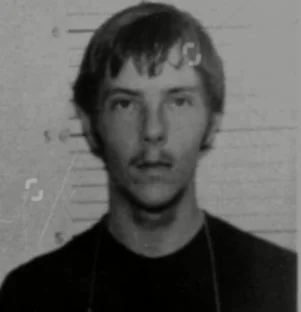
1979Steven Keith Hatch was an American man who became known for his role in the 1979 murders of Reverend Richard Douglass and Marilyn Douglass in Canadian County, Oklahoma. He was also known by the alias Steve Lisenbee. Hatch was born in 1954. At the time of his trial and death sentence, he was described as being in his mid-twenties. He was later executed at the age of 42.
Before the Douglass murders, Hatch was associated with Glen Burton Ake, also known as Johnny Vandenover. The two men were working in Oklahoma before the crime. Court records state that on October 15, 1979, Hatch and Ake left work, borrowed a car, and drove through the area while looking for a home to rob. Their search led them to the rural home of Reverend Richard Douglass and his wife, Marilyn Douglass, near Okarche, Oklahoma.
The public record does not show that Hatch had a prior confirmed homicide history before the Douglass case. His known criminal history became centered on the October 1979 home invasion, robbery, attempted sexual assault, shootings, and murders. The case later became legally significant because Hatch was not identified as the shooter, but he was still convicted of first-degree murder under Oklahoma’s felony-murder law.
On the evening of October 15, 1979, Steven Keith Hatch and Glen Burton Ake drove to the rural home of Reverend Richard Douglass and Marilyn Douglass near Okarche, Oklahoma. The Douglass family was at home at the time. Richard and Marilyn were there with their children, 16-year-old Brooks and 12-year-old Leslie.
Ake first approached the home under the false claim that he was lost and needed help with directions. After speaking with Brooks Douglass near the entrance, Ake returned to the car, supposedly to get a telephone number. He then re-entered the home with a firearm. Hatch joined him shortly afterward and was also armed.
Once inside the home, Hatch and Ake held the Douglass family at gunpoint. Reverend Douglass, Marilyn Douglass, and Brooks Douglass were bound and gagged and forced to lie on the living room floor. Hatch and Ake ransacked the home while the family was restrained. Court records state that the men stole items from the house and threatened the family during the attack.
Leslie Douglass was taken to a bedroom, where the men attempted to sexually assault her. Afterward, she was also bound and gagged and placed with the rest of the family in the living room. The family members’ heads were covered with clothing while they remained tied and helpless on the floor.
Before the shootings, Ake told Hatch to leave the house, turn the car around, and wait or listen for a sound. Hatch left the home. After Hatch went outside, Ake shot the family members with a .357 Magnum pistol. Richard Douglass and Leslie were each shot twice. Marilyn Douglass was shot once. Brooks Douglass was also shot once.
Marilyn Douglass died almost immediately from her gunshot wound. Richard Douglass died from a combination of gunshot wounds and strangulation caused by the way he had been bound. Brooks and Leslie survived the attack. After the assailants left, the two children were able to free themselves and get help.
After the crime, Hatch and Ake left Oklahoma and continued traveling through several states. Authorities eventually apprehended them in Colorado. Hatch was later prosecuted in Canadian County, Oklahoma.
Hatch waived his right to a jury trial and was tried before a judge in Canadian County District Court. He was convicted of two counts of first-degree murder for the deaths of Richard and Marilyn Douglass, and two counts of shooting with intent to kill for the shootings of Brooks and Leslie Douglass. He received two death sentences for the murder convictions and two 45-year prison sentences for the shooting-with-intent-to-kill convictions.
In 1983, the Oklahoma Court of Criminal Appeals affirmed Hatch’s convictions but vacated the death sentences and sent the case back for review under Enmund v. Florida, a United States Supreme Court decision concerning death sentences for defendants who did not personally kill. The court required further consideration of Hatch’s individual participation and intent.
Hatch went through several sentencing reviews. In January 1984, a hearing was held before Judge Stan Chatman, and the death sentences were again upheld. Later post-conviction proceedings resulted in another review because of concerns over the sentencing judge. In 1987, Judge Joe Cannon conducted another sentencing review and again fixed the punishment at death for both murder convictions. The Oklahoma Court of Criminal Appeals affirmed the death sentences in 1992.
Hatch continued to challenge his convictions and sentences in federal court. In 1995, the Tenth Circuit rejected his habeas claims. In 1996, further attempts to stop the execution failed. Amnesty International and other death penalty opponents questioned the execution because Glen Ake, the shooter, was serving life imprisonment, while Hatch was scheduled to die for his role in the same crime.
Steven Keith Hatch was executed by lethal injection at Oklahoma State Penitentiary in McAlester, Oklahoma, on August 9, 1996. He was pronounced dead at 12:17 a.m. Brooks Douglass and Leslie Douglass Frizzell, the surviving children of Richard and Marilyn Douglass, witnessed the execution.
