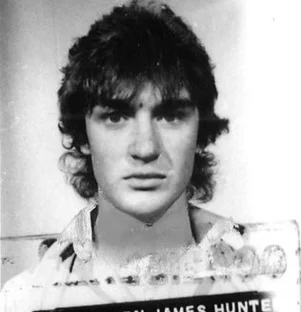
b: 1965
Summary
Name:
Steven James HunterYears Active:
1986 - 2012Birth:
October 06, 1965Status:
ImprisonedClass:
MurdererVictims:
2Method:
Stabbing / HittingNationality:
Australiab: 1965
Summary: Murderer
Name:
Steven James HunterStatus:
ImprisonedVictims:
2Method:
Stabbing / HittingNationality:
AustraliaBirth:
October 06, 1965Years Active:
1986 - 2012"I don't understand why, I really don't understand why. I am nothing."
— Steven James Hunter
Steven James Hunter was born on October 6, 1965. Sentencing judge Justice Kevin Bell later described Hunter as having endured a "highly deprived upbringing, characterised by physical abuse, neglect, substance abuse and exposure to family violence." As a child, Hunter was burned with an iron and degraded for bed-wetting. In one incident when he was eight years old, his father locked Hunter and his two siblings in a room while tying their mother to a chair; Hunter managed to escape the room and, upon seeing his father put a shotgun into his mother's mouth, called his grandparents for help. His stepfather was also violent toward him. Hunter became estranged from his father, Murray, in 2002, and at the time of his 2013 sentencing did not know whether his father was still alive; his father did in fact attend the sentencing hearing.
At age 21, on April 9, 1986, Hunter stabbed and killed 18-year-old Jacqueline Mathews in Moonee Ponds, Melbourne, after she rejected his sexual advances. He was arrested approximately ten days later and, on February 25, 1988, was sentenced to 16 years in prison with a non-parole period of 13 years. He was released on parole in December 2000. During his time in custody over the years, Hunter also escaped from Pentridge Prison on one occasion.
Hunter completed a subsequent period of parole (stemming from other violent offenses, including a 2005 conviction for theft, kidnapping, assault causing injury, and drug trafficking) roughly ten days before he murdered Sarah Cafferkey. Hunter and Cafferkey had met less than three months before her death through mutual friends; the relationship had a strong connection to drug use, and Hunter reportedly saw himself as a kind of father figure to her. While Cafferkey was aware of Hunter's criminal history, it was not established at trial whether she knew he had previously killed someone.
On the night of November 10, 2012, an argument broke out between Hunter and Cafferkey, then 22, at his home in Bacchus Marsh, Victoria. Hunter told police Cafferkey became angry after mistakenly believing he had called her a "junkie," and that he "snapped" after she struck him on the back during the argument. He beat her with a hammer and stabbed her up to 17 times; the sentencing judge described the stabbing as "shocking in its ferocity," given that Cafferkey was entirely defenseless.
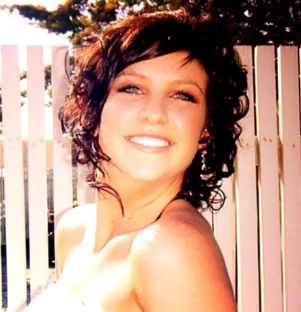
After the killing, Hunter carried out an elaborate cover-up. He sent text messages from Cafferkey's own phone to make it appear she was still alive, drove her body to another property in his car, and entombed her remains inside a wheelie bin filled with concrete and lime, having purchased supplies for this purpose from a hardware store. He also asked a friend to help him hide her body.
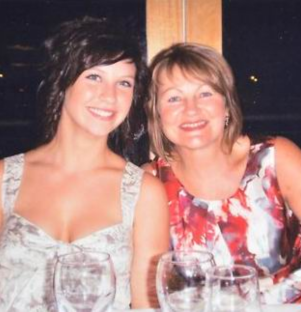
In his police interview following his arrest, Hunter said he remembered hitting Cafferkey with the hammer but could not remember stabbing her, and could not explain why he had killed her: "I don't understand why, I really don't understand why. I am nothing." He told police he hoped to die in jail.
At sentencing on August 21, 2013, prosecutors argued Hunter had lost his right ever to be released, while his own defense lawyers argued for a non-parole period rather than a whole-of-life sentence. Justice Kevin Bell sentenced Hunter to life imprisonment without parole, finding he was "likely to remain powerful enough to represent an ongoing threat to the community even in old age" and that his crime fell into "the worst category of the most serious crime of murder." Bell said that while Hunter's crime was monstrous, Hunter himself was not a monster, and that he was not a psychopath, though he had only a very slight chance of rehabilitation.
Cafferkey's parents, Noelle Dickson and Adrian Cafferkey, welcomed the sentence, describing it as courageous and stating that justice had been served for their daughter. They also continued to publicly push for reform of Victoria's adult parole system in the wake of the case. A woman identifying herself as a lifelong friend of Hunter's, who attended the sentencing alongside his estranged father, said she believed Hunter was fundamentally "a very nice man" and vowed to help him pursue an appeal.
A 2015 coronial inquest into Sarah Cafferkey's death examined how Hunter had been granted parole in the first place. Testimony revealed that a Corrections Victoria computer risk-assessment tool had not properly accounted for Hunter's violent criminal history when it assessed him as a low risk to reoffend; a Corrections Victoria official acknowledged the assessment had been manually overwritten to a "moderate" risk rating, and testimony suggested Hunter may simply have been presenting a false, cooperative front during his time on parole. The inquest findings fed into a broader review of Victoria's parole system led by former High Court Judge Ian Callinan, following commitments from then-Premier Denis Napthine to overhaul the system.
