d: 1921
Summary
Name:
Steinie MorrisonNickname:
Alexander Petropavloff / Morris Stein / Moses Tagger / BanmanYears Active:
1911Status:
DeceasedClass:
MurdererVictims:
1Method:
Bludgeoning / StabbingDeath:
January 24, 1921Nationality:
Russiad: 1921
Summary: Murderer
Name:
Steinie MorrisonNickname:
Alexander Petropavloff / Morris Stein / Moses Tagger / BanmanStatus:
DeceasedVictims:
1Method:
Bludgeoning / StabbingNationality:
RussiaDeath:
January 24, 1921Years Active:
1911“I decline such mercy! I do not believe there is a God.”
— Steinie Morrison
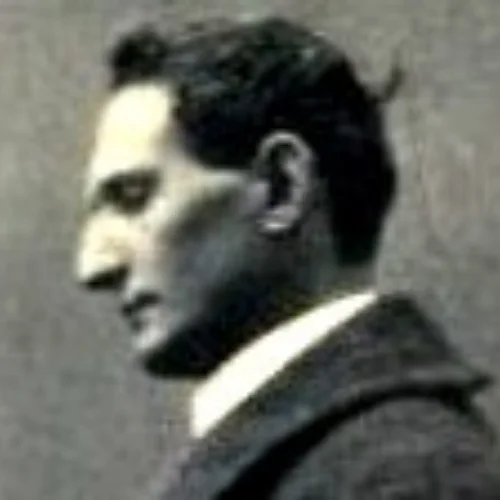
Steinie Morrison was born around 1880. Several accounts describe him as a Russian Jewish immigrant, while Morrison reportedly claimed at times that he had been born in Australia. He was also associated with several names, including Alexander Petropavloff, Morris Stein, Moses Tagger, and Banman.
By the early 1900s, Morrison was living in London. The Old Bailey record described him as a baker, but later crime accounts also described him as a professional burglar. He had a criminal history before the Leon Beron case and had spent much of the previous years in prison. His record made him an early person of interest once police began looking into Beron’s final known movements.
Leon Beron, the victim, was a 48-year-old widower and Russian Jewish immigrant who had come to England from Paris. He owned several small rental properties in Stepney and lived from the rent he collected. He was known to carry money and wear visible valuables, including a gold watch and chain. This made robbery a likely motive in the case.
In December 1910, Beron and Morrison were reportedly seen together at the Warsaw Kosher Restaurant in Whitechapel. This became important because witnesses later placed Beron with another man shortly before his death. Police also learned that Morrison knew parts of South London, including the Clapham Common area, because he had once worked nearby.
The wider historical context added further controversy to the case. Beron’s murder happened around the time of the Houndsditch murders and the Siege of Sidney Street, major events involving East End anarchists and police. Because marks resembling the letter “S” were found on Beron’s face, some later theories suggested that the killing may have been connected to informers, spies, or political revenge. However, the evidence for that theory was never proven in court. The prosecution treated the case as a robbery-murder, not a political killing.
On the morning of January 1, 1911, Police Constable Mumford found the body of Leon Beron on Clapham Common in London. Beron’s body was hidden in bushes near a footpath. He had been violently attacked and robbed. Contemporary and later accounts state that he had suffered a head injury from a blunt object and had been stabbed in the chest. Cuts resembling the letter “S” were also found on his face.
The discovery quickly became one of London’s most talked-about murder cases. Beron was known in the East End, and his death occurred during a tense period after the Houndsditch murders and shortly before the Siege of Sidney Street. Because of this timing, some people speculated that Beron may have been killed because he was believed to be an informer. The defence later tried to raise this possibility, but it was not accepted as the official explanation for the murder.
Police focused on Morrison after witnesses said Beron had been seen with a man shortly before the killing. The owner of the Warsaw restaurant told police that Beron had left the restaurant with another man. A cab driver also came forward and said he had driven two foreign-speaking men. One description was said to fit Morrison.
Investigators also found other suspicious details. Morrison had told his landlady that he was leaving for Paris, but instead he moved in with a woman named Florrie Dellow in Lambeth. Police also learned that, under the name Banman, Morrison had deposited a parcel containing a revolver and ammunition at St Mary’s Station in Whitechapel on the morning of January 1.
Morrison was arrested on January 8, 1911. He was first held partly because he was on parole and had failed to report his change of address. The charge was later changed to murder. He denied killing Beron and continued to deny it for the rest of his life.
His trial began at the Old Bailey on March 6, 1911. The trial lasted several days and involved many witnesses from London’s East End. The evidence was mostly circumstantial. Witnesses placed Morrison near Beron, connected him to movements before and after the murder, and described suspicious behaviour after Beron’s death. The defence argued that the witnesses were unreliable and suggested that Beron may have been killed by others for reasons unrelated to robbery.
The jury found Morrison guilty after a short deliberation. He was sentenced to death by hanging. After sentence was pronounced, Morrison reportedly rejected the judge’s religious expression of mercy and declared that he did not believe in God.
The case did not end with the verdict. Petitions and public concern reached the Home Office. Winston Churchill, who was Home Secretary at the time, commuted Morrison’s death sentence to life imprisonment on April 12, 1911. Morrison was sent to prison and continued to protest his innocence.
Morrison repeatedly asked to be executed rather than serve life in prison. He also staged hunger strikes and resisted imprisonment. Later historical research on hunger-striking prisoners states that Morrison died in prison in 1921 after years of food refusal and force-feeding; the inquest verdict connected his death to syncope and aortic disease aggravated by food abstinence.
Steinie Morrison died at Parkhurst Prison on January 24, 1921. He never admitted guilt. Legally, he remains the convicted murderer of Leon Beron, but the case has continued to be discussed as controversial because the conviction relied heavily on circumstantial evidence and disputed witness testimony.
