Summary
Name:
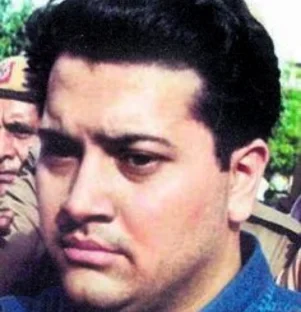
Siddharth VashishtNickname:
Manu SharmaYears Active:
1999Status:
ImprisonedClass:
MurdererVictims:
1Method:
ShootingNationality:
IndiaSummary: Murderer
Name:
Siddharth VashishtNickname:
Manu SharmaStatus:
ImprisonedVictims:
1Method:
ShootingNationality:
IndiaYears Active:
1999Date Convicted:
December 18, 2006"The idea at that time was to shoot in challenge. It was embarrassing to hear that even if I paid a thousand bucks I would not get a sip of drink."
— Siddharth Vashisht
Siddharth Vashisht, also known as Manu Sharma, was born in 1977 in India. He is the son of Venod Sharma, a prominent politician in the Indian National Congress Party. Venod Sharma had held significant positions, including serving as a federal minister in the Indian government. The family was wealthy, owning sugar mills and entertainment businesses in the states of Haryana and Punjab. Siddharth grew up in a privileged environment, surrounded by influence and power.
From a young age, Siddharth was exposed to a lifestyle that included social events and connections with other influential families. This upbringing provided him with a sense of entitlement and privilege. Reports suggest that he enjoyed activities that are typical of affluent youth, including attending parties and interacting with models and celebrities.
Siddharth attended school in Haryana and later pursued higher education. Details about his schooling and college life are scarce, but it is known that he was involved in the nightlife scene in Chandigarh, where he became known for managing a popular disco called Blue Ice. Here, he developed a reputation as a party planner and a social figure within the elite circles.
His family background played a significant role in shaping his character. Being the son of a powerful politician, he was often shielded from the consequences of his actions. This aspect of his life would come into play during a significant event that would follow him into adulthood, changing his life forever.
On April 29, 1999, a well-known model named Jessica Lall was shot while she was working as a waitress at a popular restaurant called Tamarind Court in New Delhi. At around 2 AM, when the bar was closing, Siddharth Vashisht, also known as Manu Sharma, and his friends entered the restaurant. Manu asked Jessica for a drink, but she refused because the bar had already closed.
This refusal led to a heated argument between them. Witnesses reported that during this confrontation, Manu Sharma pulled out a gun and fired two shots. One shot was aimed into the air, and the second shot struck Jessica in the head. She was taken to a hospital but died from her injuries a few hours later.
After the shooting, Manu and his friends quickly fled the scene. For the next seven days, he went into hiding. On May 6, 1999, he surrendered to the police. During this time, he reportedly made a confession about the shooting, which was recorded. However, many witnesses who initially spoke to the police later changed their stories in court.
The trial began, but it faced many challenges. Over the years, various witnesses retracted their statements, leading to a collapse of the prosecution's case. In February 2006, a lower court acquitted Manu Sharma and several other co-accused due to a lack of reliable evidence. This decision caused public outcry, which forced the investigation to be reopened.
As pressure increased from the media and the public, the case was taken to the Delhi High Court. This court reviewed the evidence and conducted a fast-track hearing over several months. On December 18, 2006, Manu Sharma was found guilty of murder and sentenced to life in prison. He was also ordered to pay compensation to Jessica's family.
Two of his friends received four-year sentences for their roles in helping to destroy evidence related to the case. The trial and its outcome highlighted issues of influence and power in India's justice system, making it a highly publicized and discussed event in the country.
