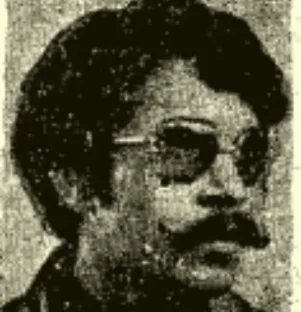
d: 1983
Summary
Name:
Shantaram Kanhoji JagtapYears Active:
1976 - 1977Status:
ExecutedClass:
Serial KillerVictims:
10Method:
StrangulationDeath:
November 27, 1983Nationality:
Indiad: 1983
Summary: Serial Killer
Name:
Shantaram Kanhoji JagtapStatus:
ExecutedVictims:
10Method:
StrangulationNationality:
IndiaDeath:
November 27, 1983Years Active:
1976 - 1977Date Convicted:
September 28, 1978Shantaram Kanhoji Jagtap was one of four men convicted in the Joshi-Abhyankar serial murders, a case that caused widespread fear in Pune, Maharashtra, India, during the 1970s. His exact date of birth is not publicly confirmed in reliable sources. Available accounts identify him as one of the commercial art students at Abhinav Kala Mahavidyalaya on Tilak Road in Pune.
Jagtap was associated with Rajendra Jakkal, Dilip Dhyanoba Sutar, and Munawar Harun Shah. The four young men were students at the same art college and became known on campus for misconduct, theft, drinking, and robbery-related behavior. Their criminal activity gradually escalated from theft and intimidation into kidnapping, robbery, and murder.
By 1976, Jagtap and the others had begun planning crimes against people they knew or households they believed they could rob. Their first known killing involved a fellow student, Prakash Hegde, whose father operated a small hotel near their college. The murder of Hegde became the beginning of a series of killings that later became known as the Joshi-Abhyankar serial murders.
The first murder connected to Shantaram Kanhoji Jagtap and the group occurred in January 1976. The victim was Prakash Hegde, a 20-year-old student connected to the same college circle. His father, Sundar Hegde, operated a small hotel called Vishwa behind Abhinav Kala Mahavidyalaya.
On January 15, 1976, Jagtap, Rajendra Jakkal, Dilip Sutar, Munawar Shah, and classmate Suhas Chandak lured Prakash away under false pretenses and took him to Jakkal’s tin shed on Karve Road. They forced him to write a note suggesting that he had left home voluntarily. On the night of January 16, 1976, they gagged him, took him to Peshwe Park, strangled him with a nylon rope, placed his body in an iron barrel, added stones, and dumped the barrel into the lake. A ransom note was later sent to his father.
After the Hegde killing, the group attempted to expand its activities. In August 1976, they went to Kolhapur and targeted the house of a local businessman, but the plan failed and they returned to Pune.
On October 31, 1976, the group attacked the home of Achyut Joshi in the Vijaynagar area of Pune. Achyut Joshi and his wife Usha were inside when the offenders forced their way into the house while armed with knives. They tied the couple’s hands and legs. Achyut Joshi was strangled with a nylon rope, while Usha Joshi was suffocated. When their teenage son Anand returned home, he was also restrained and strangled. After killing the three family members, the group stole valuables, including a mangalsutra, a watch, and cash.
On November 22, 1976, members of the group attacked the bungalow of Yashomati Bafna on Shankarseth Road. The attempted robbery failed after Bafna and her servants resisted. The offenders escaped by climbing over a barbed-wire fence.
On December 1, 1976, the group attacked the Abhyankar family home, known as Smriti, on Bhandarkar Road in Pune. Inside the home were Sanskrit scholar Kashinath Shastri Abhyankar, his wife Indirabai, their maid Sakubai Wagh, granddaughter Jai or Jui, and grandson Dhananjay. The offenders entered after ringing the doorbell. When Dhananjay opened the door, they restrained him and forced him to lead them inside.
The group then killed all five people in the house. The victims were restrained, gagged, and strangled with nylon rope. The offenders searched the house for valuables before leaving. This attack caused major public fear across Pune, and residents became cautious about opening their doors to strangers.
The final known murder occurred on March 23, 1977. The victim was Anil Gokhale, the younger brother of Jayant Gokhale, a college acquaintance of the group. Anil was supposed to meet his brother near Alka Talkies. Rajendra Jakkal offered him a ride on a motorcycle and took him to Jakkal’s shed. There, Anil was strangled with the same type of nylon rope used in the earlier killings. His body was tied to an iron ladder, weighed down with stones, and dumped into the Mula-Mutha River near Bund Garden.
On March 24, 1977, Anil Gokhale’s body surfaced near Yerwada. Police noticed that the knots used to tie the body were similar to knots in earlier killings. This discovery helped investigators connect the cases.
Assistant Commissioner of Police Madhusudan Hulyalkar led the investigation, with Police Inspector Manikrao Damame playing a key role. When questioned, the suspects gave conflicting accounts of their movements. A college associate, Satish Gore, later gave information to police. Suhas Chandak, who had witnessed the Hegde killing and later distanced himself from the group, also provided important evidence.
Jagtap, Jakkal, Sutar, and Shah were arrested on March 30, 1977. After their arrest, police recovered evidence connected to the crimes, including remains and stolen property from the victims’ homes.
The trial began in Pune on May 15, 1978, and lasted more than four months. On September 28, 1978, Pune Sessions Court Judge Waman Narayan Bapat sentenced the four men to death.
Their death sentences were confirmed by the Bombay High Court on April 6, 1979. The Supreme Court of India dismissed their special leave petitions on November 17, 1980. After their appeals failed, the four men sought mercy from the President of India, but the request was denied.
Shantaram Kanhoji Jagtap, Rajendra Jakkal, Dilip Dhyanoba Sutar, and Munawar Harun Shah were executed by hanging at Yerwada Central Jail on November 27, 1983.
