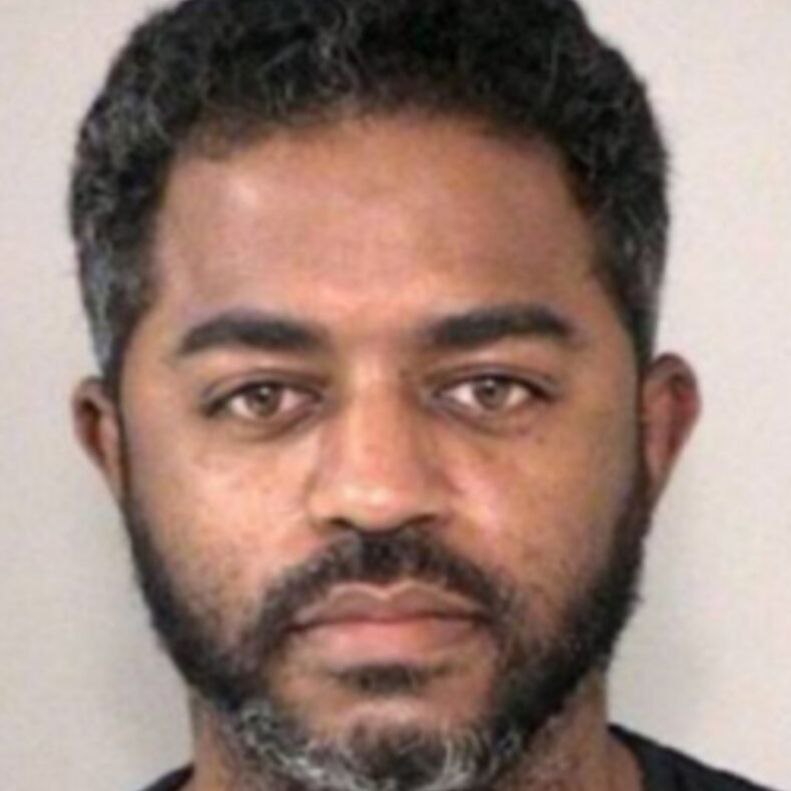
1982 - 2025
Summary
Name:
Shamsud-Din Bahar JabbarYears Active:
2025Birth:
October 26, 1982Status:
DeceasedClass:
Mass MurdererVictims:
14Method:
Vehicle ramming / ShootingDeath:
January 01, 2025Nationality:
USA1982 - 2025
Summary: Mass Murderer
Name:
Shamsud-Din Bahar JabbarStatus:
DeceasedVictims:
14Method:
Vehicle ramming / ShootingNationality:
USABirth:
October 26, 1982Death:
January 01, 2025Years Active:
2025Shamsud-Din Bahar Jabbar was born on October 26, 1982, in Beaumont, Texas, to an African American family with Creole roots. His upbringing straddled Christianity and Islam, his mother remained a practicing Christian while his father converted to Islam and adopted the surname Jabbar. Though raised in a predominantly Christian household, Jabbar embraced Islam early in life and retained his religious identity into adulthood.
He served in the United States Army for over a decade, beginning his military career in the early 2000s. He worked as a human resources and information technology specialist and achieved the rank of Staff Sergeant. Between February 2009 and January 2010, Jabbar deployed to Afghanistan. After completing his active duty service in 2015, he remained in the Army Reserve until 2020.
Following his military service, Jabbar enrolled at Georgia State University and earned a Bachelor of Business Administration in Computer Information Systems in 2017. He later secured a lucrative position as a senior solutions specialist with Deloitte, earning $120,000 annually. Despite this financial success, Jabbar experienced personal and emotional turmoil. He was divorced three times and financially burdened by alimony and child support payments. In the years leading up to the attack, acquaintances described him as increasingly isolated and erratic.
Jabbar’s behavior grew more unpredictable in 2024. He distanced himself from family and community, moved into a Muslim enclave north of Houston, and began publishing religious monologues on SoundCloud and social media. These recordings condemned music, alcohol, and Western culture as corrupting forces. Though not affiliated with any mosque, his rhetoric became more extreme following the outbreak of the Gaza conflict in late 2023.
In the summer of 2023, he traveled alone to Cairo, Egypt, for eleven days, followed by a short trip to Ontario, Canada. Investigators later flagged these trips for their potential role in his radicalization, though no direct foreign contact was ever established. By late 2024, he was wearing body armor, experimenting with explosives, and withdrawing from work and public life.
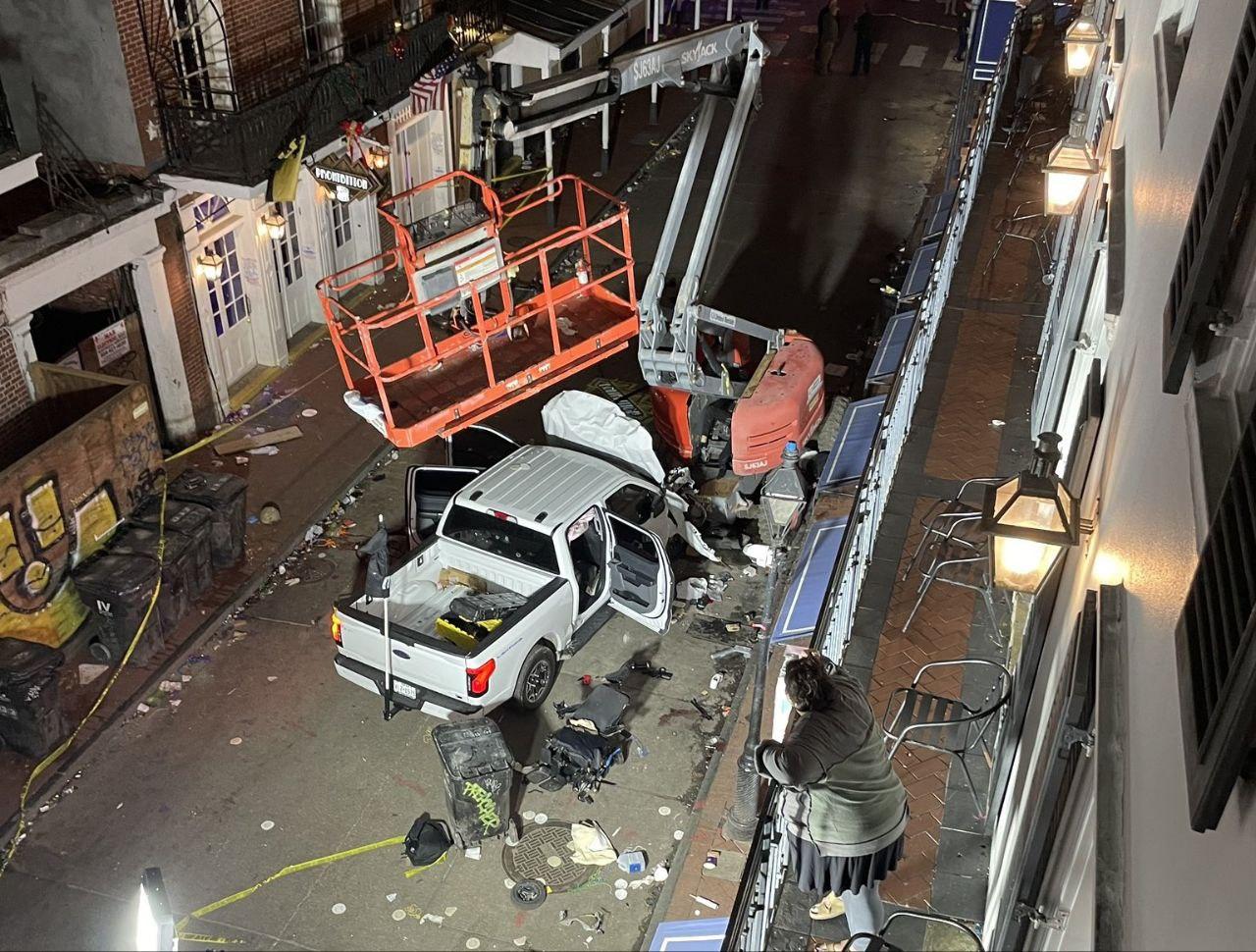
In the early hours of January 1, 2025, Shamsud-Din Bahar Jabbar carried out a deadly terrorist attack in the heart of New Orleans during the city’s New Year’s Eve festivities. Around 3:15 a.m. CST, Jabbar drove a rented white Ford F-150 Lightning pickup truck into a dense crowd celebrating along Bourbon Street. The vehicle, rented via Turo and traced to Jabbar’s home in Houston, bypassed barricades and law enforcement vehicles, mowing down pedestrians along a three-block stretch between Canal and Conti Streets.
Jabbar had uploaded a series of videos to Facebook in the minutes preceding the attack, pledging allegiance to the Islamic State (ISIS) and proclaiming religious justifications for mass violence. His videos revealed a deep obsession with Islamic eschatology and described the act as part of a "war between believers and disbelievers." Surveillance footage later confirmed that Jabbar planted two pipe bombs in the French Quarter before the attack. Fortunately, they failed to detonate.
After colliding with a stationary aerial lift platform, Jabbar exited the truck wearing body armor and opened fire on police officers and civilians. Armed with a .308 AR-10 rifle and a Glock handgun equipped with a homemade suppressor, Jabbar wounded two police officers before being shot and killed by responding officers. He was hit four times in the torso and pronounced dead at the scene. Law enforcement later recovered his weapons, body armor, and a wireless detonator linked to the unexploded pipe bombs.
Fourteen people were killed and at least 57 others injured in the attack. The deceased ranged in age from 18 to 63 and included a British national and tourists from across the U.S. and abroad. Dozens of others suffered injuries from blunt force trauma, gunfire, and stampedes caused by panic during the attack. Emergency services treated the wounded across five local hospitals.
Investigators from the FBI, DHS, and ATF found Jabbar’s actions to be premeditated and ideologically driven, though no foreign terrorist organization directly facilitated the attack. The FBI concluded that Jabbar was self-radicalized, stating unequivocally that he was "100% inspired by ISIS" but acted alone. The Islamic State later claimed responsibility via its propaganda outlet Al-Naba.
At Jabbar’s rented Airbnb in New Orleans, agents discovered evidence of attempted arson, including accelerants and partially scorched material. Investigators believe he intended to destroy incriminating evidence. He had also worn Meta smart glasses during the attack, but the FBI determined he did not livestream the events. A subsequent search of his home in Houston revealed further bomb-making materials and ISIS literature.
The city of New Orleans reeled from the attack, which forced the postponement of the 2025 Sugar Bowl by 24 hours. Temporary Archer barriers, which were originally purchased in 2017 for crowd control, were deployed after the tragedy. The failure to deploy these barriers beforehand drew scrutiny. Officials later confirmed that existing bollards had been removed and were scheduled for replacement, leaving the area exposed.
Security protocols for Super Bowl LIX, scheduled to take place in New Orleans in February 2025, were immediately reassessed. A moment of silence was held before the rescheduled Sugar Bowl, and victims were honored again before kickoff at the Super Bowl.
While initially thought to be part of a broader terror cell, especially following an unrelated explosion later that day in Las Vegas, federal authorities ultimately concluded that Jabbar acted alone.
