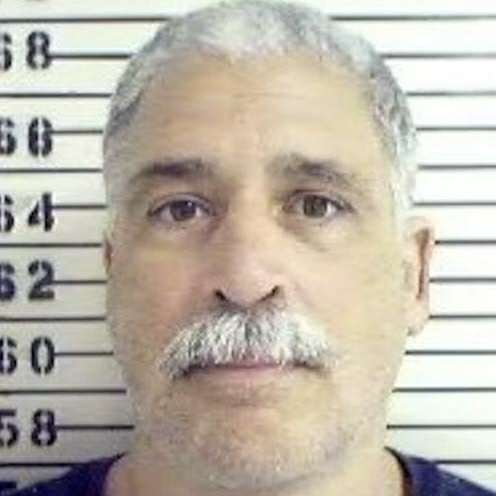
b: 1963
Summary
Name:
Scott William CoxNickname:
Seth Scott Cutter / Thomas Wood / Thomas PerkinsYears Active:
1991Birth:
November 03, 1963Status:
ImprisonedClass:
Serial KillerVictims:
2+Method:
Beating / Stabbing / StrangulationNationality:
USAb: 1963
Summary: Serial Killer
Name:
Scott William CoxNickname:
Seth Scott Cutter / Thomas Wood / Thomas PerkinsStatus:
ImprisonedVictims:
2+Method:
Beating / Stabbing / StrangulationNationality:
USABirth:
November 03, 1963Years Active:
1991Date Convicted:
September 15, 1993Scott William Cox was born on November 3, 1963, in the United States. By all available records, his early years were turbulent, marked by frequent psychiatric institutionalizations. Since 1975, Cox was admitted to mental health facilities more than 100 times, indicating a long history of psychological instability. In adulthood, he began to accumulate a criminal record, including convictions for forgery and gun theft.
By the late 1980s and early 1990s, Cox was employed as a long-haul truck driver, a job that took him across the United States, Canada, and even into Mexico. This allowed him access to hundreds of cities and remote routes, including areas with higher vulnerability among sex workers and transient populations. At some point during this time, he began operating under the alias “Seth Scott Cutter” and created fake identification under that name.
Cox’s travels would later make him a person of interest in over 20 unsolved homicide cases involving women whose bodies were found near major truck routes across North America. However, at the time, he was only convicted for two murders. Despite early signs of violence and instability, including reported assaults before his murder charges, he remained relatively undetected as a high-risk offender until the early 1990s.
The known murder spree of Scott William Cox began in Portland, Oregon, in late 1990. On November 24, 1990, Rheena Ann Brunson, a 34-year-old woman, was discovered outside a Safeway store. She had been brutally beaten, stabbed in the heart, and handcuffed. Though found alive, she died shortly after arrival at the hospital. Three months later, on February 19, 1991, another woman, Victoria Rhone, was found dead inside a train car in a Portland rail yard. She had been strangled with a shirt, which was later identified as belonging to her killer.
While both murders initially went unsolved, police began to suspect a serial attacker after a woman was found beaten, raped, bitten, and left for dead in Seattle on May 30, 1991. This victim survived and helped police identify the attacker’s truck as belonging to “Woodland Trucking.” When contacted, the company identified the driver as “Seth Scott Cutter.” The police quickly linked Cutter to other assaults and launched a wider investigation, eventually identifying him as Scott William Cox, who was also wanted for forgery and had been living in Newberg, Oregon.
Police charged Cox with two murders after forensic evidence and confessions connected him to the Brunson and Rhone killings. He admitted to beating both women and claimed his motive in Brunson’s case was a release of anger directed at his girlfriend. He denied involvement in any other murders, though he acknowledged multiple assaults against women. He was briefly investigated as a possible suspect in the Green River killings, but authorities believed he was too young at the time those crimes occurred.
On September 15, 1993, Cox pleaded no contest to two counts of murder. However, his confessions were deemed inadmissible due to procedural violations, and the case proceeded based primarily on DNA evidence. He was sentenced to two consecutive terms of 150 months (12.5 years each), with lifetime post-prison supervision. His case highlighted shortcomings in Oregon’s sentencing guidelines at the time. A new mandatory minimum sentencing law (Ballot Measure 11) passed shortly after, which would have subjected him to a 50-year sentence had it applied retroactively.
Cox was released on February 22, 2013, after serving 20 years. He was placed on strict supervision: wearing a GPS tracker, obeying curfews, and staying away from bars, parks, and children. He quickly violated parole several times, including taking unapproved routes, entering homes with minors, and smuggling contraband into jail. He was re-arrested at least six times between 2013 and 2016, yet was repeatedly released due to the nature of his original sentence.
Despite having never been charged with additional murders, Cox remains the primary suspect in at least 20 unsolved homicide cases across North America.
