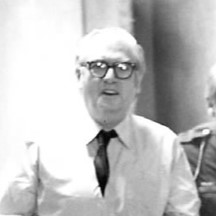
1932 - 2006
Summary
Name:
Rudy BladelNickname:
The Railway KillerYears Active:
1963 - 1978Birth:
December 08, 1932Status:
DeceasedClass:
Serial KillerVictims:
7Method:
ShootingDeath:
November 15, 2006Nationality:
USA1932 - 2006
Summary: Serial Killer
Name:
Rudy BladelNickname:
The Railway KillerStatus:
DeceasedVictims:
7Method:
ShootingNationality:
USABirth:
December 08, 1932Death:
November 15, 2006Years Active:
1963 - 1978Date Convicted:
March 22, 1979Rudy Bladel was born on December 8, 1932, in Chicago, Illinois, into a family closely connected to the railroad industry. His father, Holgar Bladel, was employed by the Chicago, Rock Island and Pacific Railroad, and Rudy followed in his footsteps. He grew up on Chicago’s South Side, attending Vocational High School where he specialized in automotive shop courses. After graduating in 1951, he began working for Rock Island as a fireman before enlisting in the U.S. Army as a military engineer during the Korean War.
While stationed in South Korea, Bladel worked under fire, hostling locomotives and performing engineering duties in combat conditions. He later claimed he had scored a 145 IQ during a military exam. Upon returning to the U.S., he was injured in a motorcycle accident, which permanently altered his posture, but he returned to work with the railroad.
Bladel’s obsession with the railway industry deepened in the late 1950s. He was devastated when, in 1959, the New York Central Railroad moved operations from Niles, Michigan to Elkhart, Indiana, effectively demoting or displacing many Michigan workers. Bladel felt betrayed by the Brotherhood of Locomotive Engineers and Firemen, blaming the union for his perceived professional downfall.
Rudy Bladel’s violent campaign began on August 2 or 3, 1963, when two railway workers—engineer Roy Bottorf and fireman Paul Overstreet—were found shot execution-style inside a locomotive in Hammond, Indiana. The only clue was a motorcycle heard fleeing the scene—an important link later, as Bladel was known to ride one and lived alone in a trailer in Blue Island, Illinois at the time.
The second fatal incident occurred on August 6, 1968. Engineer John W. Marshall was ambushed in the Elkhart rail yard and killed by multiple blasts from a 12-gauge shotgun. Though there were witnesses, they could only describe the shooter’s peculiar gait—another detail that matched Bladel’s post-accident posture.
In March 1971, Bladel attempted to kill another engineer, Louis John Sayne, shooting him twice with a .357 Magnum revolver. Sayne survived and identified Bladel, who admitted he was targeting Niles men working in Elkhart. He was sentenced to 1–5 years for attempted murder and released after 18 months.
In 1976, engineer James “Tiny” McCrory was murdered in a similar fashion—shot in the head while inside his cab at the Elkhart yard. Bladel was not charged but remained under quiet suspicion.
On January 6, 1978, Bladel was arrested again—this time by ATF agents for illegal firearm possession as a convicted felon. He served another short sentence at Sandstone Federal Prison and was released in November 1978.
Barely a month later, on December 31, 1978, Bladel committed his final and most brutal murders. Posing as a traveler, he checked into a hotel in Jackson, Michigan, carrying a suitcase containing parts of a 12-gauge shotgun. The next morning, he entered the Jackson depot locker room and murdered three railway employees in cold blood: flagman Robert Lee Blake, conductor William Gulak, and fireman Charles Lee Burton. Each man was shot at close range.
Following the attack, Bladel disassembled the weapon, hid it in the bushes at Cascade Falls, and returned to his residence in Elkhart. Though initially questioned and released due to lack of evidence, authorities later recovered the murder weapon and linked it to Bladel via serial number and shell casing ejection marks.
Bladel was arrested on March 22, 1979, and charged with the Jackson murders. Though he initially confessed, he later recanted, claiming coercion. Despite this, the evidence was overwhelming. He was convicted and sentenced to life imprisonment.
Bladel’s case was later part of the Supreme Court ruling in Michigan v. Jackson, which invalidated his first confession on Sixth Amendment grounds. A retrial was ordered, but even without the confession, he was again convicted in 1986 and resentenced to life. The Michigan v. Jackson precedent was later overturned by the Supreme Court in Montejo v. Louisiana.
Rudy Bladel died from thyroid cancer on November 15, 2006, at a hospital in Jackson, Michigan.
