b: 1980
Summary
Name:
Ruben GarzaYears Active:
1999Birth:
March 26, 1980Status:
Awaiting ExecutionClass:
MurdererVictims:
2Method:
ShootingNationality:
USAb: 1980
Summary: Murderer
Name:
Ruben GarzaStatus:
Awaiting ExecutionVictims:
2Method:
ShootingNationality:
USABirth:
March 26, 1980Years Active:
1999Date Convicted:
August 26, 2004“The guy shot me, then I shot him.”
— Ruben Garza
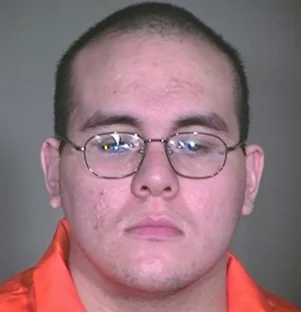
Ruben Garza was born on March 26, 1980. He was the nephew (by marriage) of Larry Franco, whose wife, Ellen, had recently separated from him and moved into a two-bedroom house in Waddell, Arizona (in the Phoenix metro area), shared with Jennifer Farley and her boyfriend, Lance Rush. At 19 years old and with no prior criminal record, Garza had, in the weeks before the murders, reportedly approached two associates and asked if they would help him with a "dirty job" — offering compensation — framing it as a way to "deal with some family problems."
At approximately 10:30 p.m. on December 1, 1999, Jennifer Farley heard a knock at the door of the Waddell house and found a Hispanic man, roughly 5'9" to 5'10" and 180 to 200 pounds, with noticeable acne. Garza had come, he later claimed, to try to persuade Ellen to reconcile with his uncle Larry. Ellen went outside to speak with him, and the conversation escalated into an argument. Garza drew a handgun and shot her twice. He later told detectives he "blacked out" and was "in a daze" afterward, claiming Ellen had actually charged at him with a knife before he fired, and that he didn't recall seeing a man at the house at all.
Hearing the commotion, Jennifer Farley and Lance Rush locked themselves in a bedroom, with Farley hiding in a closet. Garza broke through the bedroom door and struggled with Rush; during the fight, Garza shot Rush three times and was himself shot or grazed, sustaining a gunshot wound to his left arm — which he claimed came from an unknown person firing at him. Garza fled the scene. Farley called 911. Ellen never regained consciousness and died shortly afterward at St. Joseph's Hospital; Rush died approximately an hour later at John C. Lincoln Hospital.
Around 12:45 a.m. on December 2, Garza bought bandages, gauze, and hydrogen peroxide at a drugstore in west Phoenix. Later that morning, he sought treatment at Phoenix Baptist Hospital for the gunshot wound to his arm; the hospital contacted police. He initially told the responding officer he had been the victim of an unrelated drive-by shooting. When Maricopa County Sheriff's Office detectives questioned him the next morning, he maintained this story until told that Farley had identified him as the man who had come to the house that night — at which point he admitted going there to try to reconcile Ellen with his uncle, though he continued to deny intentionally shooting anyone and maintained his account of being attacked and "blacking out."
Investigators found drops of Garza's blood on the hallway walls of the victims' home, confirming his presence at the scene. The murder weapon was found among his belongings, and ammunition matching that used in the shootings was discovered in his car. Later that same day, from jail, Garza made two phone calls to an associate, Laurel Thompson. In the first, he told her he expected to be in jail "for a couple years" and that he had "done to someone else" what the two of them had previously discussed doing to a boyfriend who had assaulted her. In the second call, after Thompson told him he was on every newscast, Garza mostly asked how he had been caught and how their mutual friends were reacting to the news.
Garza was indicted on two counts of first-degree murder and one count of burglary, and was convicted on all counts in Maricopa County Superior Court on August 26, 2004, following a trial that began May 27, 2004. Prosecutors, led by Mark Barry and George Gialketsis, argued a financial motive tied to the "dirty job" testimony, though the jury ultimately did not find robbery or pecuniary gain as a proven aggravating circumstance. The defense, led by James Cleary and Christopher Dupont, argued that Garza had only confessed to being present at the scene and that there was insufficient evidence he had personally inflicted the fatal violence, presenting his youth (19 at the time), lack of any prior criminal record, and character testimony from friends and family as mitigating factors.
The jury found the state had proven that the murders were "temporally, spatially, and motivationally related" — Garza shot Ellen in the living room, then went down the hallway and shot Rush in the bedroom shortly after. Weighing this against the mitigating evidence, the jury sentenced Garza to life imprisonment for the murder of Ellen Franco, but death for the murder of Lance Rush; the court on September 20, 2004, formally imposed this sentence.
On automatic direct appeal, Garza raised numerous claims, including alleged structural errors during jury selection (including an improperly struck qualified juror and the seating of jurors predisposed toward death), a claim that the state had withheld exculpatory material in violation of Brady v. Maryland, and objections to the display of victim photographs and restrictions on his right of allocution at sentencing. The Arizona Supreme Court rejected all of these claims and affirmed both Garza's convictions and his death sentence in 2007 (State v. Garza, 216 Ariz. 56, 163 P.3d 1006). Ruben Garza remains on Arizona's death row.
