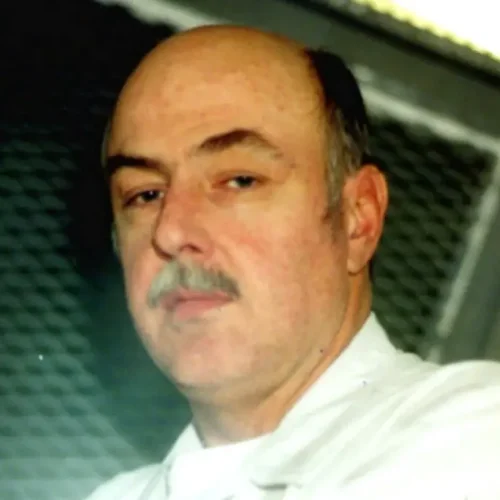
1952 - 1999
Summary
Name:
Roy Michael RobertsYears Active:
1983Birth:
December 18, 1952Status:
ExecutedClass:
MurdererVictims:
1Method:
StabbingDeath:
March 10, 1999Nationality:
USA1952 - 1999
Summary: Murderer
Name:
Roy Michael RobertsStatus:
ExecutedVictims:
1Method:
StabbingNationality:
USABirth:
December 18, 1952Death:
March 10, 1999Years Active:
1983Date Convicted:
February 1, 1985“You’re killing an innocent man.”
— Roy Michael Roberts
Roy Michael Roberts was born on December 18, 1952, in St. Louis, Missouri. He grew up in a neighborhood with several challenges, which often led to a troubled youth. As a child, he faced difficulties that set a course for his future. He attended public schools, but his academic performance was not notable. Early on, he showed signs of rebellion, and this contributed to a life filled with conflict with authority.
As a teenager, Roberts began to get into trouble. He had his first encounter with the law at the age of 18 when he was arrested for tampering in St. Louis City. This arrest led to probation, but further criminal activities followed. By the time he was in his early twenties, Roberts faced more serious charges, including stealing and drug possession, which resulted in several prison sentences.
In 1979, he was sentenced to 12 to 18 years for armed robbery in St. Louis. During his time in prison, he experienced a range of interactions and conflicts with fellow inmates and staff. These interactions often highlighted the violent and turbulent environment of prison life. Despite his ongoing conflicts, he was able to maintain some level of connection with others, but his reputation was marred by his criminal record.
Roberts spent much of his life in and out of prison, facing charges that would eventually lead to his conviction for a serious crime. The cycles of behavior ultimately contributed to his involvement in a violent incident that would change the course of his life forever, leading to his execution in 1999.
On July 3, 1983, a violent prison riot erupted at the Moberly Correctional Center in Missouri. During this riot, Correctional Officer Thomas Jackson was killed. As part of the chaos, Thomas Jackson was attempting to escort an unruly inmate named Jimmy Jenkins out of Housing Unit 2 when he was surrounded by other inmates. Among them was Roy Michael Roberts, who reportedly challenged the inmates to stop the officers. In a surge of violence, multiple inmates rushed the officers, forcing them into a control area.
Officer Jackson was left vulnerable when he tried to escape back to the control center. At that moment, Roy Roberts allegedly grabbed Officer Jackson, pinning him against a door frame. Another inmate, Robert Driscoll, stabbed Officer Jackson multiple times, hitting his heart and abdomen. As the guards attempted to rescue Officer Jackson, Roberts played a role in pulling him back into the riotous crowd. Ultimately, Officer Jackson was fatally injured in this flurry of violence and died shortly after from his wounds.
Roberts was arrested on the same day as the riot. He would later be charged with capital murder. During the trial, several witnesses, including guards at the prison, would claim that Roberts held Officer Jackson while he was being stabbed. However, the aftermath of the riot and the subsequent investigation raised serious doubts about the accuracy of their accounts.
In the weeks following the incident, a comprehensive investigation did not list Roberts as a suspect, and initial reports failed to identify him as involved in the attack. It wasn't until nearly two weeks later that a guard named Denver Halley implicated Roberts, stating he remembered seeing him during the riot. This testimony, however, was called into question, as other guards who had initially stated they did not see Roberts later changed their accounts. Despite this evolving testimony, Roberts was convicted of capital murder and sentenced to death.
After exhausting his appeals, Roberts was executed by lethal injection on March 10, 1999. His final notable statement before his execution was an assertion of his innocence, claiming, "You’re killing an innocent man." The case remains controversial due to the lack of physical evidence against Roberts and the credibility issues surrounding the eyewitness testimonies that contributed to his conviction.
