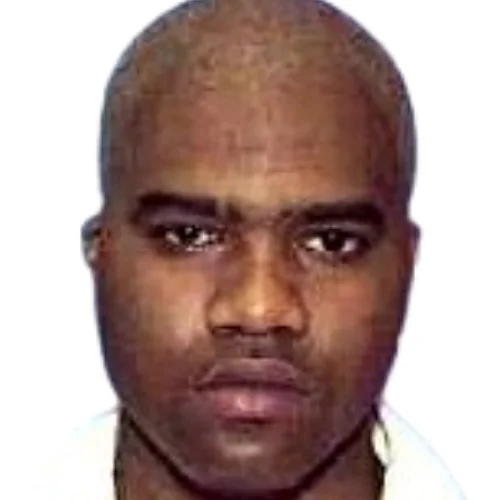
b: 1977
Summary
Name:
Roderick Dasha NewtonYears Active:
1999Birth:
December 07, 1977Status:
ImprisonedClass:
MurdererVictims:
1Method:
ShootingNationality:
USAb: 1977
Summary: Murderer
Name:
Roderick Dasha NewtonStatus:
ImprisonedVictims:
1Method:
ShootingNationality:
USABirth:
December 07, 1977Years Active:
1999Date Convicted:
February 25, 2000Roderick Dasha Newton was born on December 7, 1977, in Hartford, Connecticut. By the time he was in his early twenties, Newton had dropped out of school after completing only the ninth grade. He worked as a cook and laborer before his life took a drastic turn. In 1999, at the age of 21, he committed a crime that would change his life forever.
On March 9, 1999, Roderick Dasha Newton and his co-defendant, Julian Paul Williams, committed a carjacking in Dallas County, Texas. They targeted a 20-year-old man named Jesus Montoya. Newton approached Montoya while he was at a car wash and started a conversation.
After some time, Newton and Williams forced Montoya into his own truck. They took him to an ATM and made him withdraw $200 at gunpoint. After the robbery, they drove Montoya to a vacant field where they forced him out of the truck. Newton then shot Montoya several times, leaving him in the field. They took items from Montoya, including a gold chain, which Newton later pawned.
The next day, a neighbor noticed that Montoya's truck was still at the car wash and reported it. The police discovered fingerprints belonging to Williams on the truck's passenger side. This led them to arrest Williams. During questioning, Williams implicated Newton in Montoya's murder.
When the police tried to arrest Newton, he led them on a high-speed chase but was eventually captured. During the arrest, they found a .35 caliber gun in Newton's car, which matched the weapon used in the murder.
On February 25, 2000, Newton was found guilty of capital murder and robbery. The jury sentenced him to death on March 1, 2000. He has gone through various legal appeals since then, but his conviction and sentence have largely been upheld.
