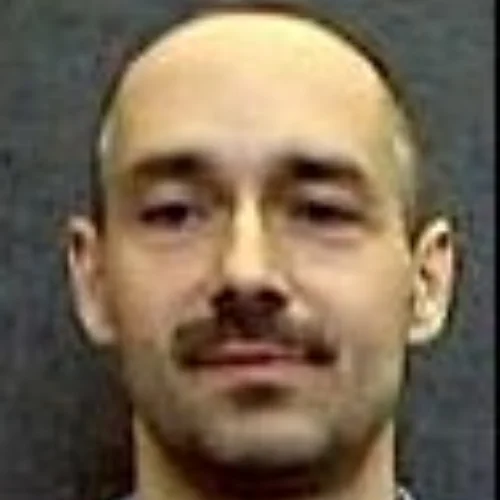
b: 1959
Summary
Name:
Robert Paul Langley Jr.Years Active:
1987 - 1988Birth:
December 22, 1959Status:
ImprisonedClass:
MurdererVictims:
2Method:
Strangulation / Beating / BludgeoningNationality:
USAb: 1959
Summary: Murderer
Name:
Robert Paul Langley Jr.Status:
ImprisonedVictims:
2Method:
Strangulation / Beating / BludgeoningNationality:
USABirth:
December 22, 1959Years Active:
1987 - 1988Robert Paul Langley Jr. was born on December 22, 1959. Before the murders, he was already part of the Oregon prison system. By April 1986, Langley had entered a residential treatment program at the Oregon State Hospital in Salem. The program was meant for inmates with mental or emotional problems who were close to returning to the community. It offered counseling, job training, and help with adjusting outside prison.
Langley lived in a cottage on the hospital grounds while he was in the program. He was still legally in custody, but he had more freedom than a regular prison inmate. By late 1987, he was allowed to leave the hospital grounds on long, unsupervised passes.
His case became known because both victims were connected to places he had access to. Anne Louise Gray was later found buried in a backyard connected to Langley’s family. Larry Richard Rockenbrant was found buried under a garden area on the Oregon State Hospital grounds, near the cottage where Langley lived.
The first known murder connected to Robert Paul Langley Jr. was the killing of Anne Louise Gray in December 1987. Gray was a neighbor of Langley’s girlfriend, Sacha Thayer. Court records state that Langley created a false story suggesting Gray had decided to leave Salem and had asked him to sell her belongings. He also had Thayer witness a written agreement connected to the sale of Gray’s property. However, Gray was not seen alive after that time.
Later that evening, Langley carried a heavy bundle wrapped in blankets from Gray’s apartment to Thayer’s vehicle. He took the bundle to a house where his aunt and cousin lived. After the later murder of Larry Rockenbrant, Langley’s cousin contacted police about a hole Langley had dug in the backyard during the winter of 1987. Police searched the area and found Gray’s body buried there. Court records state that Gray had died from asphyxiation or ligature strangulation.
The second known murder was the killing of Larry Richard Rockenbrant in April 1988. Rockenbrant knew Langley through drug-related dealings. Court records state that Langley had talked about using sedatives to knock Rockenbrant out and take his property. When that plan did not happen, Langley later arranged to meet Rockenbrant again. He took a baseball bat with him and met Rockenbrant during the early morning hours of April 14, 1988. Rockenbrant was not seen alive again.
Rockenbrant’s body was found buried behind the Oregon State Hospital cottage where Langley had been living. The grave had been presented as a garden plot. Court records state that Rockenbrant had been struck at least ten times in the head with a blunt object, which could have been a baseball bat. His body was clothed, and his hands and ankles were tied. Blood evidence also connected the body’s movement to vehicles used by Langley.
Langley was prosecuted for both murders. In the Anne Gray case, he was convicted on multiple counts of aggravated murder and sentenced to death. In the Rockenbrant case, he was also convicted and sentenced to death. However, both cases went through major appeals. In 1992, the Oregon Supreme Court upheld most of the Gray convictions but vacated the death sentence because of problems with the penalty-phase jury instructions.
In the Rockenbrant case, the Oregon Supreme Court reversed the aggravated murder convictions and sent the case back for a new trial. The court ruled that the trial judge had improperly allowed evidence from the Anne Gray murder to be used to identify Langley as Rockenbrant’s killer. The court found that the similarities between the two murders were not distinctive enough to use one killing as proof of the other.
Over the following years, Langley’s case continued through retrials, resentencing hearings, and appeals. He received death sentences more than once, and several were overturned or reviewed because of legal issues connected to Oregon’s death penalty procedures. In December 2022, Oregon Governor Kate Brown commuted the sentences of all 17 people on Oregon’s death row to life imprisonment without the possibility of parole. Robert Paul Langley Jr. was included on that list.
