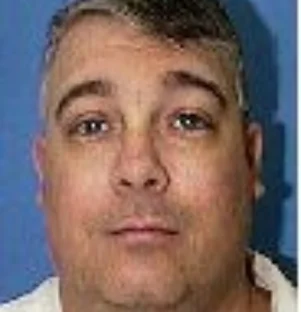
1962 - 2003
Summary
Name:
Robert Lloyd HenryYears Active:
1993Birth:
September 26, 1962Status:
ExecutedClass:
MurdererVictims:
2Method:
Beating / StabbingDeath:
November 20, 2003Nationality:
USA1962 - 2003
Summary: Murderer
Name:
Robert Lloyd HenryStatus:
ExecutedVictims:
2Method:
Beating / StabbingNationality:
USABirth:
September 26, 1962Death:
November 20, 2003Years Active:
1993Date Convicted:
November 14, 1994“I killed two people in Portland, and I want to turn myself in to you.”
— Robert Lloyd Henry
Robert Lloyd Henry was born on September 26, 1962, in Texas. Texas Department of Criminal Justice records list his native county as Potter County, Texas. At the time he was received on death row in November 1994, TDCJ recorded his age as 32, his prior occupation as sales/data entry, and his education level as 14 years. The same record listed no prior prison record.
Before the murders, Henry had a personal connection to the victims’ household. Carol Lea Arnold’s son had been one of Henry’s friends during their teenage years, and Henry had regularly visited the Portland, Texas, home where Arnold lived with her mother, Hazel V. Rumohr. Records also state that Henry maintained contact with the women over the years through Christmas cards.
The available records do not show a verified history of prior violent crime before the murders. The Texas Attorney General summary included in the case material states that Henry had no previous criminal history at the time of the offense, while TDCJ records list no prior prison record. Because those are not the same thing legally, the safest wording is that no prior prison record is verified in official TDCJ records, and the available case summary reported no previous criminal history.
Henry later denied responsibility despite the confession evidence used against him. In a death-row interview, he claimed that his work reviewing accident reports often brought him to the police department, where he heard conversations about the killings. He said he began having nightmares and described having a nervous breakdown. These statements were made after his conviction and should be treated as Henry’s own claims, not as independently proven facts.
The motive for the murders was never clearly established in court records. Prosecutors pointed to a possible bondage-related element because a rope or cord was found attached to Arnold’s leg, and a former co-worker testified about Henry watching a sadomasochistic video before he surrendered. However, no confirmed motive was legally established, so the most accurate profile wording is that the motive remained unclear, with prosecutors presenting a possible bondage-related theory.
During the 1993 Labor Day weekend, Carol Lea Arnold, 57, and her mother, Hazel V. Rumohr, 83, were killed inside their home in Portland, Texas, in San Patricio County. The estimated time of the murders was between midnight and 9:00 a.m. on September 5, 1993. TDCJ’s summary states that the bodies were later found inside the residence, while other case summaries identify the discovery as September 7, 1993.
There were no signs of forced entry. This was consistent with Henry’s prior connection to the victims, since he had known the family for years and had previously visited the home. The victims were found inside the residence after a severe attack involving both stabbing and blunt-force injuries.
Hazel Rumohr suffered multiple stab wounds, including injuries to her neck, back, and chest. She also had defense wounds on her hands and arms. Her fatal injury was described as a slashing stab wound that entered the chest area and punctured the heart.
Carol Lea Arnold was beaten and stabbed around the head and neck. Her injuries were severe enough that her face was described in the case material as unrecognizable to a neighbor, who identified her by her jewelry and clothing. Arnold’s cause of death was blunt trauma to the head and brain. A rope or cord was found attached to her leg, which prosecutors used to suggest a possible bondage-related element, although the motive was never definitively established.
About two months after the murders, Henry walked into the Corpus Christi Police Department and surrendered to an officer he knew, E.R. Frobish. According to the case summary, Henry told Frobish that he had killed two people in Portland and wanted to turn himself in. He later made additional statements admitting that he used a knife and wore work boots with knobby soles.
Physical evidence supported the prosecution’s case. The soles of Henry’s work boots were matched to bloody footprints found at the crime scene. DNA evidence also connected him to the murders: Rumohr’s blood was found in Henry’s car, and Henry’s blood was found inside the victims’ home. The Fifth Circuit later summarized the case by noting that Henry’s detailed confession was substantiated by DNA evidence linking Rumohr’s blood to blood in Henry’s car and Henry’s blood to blood in the victims’ home.
Henry pleaded not guilty at trial despite the confession evidence. His defense presented expert testimony suggesting that he suffered from obsessive-compulsive anxiety disorder, had high intelligence, and may have panicked during police questioning. The defense theory was that Henry falsely confessed because he believed it would end the interrogation. The prosecution challenged that explanation, and the jury rejected the defense.
A former co-worker, Paul Johnson, also testified about Henry’s behavior before he surrendered. Johnson said he and Henry had watched a sadomasochistic video, and that Henry tearfully said he had “made his own bed and would have to lie in it.” Prosecutors used this testimony along with the rope or cord found on Arnold’s leg when discussing a possible motive, but the exact reason for the killings remained unresolved.
Henry was indicted for the capital murders of Hazel Rumohr and Carol Lea Arnold on July 15, 1994. A San Patricio County jury convicted him of capital murder in November 1994, and he was sentenced to death. TDCJ records show that he was received on death row on November 15, 1994.
Henry continued to challenge his conviction and sentence through state and federal appeals. The Texas Court of Criminal Appeals affirmed his conviction and death sentence in October 1996. His later state and federal habeas claims were denied. In April 2003, the United States Court of Appeals for the Fifth Circuit denied his request for a certificate of appealability in a federal habeas case focused on ineffective assistance of counsel claims.
Henry continued to deny involvement after conviction and claimed that the confession and DNA evidence had been manufactured. His trial attorney denied conspiring against him. No court accepted Henry’s claims of innocence, and his appeals did not stop the execution.
Robert Lloyd Henry was executed by lethal injection in Huntsville, Texas, on November 20, 2003. TDCJ lists him as execution number 311, with TDCJ number 999129, age 41, from San Patricio County. TDCJ’s official last-statement page states that he declined to make a last statement. Other execution reports state that, while the lethal injection was being administered, he mouthed goodbye to friends and relatives before he was pronounced dead at 6:19 p.m.
