d: 1978
Summary
Name:
Robert Karl HohenbergerYears Active:
1978Status:
DeceasedClass:
Serial KillerVictims:
3-7Method:
StrangulationDeath:
May 31, 1978Nationality:
USAd: 1978
Summary: Serial Killer
Name:
Robert Karl HohenbergerStatus:
DeceasedVictims:
3-7Method:
StrangulationNationality:
USADeath:
May 31, 1978Years Active:
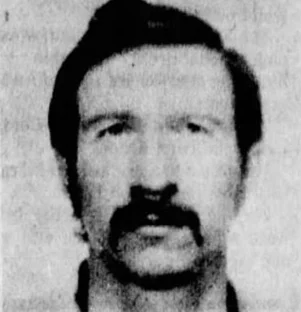
1978Robert Carl Hohenberger was born in 1943 in Indiana, his family later relocated to Riverside County, California. In 1971, he was convicted of kidnapping two girls at gunpoint in Laguna Beach, California, and sentenced to life in prison with parole eligibility after six months. He was sent to San Quentin State Prison, where by 1974 he had been reclassified as a low-security inmate. On April 12, 1974, he escaped from the facility and kidnapped a young couple, forcing them to drive him toward Modesto and then Los Banos before they managed to escape and alert authorities; Hohenberger was recaptured within hours and convicted of escape.
He was paroled again in August 1977 and returned to Riverside County. In October 1977, he abducted, beat, and raped a girl in Palm Desert; she survived and later identified him from a series of mugshots shown to her by police, resulting in his placement on a wanted list. Upon learning of this in January 1978, Hohenberger fled California, eventually making his way to Louisiana, where he settled in the small town of Bayou Vista under the alias "Frank Henry Green" and found work and housing at a welding equipment supplier, R&M Service Inc. He frequently spent time in the neighboring town of Morgan City.
Between March and May 1978, five teenagers disappeared from the Morgan City, Louisiana area under circumstances investigators later linked to Hohenberger. The first was 16-year-old Mary Leah Rodermund, a high school sophomore, who disappeared on March 2, 1978, after driving to a local drugstore to buy batteries; her family received a ransom call demanding $5,000, during which Rodermund briefly spoke to her father to say she was unharmed, but no further instructions were ever given, and she was never seen again. Her body has never been found.
On May 11, 1978, 15-year-old Judy Adams and 14-year-old Bertha Gould disappeared after attending a school fair at the Morgan City Municipal Auditorium. Witnesses reported the girls had gotten into a car driven by an unfamiliar white man; investigators traced the vehicle's license plate to a man using the name "Frank Green," whose true identity as Hohenberger was subsequently confirmed through fingerprint records. Before police could arrest him, a neighbor tipped him off, allowing him to flee the area.
On May 25, 1978, the bodies of two victims, reported to include Judy Adams and a third young woman, Bridget Cantrell, were recovered, weighted down and dumped in a septic tank. Two days later, on May 27, a third body was recovered: that of 17-year-old Gordon Mark Cannella. All three recovered victims had been sexually assaulted and strangled. Bertha Gould's body was never recovered. Investigators believed Hohenberger used a fake police badge to gain victims' trust and lure them, consistent with his background as a former reserve sheriff's deputy in Riverside County, California.
With Hohenberger identified as the prime suspect, the FBI joined the investigation, issuing a federal murder warrant and placing him on a national wanted list alongside outstanding California charges of rape, kidnapping, and related offenses. Hundreds of local police and volunteers searched cane fields, waterways, and abandoned structures across the region in the following weeks. Investigators also examined possible links between Hohenberger and similar-pattern killings of teenagers in Boca Raton, Florida, and Cartersville, Georgia, though these connections were never conclusively established.
Hohenberger fled Louisiana and made his way to Tacoma, Washington, where he had been living since around May 23, 1978, using the alias "Frank Harris" while looking for work. On May 31, 1978, he was located by police after attempting to sell a stolen car. When four plainclothes officers attempted to arrest him, Hohenberger resisted and shot himself in the head with a .22 caliber pistol. He was taken to St. Joseph Medical Center and underwent brain surgery, but died a few hours later the same day from complications; his death was ruled a suicide. A search of his rented apartment in Tacoma turned up a 12-gauge shotgun and several knives.
Because Hohenberger died before he could be tried for any of the Morgan City killings, his guilt was never established in a court of law, and estimates of his total victim count, ranging as high as seven when including the disputed out-of-state cases, remain based on circumstantial evidence and investigative suspicion rather than legal conviction. In the aftermath of the case, Morgan City's city council passed an ordinance requiring transients to register with police and be fingerprinted, explicitly intended to discourage itinerant workers from settling in the area.
