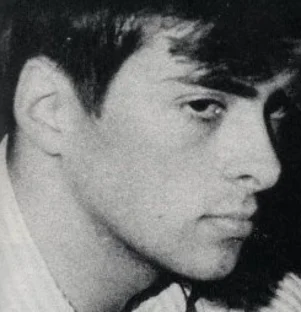
Summary
Name:
Robert Benjamin SmithNickname:
Benny SmithYears Active:
1966Status:
ImprisonedClass:
Mass MurdererVictims:
5Method:
ShootingNationality:
USASummary: Mass Murderer
Name:
Robert Benjamin SmithNickname:
Benny SmithStatus:
ImprisonedVictims:
5Method:
ShootingNationality:
USAYears Active:
1966Date Convicted:
October 24, 1967“I wanted to get known — just wanted to get myself a name.”
— Robert Benjamin Smith
Robert Benjamin Smith was born in 1948 to a family that moved often due to his father's job as a Major in the Air Force Reserves. Because of this lifestyle, Robert had a difficult time settling into schools and making friends. He often found himself teased by other children because he struggled with physical coordination. This teasing and his lack of success in sports made him retreat into the world of books.
As a child, Robert was not unusual—he was of average intelligence and did fairly well in school, but he started to show signs of social withdrawal. He seemed to gravitate towards stories about historical and political figures. He admired powerful leaders like Julius Caesar and Napoleon, but his biggest idol was President John F. Kennedy. The assassination of Kennedy in 1963 had a profound impact on him. While living in Baltimore at the time, he begged his father to take him to the funeral, but his father refused. This disappointment marked the start of a darker change in Robert's interests.
By the time his family moved to Mesa, Arizona, in 1965, Robert's focus had shifted from heroic figures to those infamous for their crimes, such as Jesse James and Lee Harvey Oswald. He became intensely interested in stories of crime and violence, which further distanced him from his peers. In school, Robert was described as a good student, and his intelligence earned him a position on the student council despite his social awkwardness. He often spent his time alone, preferring to read or watch TV rather than engage in social activities.
In the summer of 1966, horrific events in the news, such as the murders committed by Richard Speck and Charles Whitman, stirred something dark within him. These events likely fueled his desire for recognition. As he plotted a violent act, he decided on a target he believed would have a significant impact—the Rose-Mar College of Beauty, where he anticipated gathering many victims.
The night before the murders, he prepared a brown paper bag filled with tools, including a .22-caliber pistol, nylon cord, and other items. By this time, he had begun to see violent acts as a way to gain the fame he desperately sought. In the following weeks, he grew increasingly isolated and obsessed with his plan, viewing the act as a path to make a name for himself.
On November 12, 1966, Robert Benjamin Smith entered the Rose-Mar College of Beauty in Mesa, Arizona, with the intent to commit murder. He was 18 years old and had been planning his attack for several months, inspired by other mass killers. He carried a .22-caliber pistol, which was a gift from his parents, along with knives and supplies to bind his victims.
When Smith entered the beauty school, he fired a shot into the ceiling to get everyone's attention. He then ordered five women and two children into a back room, where he forced them to lie down in a circle. He positioned their heads in the center and feet outward, creating what some later referred to as the "Wheel of Death." One of the women began to pray, and when Smith expressed annoyance, he shot her in the head. Smith shot each of his victims in turn, using his pistol methodically.
Joyce Sellers, 27, was among the victims. After she was shot, her daughter, three-year-old Debbie, continued to squirm, prompting Smith to stab her. Overall, Smith killed five people: Joyce Sellers, her daughter Debbie, and three other young women—Glenda Carter, Mary Olsen, and Carol Farmer. Only one adult woman, Bonita Sue Harris, survived by pretending to be dead. A three-month-old baby, Tamara Lynn, also survived as her mother shielded her with her body.
After committing the murders, Smith walked outside, where police soon arrived. He did not resist arrest and openly confessed to the killings. When questioned, he said he wanted to "get known" and "make a name for himself."
On October 24, 1967, Smith was found guilty of five counts of first-degree murder and sentenced to death. However, in 1972, the U.S. Supreme Court declared a moratorium on the death penalty, which meant he could not be executed. His sentence was commuted to life in prison without the possibility of parole. Smith has remained in prison since then, serving his sentences and no longer able to carry out further acts of violence.
