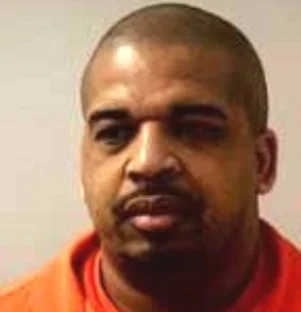
b: 1961
Summary
Name:
Robert Allen GattisYears Active:
1990Birth:
November 18, 1961Status:
ImprisonedClass:
MurdererVictims:
1Method:
ShootingNationality:
USAb: 1961
Summary: Murderer
Name:
Robert Allen GattisStatus:
ImprisonedVictims:
1Method:
ShootingNationality:
USABirth:
November 18, 1961Years Active:
1990Date Convicted:
September 22, 1992"I was an abuser. I stalked Shirley and eventually I killed her... I am not the Robert Gattis who killed Shirley Slay. That's not who I am."
— Robert Allen Gattis
Robert Allen Gattis was born on November 18, 1961. He dated Shirley Y. Slay, 27, for a period of time marked by what prosecutors and family members later described as years of physical abuse, obsessive jealousy, and controlling behavior. In the weeks before her death, Slay had been trying to end the relationship for good, moving into a new apartment at the DuPont Parkway Apartments in an effort to get away from him.
Court records later revealed that Gattis had complained to medical professionals about mental illness and involuntary violent impulses more than a year before the murder, and that he had endured severe physical, emotional, and sexual abuse as a child at the hands of family members — information he did not disclose to any of his attorneys until 2009, nearly two decades after the crime.
On the evening of May 9, 1990, Gattis entered Slay's apartment and beat her about the head before storming out. He then retrieved a loaded .38-caliber handgun and obtained a different car from a friend before returning to her apartment, despite having been told by police to stay away from her. Just after midnight, in the early morning hours of May 10, 1990, Gattis forced open the door to Slay's apartment and fired one round that struck her directly between the eyes from a distance of four to eighteen inches. She died where she fell, her body lying just inside the doorway. Witnesses — including Slay's daughter, Tykisha Slay; her mother, Shirley E. Slay; and her supervisor, Ruth Ann Noel McCrory — later testified to Gattis's long history of violence toward her.
After the shooting, Gattis fled the scene and drove back toward Wilmington, throwing the gun out of his car window along Route 9; it was never recovered. He went to the home of a friend, Wanda Scrivens, and got into bed with her while she slept. Later that same afternoon, accompanied by Scrivens and another friend, Lee Simpson, Gattis turned himself in to police at the Delaware State Hospital.
Gattis was charged with first-degree murder, first-degree burglary, possession of a deadly weapon by a person prohibited, and two counts of possession of a deadly weapon during the commission of a felony. At trial, which began September 9, 1992, Gattis testified that the shooting was accidental, claiming the gun discharged while he struggled to force open the apartment door — an account contradicted by multiple witnesses who described the door as only partially open, with Slay's body positioned just behind it. On September 22, 1992, the jury convicted Gattis on all counts. During the penalty phase, the jury voted 10–2 that aggravating circumstances outweighed mitigating ones — a non-unanimous recommendation that Delaware law at the time treated as sufficient to support a death sentence. Superior Court Judge Norman A. Barron formally sentenced Gattis to death on October 29, 1992.
The Delaware Supreme Court affirmed Gattis's convictions and sentence on direct appeal in 1994. His federal habeas corpus petition was denied by the U.S. District Court for Delaware in 1999, a decision the Third Circuit Court of Appeals affirmed in 2002; the U.S. Supreme Court denied certiorari in 2003. Gattis continued to pursue state post-conviction relief through 2005 and 2008, and the U.S. Supreme Court denied a final petition for certiorari on January 12, 2009. Later that year, the Third Circuit denied Gattis permission to file a second federal habeas petition after he argued his trial attorneys had failed to investigate and present a viable "extreme emotional disturbance" defense — the same body of childhood trauma evidence he had not disclosed to his lawyers until that year.
With an execution date set for January 2012, Gattis's case drew unusual attention from death penalty opponents, legislators, former judges and prosecutors, domestic violence organizations, clergy, and mental health professionals, all of whom appealed to Governor Jack Markell for clemency; the Delaware News Journal editorialized in favor of clemency for the first time in its history. Reviewers noted that at least sixteen other Delaware murder cases with similar or more egregious facts had resulted in sentences of life imprisonment or less, and that Gattis's death sentence had rested on a non-unanimous 10–2 jury vote, under a sentencing scheme then followed only by Delaware, Florida, and Alabama.
On January 9, 2012, Gattis appeared in person before Delaware's Board of Pardons, telling the panel: "I was an abuser. I stalked Shirley and eventually I killed her... I am not the Robert Gattis who killed Shirley Slay. That's not who I am." The Board voted 4–1 on January 15 to recommend commutation, writing that if even half of what had been submitted about Gattis's childhood was true, he had been "victimized physically, emotionally, and sexually by family members who owed him a duty of care," and citing evidence he had complained of violent impulses and mental illness over a year before the murder.
On January 17, 2012, Governor Markell commuted Gattis's sentence to life imprisonment without the possibility of parole, conditioned on Gattis permanently abandoning all further legal appeals and pardon requests — terms his attorneys confirmed he would accept. Markell stated, "I realize my decision may cause pain to the family and friends of Shirley Slay. For that I deeply apologize," and said he had prayed and met with Slay's family before reaching his decision. His attorneys described it as the first time any Delaware governor had commuted a death sentence. Slay's parents, reached at their home in Georgia, expressed disappointment mixed with resignation; her mother said of the board's decision, "They bought his story, I guess," while also saying the family had "prayed about it and asked the Lord to give us the courage and strength to accept it."
Robert Allen Gattis remains incarcerated at the James T. Vaughn Correctional Center in Smyrna, Delaware, serving a sentence of life without the possibility of parole.
