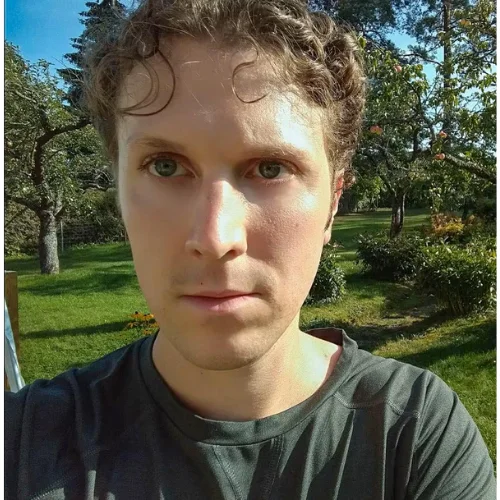
1989 - 2025
Summary
Name:
Rickard AnderssonYears Active:
2025Birth:
August 10, 1989Status:
DeceasedClass:
Mass MurdererVictims:
10Method:
ShootingDeath:
February 04, 2025Nationality:
Sweden1989 - 2025
Summary: Mass Murderer
Name:
Rickard AnderssonStatus:
DeceasedVictims:
10Method:
ShootingNationality:
SwedenBirth:
August 10, 1989Death:
February 04, 2025Years Active:
2025Rickard Andersson was born on 10 August 1989 in Örebro, Sweden. His full birth name was Jonas Rickard Simon. He lived in Örebro his whole life.
As a young child he had a normal upbringing. People who knew him then said he was happy and had many friends. Around seventh grade his personality changed. He became more withdrawn and did not want to go to school.
He was homeschooled in ninth grade. In high school he was placed in a special needs class for students with Asperger's syndrome and high‑functioning autism. He graduated in 2008 with incomplete grades.
In 2010 he completed a course at a folk high school. In 2013 he enrolled in a mathematics course at Campus Risbergska but did not start it right away. He re‑enrolled in the same course in 2019 and dropped out after two years without completing it.
Apart from a few internships, he appears not to have held a regular job. From 2009 to 2015 he received a disability benefit. He had other income support until 2022. From 2022 he lived on money that had been saved in his name since he was a child. Reports say he never had debts and paid his rent ahead of time.
People described him as someone who disliked socializing and who had trouble communicating. Authorities later said he seemed to have no close friends outside his family. Observers also said he took care of himself and ate healthily.
In 2011 he passed the necessary theory and practical tests for a hunting certification. This qualification made him eligible for a firearms licence.
On 4 February 2025, a shooting took place at Campus Risbergska in Örebro, Sweden. The shooter was identified as 35-year-old Rickard Andersson. Ten people were killed and six others were wounded. The shooter later died by suicide. The incident was reported as the deadliest mass shooting in Swedish history.
Campus Risbergska is an adult education center in Örebro. Around 2,000 adult students were enrolled there. The school offers Swedish for immigrants courses, and a number of students and staff were immigrants.
Law enforcement responded and cordoned off the area. Ambulances and medical personnel arrived from nearby counties. The Swedish Police Authority said the perpetrator acted alone. They later stated the perpetrator had likely chosen the school because he had been enrolled there for some time and that the attack was primarily motivated by suicidal thoughts.
There was early speculation that the attack was ideologically motivated because many victims were immigrants. A video clip was shared that some people said included a racist statement. Audio technicians, the police, and FBI experts later found that the claim was false. The police urged the public not to spread misinformation. Several people were wrongly accused in social media posts after the shooting.
The ten victims came from several countries. Two victims were Swedish. Two were from Syria. One victim was from Afghanistan, one from Bosnia and Herzegovina, one from Eritrea, one from Iran, one from Iraq, and one from Somalia. The fatalities included seven women and three men, aged between 28 and 68 years old.
Among the victims were two people from Tuzla, Bosnia and Herzegovina; two Syrian Christian refugees, including Salim Iskef; a nursing student from Eritrea, Elsa Teklay; a janitor trainee from Afghanistan, Ali Mohammed Jafari; and a 42-year-old Iranian nursing student referred to as Niloofar. Two Swedish victims were confirmed but their identities were not released.
The police investigation found that Andersson had left behind few clear clues about motive. The national offender profiling unit assessed his motive as linked to a desire to commit suicide. Investigators noted that he planned the act and chose a place that had personal value to him. The police also reported that his expulsion from Campus Risbergska and the loss of student loans could have been a trigger. An old math book he had left in a bathroom at the school was noted as a possible hint, but its meaning could not be confirmed.
Nearby schools were put into lockdown and the public was told to stay away. Örebro Municipality set up a crisis centre and local organizations offered support. The King and Queen of Sweden visited Örebro and laid flowers near the site. A memorial service was held on 5 February with senior government representatives in attendance. The government announced a national minute of silence and flags were flown at half-mast.
The police conducted after action reviews. These found the police response was largely successful but noted problems such as lack of sufficient food and water for officers, issues with protective equipment sizing, uneven recent training among officers, and radio-system overload. Campus Risbergska was closed for more than six months. The school was renovated, an electronic tag system was installed, and funds were spent on repairs and security measures.
The shooting prompted political discussion about firearms regulation. The Swedish government announced plans to consider stricter rules on certain types of weapons. International leaders and organizations offered condolences and many public institutions and events observed moments of silence for the victims.
