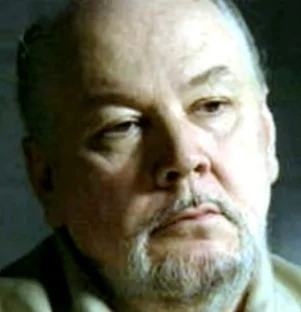
1935 - 2006
Summary
Name:
Richard KuklinskiNickname:
The Iceman / Big Rich / Big RichieYears Active:
1949 - 1986Birth:
April 11, 1935Status:
DeceasedClass:
Serial KillerVictims:
6-100+Method:
Shooting / Poisoning / StrangulationDeath:
March 05, 2006Nationality:
USA1935 - 2006
Summary: Serial Killer
Name:
Richard KuklinskiNickname:
The Iceman / Big Rich / Big RichieStatus:
DeceasedVictims:
6-100+Method:
Shooting / Poisoning / StrangulationNationality:
USABirth:
April 11, 1935Death:
March 05, 2006Years Active:
1949 - 1986“There’s more than one way to do it.”
— Richard Kuklinski
Richard Leonard Kuklinski was born on April 11, 1935, in Jersey City, New Jersey. He was one of four children born to Stanley and Anna Kuklinski, both of Polish background. His father worked as a railroad brakeman and was reported to have been violent and alcoholic. His mother worked in a meat-processing plant and was described in later accounts as strict and physically abusive.
Kuklinski’s childhood was repeatedly described as violent and unstable. Later accounts stated that his older brother Florian died after severe abuse by their father, although the official explanation given at the time was that the child had fallen down stairs. Kuklinski later claimed that the violence inside his home shaped his ability to separate emotion from violence.
As a teenager, Kuklinski developed a reputation for aggression. He later claimed that he killed a neighborhood bully named Charley Lane when he was about 13 or 14 years old, then disposed of the body. This alleged killing was never proven in court and the body was reportedly never recovered, so it should be treated as a self-reported claim rather than a verified murder.
By adulthood, Kuklinski became involved in theft, fraud, pornography distribution, and other criminal activity in New Jersey and New York. He married Barbara Pedrici and had three children. To neighbors and many family acquaintances, he presented himself as a businessman and family man. Behind that public image, he was involved in criminal schemes that included stolen goods, robbery, and violence.
Kuklinski later claimed that he worked as a contract killer for organized-crime figures, including members connected to the Gambino crime family and Roy DeMeo’s crew. Some of those claims have been disputed by organized-crime researchers and by testimony from DeMeo associates.
Richard Kuklinski’s confirmed murder record began with victims connected to criminal schemes, business dealings, or associates who became liabilities. One of the first confirmed victims was George Malliband, a Pennsylvania businessman involved in dealings with Kuklinski. Malliband disappeared in January 1980. His body was later found stuffed into a 55-gallon drum near Jersey City. Kuklinski later admitted killing him.
On March 14, 1980, New York City police detective Peter Calabro was shot to death in Upper Saddle River, New Jersey. This killing was not part of Kuklinski’s original 1988 convictions. Years later, in 2003, he pleaded guilty to Calabro’s murder and received an additional 30-year sentence. Kuklinski claimed he was hired by Salvatore “Sammy the Bull” Gravano to carry out the killing, but charges against Gravano were later dropped after Kuklinski died and prosecutors no longer had their key witness.
Another confirmed victim was Louis Masgay, who disappeared in July 1981 after arranging a business deal involving blank videotapes and a large amount of cash. His body was found in September 1983 in Rockland County, New York. Investigators discovered that the body had been frozen before disposal, which led to Kuklinski becoming known as “The Iceman.” The freezing appeared intended to mislead investigators about the time of death.
Kuklinski was also linked to Paul Hoffman, a pharmacist from New Jersey who disappeared in 1982 after arranging to meet Kuklinski with cash for a supposed drug-related business deal. Kuklinski reportedly confessed to killing Hoffman, but Hoffman’s body was never recovered and the charge was not pursued in the same way as the other confirmed convictions.
Two other victims, Gary Smith and Daniel Deppner, were connected to Kuklinski’s burglary and theft ring. Smith was killed in December 1982 and his body was later found under a motel bed in North Bergen, New Jersey. Deppner disappeared afterward and his body was found in 1983. Prosecutors argued that Kuklinski killed both men because he feared they would cooperate with police.
The investigation into Kuklinski intensified after authorities connected him to several missing or murdered associates. New Jersey State Police and federal agents developed an undercover operation known as Operation Iceman. ATF agent Dominick Polifrone posed as a criminal contact and recorded conversations with Kuklinski. During those conversations, Kuklinski discussed murder methods, poison, and plans for another killing.
On December 17, 1986, authorities arrested Kuklinski outside his home in Dumont, New Jersey. He was charged in connection with multiple murders. In March 1988, he was convicted of murdering Gary Smith and Daniel Deppner. Later that year, he pleaded guilty to killing George Malliband and Louis Masgay. He received consecutive life sentences and was not eligible for parole until he would have been over 100 years old.
During his imprisonment, Kuklinski gave numerous interviews to writers, television producers, criminologists, and psychiatrists. He claimed responsibility for far more murders than were ever proven, sometimes saying he had killed more than 100 people. These claims became central to his public image but remain heavily disputed. His confirmed legal record consists of five murder convictions or guilty pleas.
Richard Leonard Kuklinski died on March 5, 2006, while in custody in New Jersey. His death occurred while he was being treated in a secure hospital unit. Although some relatives and writers questioned the timing because he had been expected to testify in the Gravano-related Calabro case, a forensic review concluded that he died of natural causes.
