Summary
Name:
Richard Jabulani NyauzaYears Active:
2002 - 2006Status:
ImprisonedClass:
Serial KillerVictims:
16Method:
Bludgeoning / Strangulation / Stabbing / DrowningNationality:
South AfricaSummary: Serial Killer
Name:
Richard Jabulani NyauzaStatus:
ImprisonedVictims:
16Method:
Bludgeoning / Strangulation / Stabbing / DrowningNationality:
South AfricaYears Active:
2002 - 2006Date Convicted:
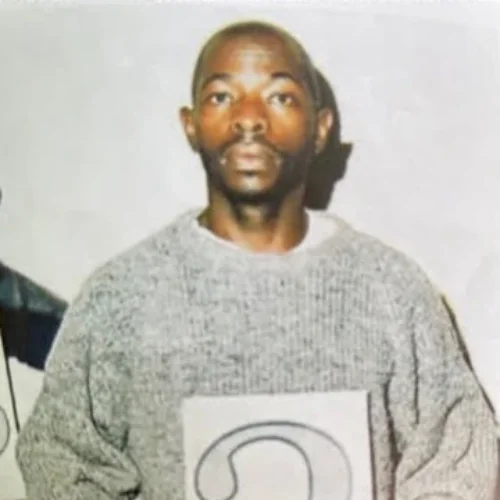
November 5, 2007Richard Jabulani Nyauza was born in 1970 in South Africa. Little verified information is publicly available regarding his early childhood, education, or family background. By adulthood, Nyauza was living in the Gauteng region and worked sporadically in manual labor roles. He was known to use access to vehicles and job-related movement to interact with members of the public.
In 2002, Nyauza was diagnosed with HIV. Court records later indicated that he believed he had been infected by a woman, an event that he cited as a turning point in his personal behavior and attitudes toward women. This period marked the beginning of his criminal escalation.
Later in 2002, Nyauza was arrested after attempting to sexually assault his girlfriend’s nine-year-old daughter. He remained in custody until November 2005, when he was acquitted and released. His release placed him back into the same communities where his earlier crimes had occurred.
Between January and September 2002, the bodies of five unidentified Black women were discovered along the Riet River near Olievenhoutbosch, outside Pretoria. The victims showed signs of violent assault, including blunt force trauma and possible drowning. At the time, investigators initially suspected a different serial offender, later identified as Elias Chauke. Chauke was ultimately excluded as a suspect after it was established that he was incarcerated during the Rossway Quarry killings. With no further leads, the investigation stalled.
Following his acquittal in November 2005, Nyauza resumed killing within weeks. On 2 January 2006, the body of a sixth victim was discovered approximately 2.8 kilometers from the earlier crime scenes. Although the cause of death differed from earlier murders, investigators linked the case due to location and pattern similarities.
From January to September 2006, Nyauza murdered an additional eleven women. He targeted vulnerable victims by offering them employment opportunities, luring them to secluded areas where he assaulted and killed them. His methods evolved over time, shifting from bludgeoning with stones or wooden objects to strangulation and stabbing, often using a screwdriver. In most cases, he removed the weapon from the scene. Fourteen of the sixteen victims were found partially or fully unclothed, and forensic testing recovered his semen from multiple victims.
On 17 August 2006, Nyauza attacked a pregnant woman near Magaliesburg after offering her a ride. He stabbed, strangled, and robbed her before leaving her for dead. She survived but lost her unborn child, partial eyesight, and use of one hand. Her testimony later became a critical part of the prosecution’s case.
On 5 September 2006, police discovered a DNA match between Nyauza and forensic evidence recovered from one of the 2002 victims. The match had existed for several years but had gone unnoticed due to limitations in DNA monitoring systems at the time. Investigators tracked a stolen cellphone belonging to one victim, which led them to Nyauza’s residence. He was arrested shortly afterward, and stolen property from victims was recovered from his home.
Nyauza confessed to the murders while in custody but later pleaded not guilty in court. His trial began on 23 October 2007 and included testimony from eighteen witnesses, including the surviving victim. During proceedings, Nyauza denied responsibility and claimed police misconduct, allegations dismissed by the court after reviewing video evidence.
Despite direct forensic evidence linking him to eight murders, expert linkage analysis demonstrated that all sixteen killings followed the same offender pattern. On 5 November 2007, Nyauza was convicted of sixteen counts of murder, one count of attempted murder, four counts of rape, and three counts of robbery. He was sentenced to sixteen life terms plus an additional 140 years’ imprisonment.
