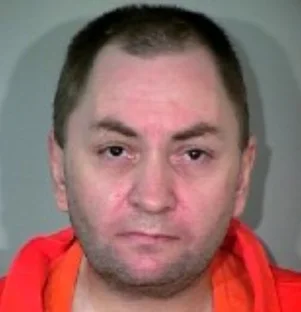
b: 1959
Summary
Name:
Richard Dean HurlesYears Active:
1992Birth:
June 01, 1959Status:
Awaiting ExecutionClass:
MurdererVictims:
1Method:
StabbingNationality:
USAb: 1959
Summary: Murderer
Name:
Richard Dean HurlesStatus:
Awaiting ExecutionVictims:
1Method:
StabbingNationality:
USABirth:
June 01, 1959Years Active:
1992Date Convicted:
April 15, 1994Richard Dean Hurles was born on June 1, 1959. He served nearly 15 years in prison for sexually assaulting two young boys before being released on parole in June 1992. Following his release, he moved to Buckeye, Arizona, where some of his family lived. He has been diagnosed by various doctors as borderline intellectually disabled and learning disabled, and had been prescribed antipsychotic medication during his imprisonment to help quiet voices that reportedly told him to commit violent acts.
On the afternoon of November 12, 1992, Richard Dean Hurles went to the Buckeye Public Library in Buckeye, Arizona. The library was described in the Arizona Supreme Court opinion as a small, house-like building in a residential area. Kay Blanton was the only employee working inside at the time. The last patron other than Hurles left shortly before 2:40 p.m.
After the last patron left, Hurles locked the front doors of the library and attacked Blanton in a back room. The evidence showed that he pulled her skirt above her waist and removed her underwear in an attempted sexual assault. He then used a paring knife from the library’s back room to stab her repeatedly.
Blanton was stabbed 37 times. She suffered wounds to her hands, head, torso, and lower body. She also suffered blunt-force trauma caused by kicking, which tore her liver. The Arizona Supreme Court later found that the attack was especially cruel because Blanton was conscious during part of the assault, tried to reach a phone, and responded to paramedics after the attack.
At about 2:45 p.m., two men went to the library and found the front doors locked. One of them looked through a window and saw Blanton lying in a pool of blood. A nearby witness saw Hurles come out of the back door of the library and run away. One of the men entered through the open back door and called 911 at about 2:50 p.m.
A witness followed Hurles after seeing him leave the library. Hurles briefly approached the witness’s truck and asked, “How are you doing?” The witness later saw him go to an apartment complex, where Hurles borrowed a bicycle from someone who knew him. Hurles then rode away.
Between 3:00 p.m. and 4:00 p.m., Hurles arrived at his nephew Thomas’ home in Buckeye and asked for a ride to Phoenix. He had changed clothes and cleaned himself up. During the drive, Thomas noticed bite marks on Hurles’ wrist. Hurles claimed he had been in a fight at the library and had stabbed a man with that man’s knife.
During the ride to Phoenix, Hurles asked Thomas to pull over so he could throw a bundle of clothing out of the car. Thomas dropped him off at a Phoenix bus station, where Hurles bought a ticket to Las Vegas. Thomas later contacted police and told them where Hurles was going. Police intercepted the bus that evening, removed Hurles, arrested him, and returned him to Phoenix.
With Thomas’ help, police recovered the discarded clothing. Blood on the clothes matched Blanton’s blood type, which the court noted occurs in about one percent of the population. Blood matching Blanton’s type was also found on Hurles’ shoes. Four bloody shoeprints at the library matched the soles of Hurles’ shoes, and his palm print was found on the paring knife left at the scene.
Hurles was charged with first-degree murder, felony murder, attempted sexual assault, and burglary. His defense presented an insanity argument, but the jury rejected it. On April 15, 1994, all 12 jurors found him guilty of premeditated murder and felony murder, along with the other charges.
The trial court sentenced Hurles to death for the murder conviction. The Arizona Supreme Court affirmed his conviction and death sentence on April 16, 1996. The court upheld the especially cruel aggravating circumstance and found that the mitigating evidence, including his difficult childhood and prior good prison behavior, was not enough to call for leniency.
Hurles’ case continued through years of appeals. In 2014, the Ninth Circuit remanded part of his federal habeas case for an evidentiary hearing on a judicial-bias claim and for further review of one ineffective-assistance issue. The court otherwise affirmed parts of the district court’s ruling.
