b: 1966
Summary
Name:
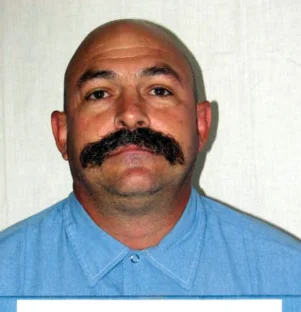
Rex Allan KrebsYears Active:
1998 - 1999Birth:
January 28, 1966Status:
Awaiting ExecutionClass:
MurdererVictims:
2Method:
Strangulation / AsphyxiationNationality:
USAb: 1966
Summary: Murderer
Name:
Rex Allan KrebsStatus:
Awaiting ExecutionVictims:
2Method:
Strangulation / AsphyxiationNationality:
USABirth:
January 28, 1966Years Active:
1998 - 1999“If I am not a monster, then what am I?”
— Rex Allan Krebs
Rex Allan Krebs was born on January 28, 1966, in the United States. Krebs first entered serious criminal trouble as a teenager. In 1984, he was convicted in Idaho of felony grand theft for stealing a car and cassette tapes. He served time in custody and completed probation before moving to California.
After moving to California, Krebs’s criminal history became more serious. In 1987, at age 21, he was arrested in connection with violent sexual assaults and burglaries in San Luis Obispo County. He later pleaded no contest to charges related to rape, sodomy, attempted rape, assault with intent to rape, and burglary. He was sentenced to 20 years in prison in 1987.
Krebs served about 10 years of that sentence and was paroled in September 1997. After release, he registered as a sex offender and lived in San Luis Obispo County. Reports state that neighbors in Atascadero became aware of his sex-offender status through Megan’s Law and objected to his presence, after which he moved away.
By 1998, Krebs was living in a rural canyon area near Avila Beach / Davis Canyon Road. He worked local jobs, including work connected to a lumberyard. He was still under parole supervision when Rachel Newhouse and Aundria Crawford disappeared.
On the night of November 12, 1998, Rachel Newhouse, a 21-year-old Cal Poly student, was walking home alone in San Luis Obispo. Krebs attacked her, beat her unconscious, and forced her into his pickup truck. He took her to his rural property in the Avila Valley area, where he raped and killed her.
Rachel disappeared without explanation, and her case caused fear in the San Luis Obispo community. For months, investigators searched for answers but did not immediately find her body.
On March 11, 1999, Aundria Crawford, a 20-year-old Cuesta College student, was attacked in San Luis Obispo. Krebs entered or approached her apartment, beat her, abducted her, and took her to his rural property. She was raped and murdered in a crime similar to Rachel Newhouse’s killing.
Krebs was already a convicted sex offender and was being supervised on parole. His parole officer, David Zaragoza, later visited him and found items that raised suspicion, including evidence connected to Aundria Crawford. Investigators searched the rural property and found human remains in shallow graves.
The bodies of Rachel Newhouse and Aundria Crawford were found buried on Krebs’s property in April 1999. The discovery confirmed that both missing women had been murdered. Contemporary reporting described the case as one of the most disturbing criminal cases in San Luis Obispo County history.
Krebs confessed to the crimes after investigators connected him to the victims. He was charged with the abduction, rape, and murder of both women. His trial was moved to Monterey County because of the intense local publicity in San Luis Obispo County.
In May 2001, a jury convicted Krebs of first-degree murder and related charges for the deaths of Rachel Newhouse and Aundria Crawford. The California Supreme Court later described the convictions as including first-degree murder, kidnapping to commit rape, rape by force, sodomy by force, and burglary-related charges.
Krebs was sentenced to death in July 2001. California’s official condemned-inmate list records his sentenced date as July 20, 2001, with San Luis Obispo County listed as the trial county.
Krebs appealed his conviction and death sentence. On November 21, 2019, the California Supreme Court affirmed both the conviction and the death judgment. The San Luis Obispo County District Attorney’s Office publicly announced the affirmed ruling in January 2020. Rex Krebs remains listed as a condemned inmate. California has a death-penalty moratorium, so his sentence remains legally in place, but no execution date is active.
